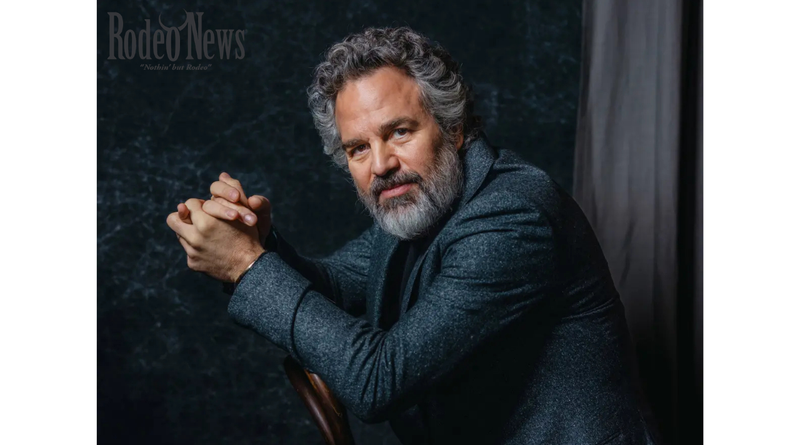
Mark Ruffalo: 170+ Jewish Artists Defend Actor
More than 170 Jewish artists, filmmakers, writers and other cultural figures have publicly defended Mark Ruffalo after Paramount Skydance accused the actor of invoking antisemitic tropes in his criticism of Oracle and the proposed $111 billion merger between Paramount and Warner Bros. Discovery.
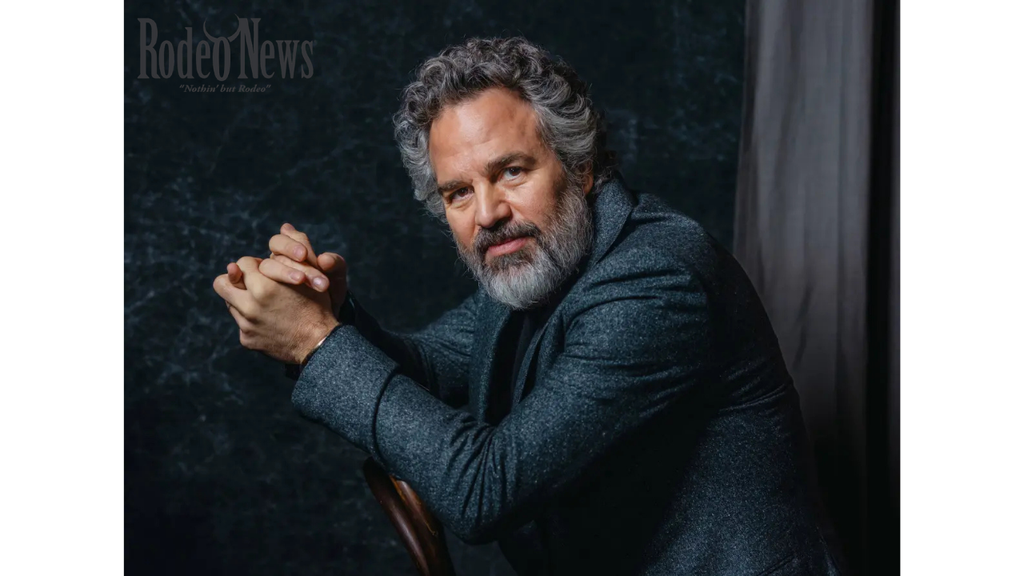
The dispute has quickly become one of Hollywood’s most contentious political and corporate controversies. At its center is a disagreement over whether Ruffalo’s criticism of business relationships involving Oracle and Israel amounted to antisemitic rhetoric, or whether it represented legitimate criticism of corporate power, technology and government policy.
The Jewish artists who signed an open letter supporting Ruffalo strongly rejected Paramount’s characterization of his comments. They argued that criticism of Israeli government policy, military technology or corporate relationships should not automatically be equated with hostility toward Jewish people. LLos Angeles Times+1
The controversy arrives at a particularly sensitive moment for Paramount. Chief Executive David Ellison is attempting to complete the company’s proposed acquisition of Warner Bros. Discovery, a deal valued at approximately $111 billion that has faced significant opposition and regulatory scrutiny.
Mark Ruffalo Faces Antisemitism Allegations
The dispute intensified after Ruffalo publicly criticized the Paramount-Warner Bros. Discovery transaction and raised questions about Oracle’s connections to the Ellison family.
Oracle was founded by Larry Ellison, the father of Paramount Chief Executive David Ellison. Ruffalo has argued that the corporate relationships surrounding the proposed merger deserve scrutiny, particularly because of Oracle’s technology contracts and alleged connections to Israel’s military infrastructure.
Paramount responded by accusing Ruffalo of using antisemitic tropes while making those arguments.
The studio’s criticism transformed what might otherwise have remained a corporate and political disagreement into a much broader debate about antisemitism, Israel, Palestine and freedom of expression in Hollywood.
Ruffalo rejected the accusation, describing Paramount’s response as deeply unfair and insisting that his criticism was directed toward corporate and political actions rather than Jewish people.
The actor has previously been outspoken about the Israeli-Palestinian conflict and has faced criticism over some of his statements. However, the latest controversy has drawn an unusually large response from Jewish members of the entertainment and cultural communities.
Jewish Artists Rally Behind Mark Ruffalo
The strongest response came through an open letter signed by more than 170 Jewish artists, writers, filmmakers, academics and other public figures.
The signatories include prominent names from the entertainment world, including filmmaker Joel Coen, Todd Haynes, actors Hannah Einbinder and Ilana Glazer, writer and filmmaker Tony Kushner, and others.
The letter rejected the idea that Ruffalo’s criticism should be classified as antisemitic simply because it involved Israel, Jewish individuals or companies associated with Jewish executives.
The signatories argued that Jewish identity and Israeli government policy are not interchangeable concepts.
They also warned against using accusations of antisemitism to silence legitimate political criticism.
The letter was particularly notable because its authors were themselves Jewish. That made it harder to frame the dispute simply as a conflict between Ruffalo and Jewish advocacy groups.
Instead, the controversy revealed a deep disagreement within Hollywood and the broader Jewish community about where the boundary between political criticism and antisemitism should be drawn.
What Did Mark Ruffalo Say?
Ruffalo’s comments emerged in the context of the proposed Paramount Skydance acquisition of Warner Bros. Discovery.
The merger would create one of the largest entertainment companies in the world and has attracted criticism from people concerned about media consolidation, corporate influence and competition.
Ruffalo became one of the more visible Hollywood figures opposing the transaction.
His criticism also focused on Oracle and its relationship to the Ellison family. He argued that technology, corporate ownership and geopolitical issues could not simply be separated when discussing the consequences of a deal of this magnitude.
Paramount, however, viewed some of those arguments differently.
The company accused Ruffalo of invoking antisemitic stereotypes in what it described as an effort to advance a business dispute.
That accusation triggered an immediate backlash from Ruffalo’s supporters.
Paramount’s Response Adds Fuel to Hollywood Debate
Paramount’s response did not occur in isolation.
Other prominent Hollywood figures and organizations have also criticized Ruffalo’s comments.
The Simon Wiesenthal Center and the Creative Community for Peace have been among those raising concerns about rhetoric surrounding Israel and Jewish identity. Other influential entertainment figures have also criticized Ruffalo. TThe Playlist+1
That has produced two sharply different narratives.
One side argues that references to Jewish individuals, Israel and military activity can cross into antisemitic territory when they rely on stereotypes or collective accusations.
The other argues that criticism of Israeli policy, Israeli military activity or companies doing business with Israel is not inherently antisemitic and should not be treated as such.
The open letter supporting Ruffalo firmly adopts the second position.
Its signatories say that Jewish identity should not be used as a shield against criticism of governments, corporations or political institutions.
Why the Paramount-Warner Bros. Merger Matters
The background to the controversy is a proposed merger that could reshape Hollywood.
Paramount Skydance’s attempt to acquire Warner Bros. Discovery has been closely watched because of the enormous scale of the transaction.
The deal would combine major entertainment properties and media operations, raising questions about competition, corporate concentration and the future structure of the American entertainment industry.
The merger has also faced legal and political resistance.
California and other states, along with the Writers Guild of America, have challenged aspects of the transaction. Reuters reported that California and 11 other states recently urged a federal judge to reject Paramount’s request for a $1.88 billion bond connected to the delayed acquisition. RReuters
That wider corporate battle provides important context for Ruffalo’s intervention.
He has not treated the merger simply as an entertainment-industry transaction. Instead, he has connected the deal to broader questions about technology, political power, media ownership and human rights.
Those arguments have made him an unusually prominent celebrity critic of the proposed deal.
Oracle and the Ellison Family Connection
Oracle is central to the controversy because of its connection to Paramount’s leadership.
Larry Ellison founded Oracle and remains one of the most influential figures associated with the company. His son, David Ellison, now leads Paramount.
Ruffalo has pointed to Oracle’s involvement with Israeli technology and military systems while criticizing the proposed merger.
His critics argue that connecting those issues to the Ellison family risks creating associations based on Jewish identity.
His defenders disagree.
The Jewish artists’ open letter argues that discussing the business activities of a company or the political positions of individuals is not inherently antisemitic.
The distinction is important.
Criticism of a government, corporation or individual is generally different from attacking an entire ethnic or religious group. But determining where political criticism ends and discriminatory rhetoric begins can become especially difficult when a controversy involves Israel, Jewish identity and the Israeli-Palestinian conflict.
That disagreement is at the heart of the current dispute.
Hollywood’s Growing Debate Over Israel and Palestine
The Mark Ruffalo controversy is part of a much larger debate within Hollywood.
Since the war in Gaza intensified, actors, directors, writers and other entertainment professionals have increasingly spoken publicly about Israel and Palestine.
Some have called for ceasefires and criticized Israeli military operations. Others have argued that parts of the entertainment industry have failed to adequately confront antisemitism or have applied inconsistent standards to criticism of Israel.
The result has been an increasingly polarized Hollywood environment.
Ruffalo has been outspoken on the issue for years. His political activism has included criticism of Israeli policies and support for Palestinian rights.
He has also previously apologized for statements concerning Israel after acknowledging that his language could be inflammatory.
That history is part of the context surrounding the latest dispute.
More Than 170 Jewish Voices Complicate the Debate
Perhaps the most significant aspect of the latest controversy is the number and prominence of Jewish people defending Ruffalo.
The open letter was not merely signed by a handful of anonymous supporters.
Among the signatories are established figures in film, television, literature and the arts.
Joel Coen, Todd Haynes, Hannah Einbinder, Tony Kushner, Ilana Glazer and other prominent Jewish cultural figures added their names to the statement. VVariety+1
Their involvement demonstrates that there is no single Jewish position on the political questions surrounding Israel, Palestine or criticism of Israeli institutions.
It also demonstrates why debates over antisemitism can become so complicated.
Jewish communities contain a wide range of political views. Some strongly support Israel and emphasize the threat posed by antisemitism. Others are sharply critical of Israeli government policies or military actions. Still others distinguish between support for Israel’s existence and opposition to particular policies.
The Ruffalo letter reflects one part of that spectrum.
Supporters Say Criticism Is Not Antisemitism
The central argument from Ruffalo’s supporters is straightforward.
They say that criticizing a corporation’s activities, an executive’s business relationships or a government’s policies does not automatically constitute antisemitism.
They also object to what they describe as the weaponization of antisemitism accusations.
According to the letter’s supporters, such accusations can have a chilling effect on political speech if they are applied too broadly.
The argument is not that antisemitism does not exist.
Instead, the signatories say that genuine antisemitism should be identified and confronted while leaving room for legitimate criticism of Israel, Israeli policy and corporate relationships.
That distinction has become increasingly important in Hollywood, where many performers and creative professionals depend on major studios and entertainment companies for employment.
Critics Warn Against Dangerous Stereotypes
Those defending Paramount’s position take a different view.
They argue that antisemitic stereotypes can sometimes appear indirectly, particularly when Jewish people or Jewish-owned businesses are portrayed as having collective control over powerful institutions.
That is why the wording and context of political criticism matter.
A criticism directed at a specific company, executive or government policy may be legitimate. But critics of Ruffalo contend that some formulations can unintentionally reproduce longstanding antisemitic narratives about Jewish wealth, power or control.
This is one reason the dispute has become so heated.
Both sides claim to be defending an important principle.
Paramount and Ruffalo’s critics emphasize the need to combat antisemitism.
Ruffalo and the Jewish artists defending him emphasize the need to preserve political speech and prevent legitimate criticism from being dismissed as prejudice.
Mark Ruffalo’s Response
Ruffalo has strongly rejected the accusation against him.
He has maintained that his comments were about corporate and political conduct rather than Jewish people.
He has also emphasized his respect for Jewish culture and people while defending his right to criticize policies and institutions.
The actor’s position is consistent with the broader argument made by the open letter’s signatories.
They say that political disagreement should not be transformed into an accusation against an entire ethnic or religious community.
At the same time, the controversy illustrates why public figures face difficult choices when discussing Israel and Palestine.
A statement that one person considers legitimate political criticism can be interpreted by another as invoking a harmful stereotype.
A New Flashpoint in the Paramount Merger Battle
The controversy could have consequences beyond the immediate argument over Ruffalo.
Paramount is already fighting to complete the Warner Bros. Discovery acquisition while facing opposition from state officials, unions and other critics.
Ruffalo’s public opposition gives the merger an unusual Hollywood celebrity dimension.
Rather than remaining a dispute between corporate lawyers and regulators, the transaction has become part of a larger cultural conversation about who controls the entertainment industry and what values those companies represent.
The antisemitism controversy adds another layer.
It has brought Jewish identity, Israel, corporate power and freedom of expression directly into the merger debate.
That makes the dispute considerably more complicated than a standard celebrity feud with a studio.
What Happens Next?
The immediate question is whether the controversy will remain focused on Ruffalo or become part of the larger fight over the Paramount-Warner Bros. Discovery merger.
The open letter has already attracted substantial attention because of the number and prominence of its Jewish signatories.
Meanwhile, Paramount’s criticism ensures that the allegations will continue to receive scrutiny.
The disagreement is unlikely to disappear quickly.
The merger itself remains a major corporate story, while the debate over Hollywood’s response to Israel and Palestine continues to divide entertainment professionals.
For Ruffalo, the controversy represents another chapter in a long history of political activism.
For Paramount, it is another challenge during an already complicated effort to reshape the company’s future.
And for Hollywood’s Jewish community, the episode has exposed significant differences over how antisemitism should be defined, confronted and distinguished from criticism of Israel.
The Bigger Meaning of the Mark Ruffalo Controversy
The dispute involving Mark Ruffalo ultimately raises a question much larger than one actor or one studio.
It asks how Hollywood should handle political speech in an era of intense polarization.
Can celebrities criticize governments and corporations without being accused of attacking ethnic or religious communities?
Can Jewish people criticize Israel without being accused of antisemitism?
And can legitimate concerns about antisemitism be raised without being dismissed as attempts to silence political opponents?
There are no simple answers.
The more than 170 Jewish artists who signed the letter defending Ruffalo clearly believe that Paramount crossed an important line by characterizing his criticism as antisemitic.
Paramount and its supporters believe the opposite: that certain forms of rhetoric can reinforce harmful stereotypes even when presented as political criticism.
For now, both sides remain entrenched.
What is clear is that the Mark Ruffalo controversy has become much bigger than a dispute between an actor and a movie studio. It has become a highly visible test of how Hollywood navigates the increasingly difficult intersection of antisemitism, Israel, Palestine, corporate power and freedom of expression.
As Paramount’s proposed Warner Bros. Discovery acquisition continues through its legal and regulatory challenges, the argument surrounding Ruffalo is likely to remain part of the broader conversation.
The debate may eventually fade, but the questions it raises about speech, identity and political criticism are unlikely to disappear anytime soon.