Roku OLED TV: 5 Big Features Revealed
Roku has officially entered the OLED television market with its first Roku OLED TV models, bringing the company’s familiar smart-TV platform to a display technology long associated with premium picture quality. The new Roku Pro Series is now available, while a brighter Pro Series LX model is scheduled to arrive in October. TThe Verge+1
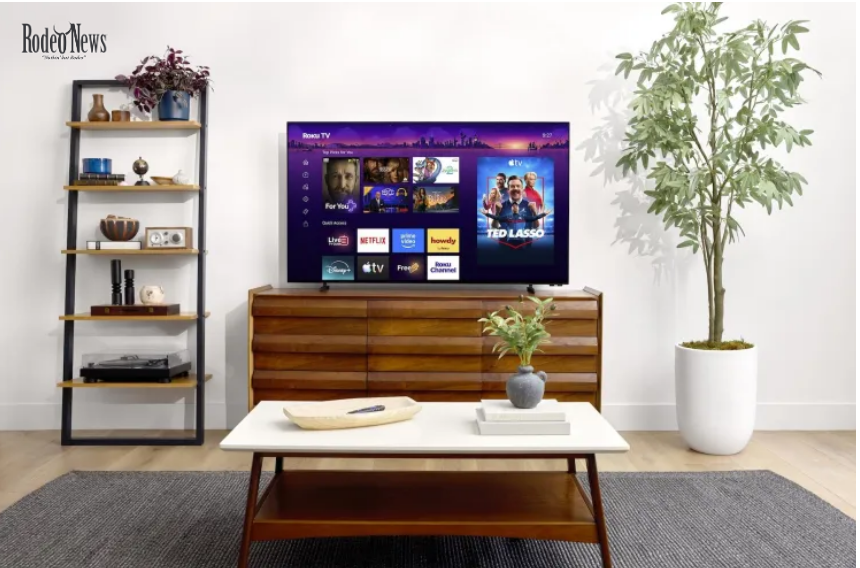
The move puts Roku directly into a more competitive part of the television market. Instead of focusing only on affordable LCD and Mini-LED televisions, Roku is now targeting consumers who want the deeper blacks and high contrast of OLED without necessarily paying flagship-TV prices.
The first Roku OLED TV models come in 55-inch and 65-inch sizes. The standard Pro Series starts at $999.99 for the 55-inch version and $1,199.99 for the 65-inch model, according to Roku. The upcoming Pro Series LX will cost $1,299.99 and $1,599.99, respectively. RRoku
Here are five of the biggest things to know about Roku’s new OLED lineup.
1. Roku OLED TV finally enters the mainstream
OLED technology has become one of the most desirable choices for people looking for a high-quality home theater experience. Unlike traditional LCD televisions, OLED panels use self-lit pixels that can switch off completely, allowing them to produce extremely deep blacks and very high contrast.
Roku is now bringing that technology into its own television lineup.
The standard Roku Pro Series features a 4K OLED panel with a 120Hz refresh rate. Roku says the display delivers vibrant colors and genuinely black blacks, while its Smart Picture Max technology is designed to automatically optimize the picture. RRoku
That combination gives Roku a substantially more premium product than its entry-level TV offerings.
The company has already established itself as a major name in streaming and smart-TV software. Its new OLED models represent a further step toward making Roku a hardware brand rather than simply a software platform used by other television manufacturers.
2. The Roku Pro Series starts at $999
Price is one of the most important parts of Roku’s OLED strategy.
The 55-inch Roku Pro Series OLED is priced at $999.99, while the 65-inch version costs $1,199.99. Roku’s product page currently lists the standard Pro Series as available through Amazon. RRoku
That pricing puts the television in the increasingly competitive midrange OLED segment.
The company is not attempting to compete exclusively with ultra-premium televisions costing several thousand dollars. Instead, Roku appears to be betting that consumers will be attracted by a combination of OLED picture quality, gaming features and the simplicity of Roku’s software.
The pricing also gives buyers another option at a time when several major television manufacturers are expanding their midrange OLED offerings.
Sony, for example, recently introduced its Bravia 6 OLED, with pricing beginning at $1,300. That means Roku is entering the market with an aggressive starting price for its 55-inch model. TThe Verge
For consumers comparing OLED televisions, the price difference could therefore become one of Roku’s biggest selling points.
3. Gaming is a major focus
The new Roku OLED TV is not designed only for movies and streaming.
The Pro Series includes a 120Hz refresh rate and four HDMI 2.1 ports. It also supports variable refresh rate technology, Auto Low Latency Mode and FreeSync Premium, features that can be particularly useful for modern game consoles and gaming PCs. TThe Verge+1
A 120Hz display can provide smoother motion than a traditional 60Hz television when compatible content is available. For gamers, the combination of high refresh rates, VRR and low-latency features can help make gameplay feel more responsive.
The four HDMI 2.1 ports are also significant.
Modern gaming hardware increasingly relies on HDMI 2.1 for advanced video capabilities. Having four such ports gives users more flexibility when connecting multiple devices, such as a PlayStation, Xbox, gaming PC, sound system or other HDMI equipment.
Roku is therefore positioning its first OLED television as more than a streaming-focused screen.
4. The Pro Series LX promises substantially more brightness
For shoppers who want something more advanced, Roku is also preparing the Pro Series LX.
The LX is expected to launch in October and will be available in 55-inch and 65-inch versions. Pricing is set at $1,299.99 for the 55-inch model and $1,599.99 for the 65-inch model. TThe Verge+1
The most notable difference is brightness.
According to the company’s product information and reporting on the launch, the Pro Series LX is designed to be roughly twice as bright as the regular Pro Series. It also adds 144Hz variable refresh rate support and a polarizer intended to reduce reflections. TThe Verge
That could make the LX particularly interesting for people who watch television in brighter rooms.
OLED televisions have traditionally been praised for their contrast and black levels, but brightness has remained an important area of competition as LCD and Mini-LED displays have become increasingly powerful.
Roku’s decision to make brightness a major differentiator suggests that the company understands one of the biggest practical questions facing OLED buyers: how well will the television perform outside a dark home theater?
5. Roku keeps its familiar smart-TV experience
The hardware may be new territory for Roku, but the software experience remains familiar.
Both the Pro Series and Pro Series LX run Roku’s operating system. That means buyers get access to the company’s established smart-TV interface rather than having to learn a completely new platform. TThe Verge+1
Roku has also been updating its software experience throughout 2026.
The company’s redesigned Home Screen puts navigation on the left side of the display while providing personalized recommendations, frequently used applications and shortcuts. Roku says its new interface uses AI to personalize some entertainment recommendations based on viewing habits. RRoku
That software integration could be an important advantage for existing Roku users.
Instead of purchasing a television from another manufacturer and attaching a separate Roku streaming device, consumers can get the Roku experience built directly into the television.
Roku OLED TV vs. Pro Series LX
The two new product lines are aimed at slightly different buyers.
The standard Roku Pro Series is the more affordable choice. It combines a 4K OLED display, 120Hz refresh rate, Dolby Vision, HDR10+, gaming features and Roku’s smart-TV platform.
The Pro Series LX takes the same basic concept further by adding substantially higher brightness, 144Hz VRR and a reflection-reducing polarizer. TThe Verge+1
For someone who primarily watches movies and streaming services in a darker room, the standard model could offer the better value.
For a buyer with a bright living room or someone particularly interested in gaming performance, the LX may justify its higher price.
Dolby Vision and HDR10+ support
Picture quality is not only about the panel itself.
The Roku Pro Series supports Dolby Vision and HDR10+, two important high-dynamic-range formats. Roku also lists Dolby Atmos support for its Pro Series OLED televisions. RRoku
HDR can make compatible movies, television programs and games look more dynamic by expanding the range between dark and bright areas of an image.
OLED’s ability to produce very deep blacks can further enhance this effect.
For streaming-focused households, support for multiple premium formats could make the Roku OLED TV a more flexible option.
A few thoughtful Roku touches remain
Roku has also carried over some of the convenience features that have become associated with its television products.
The Pro Series includes a backlit voice remote with a customizable shortcut button. Roku also includes a lost-remote finder, allowing users to locate the remote when it disappears between sofa cushions or elsewhere in the room. RRoku
These features are not as headline-grabbing as OLED or HDMI 2.1, but they highlight Roku’s broader strategy.
The company is not simply trying to build another premium television. It is attempting to combine higher-end display hardware with the straightforward user experience that has helped establish Roku as a recognizable television platform.
Roku is entering a crowded OLED market
The timing of Roku’s move is significant.
OLED televisions are no longer limited to a handful of ultra-premium models. Major manufacturers are increasingly competing in the midrange category, giving consumers more choices at lower prices.
Sony recently introduced the Bravia 6 OLED, positioned below its higher-end Bravia models. The television starts at $1,300 and is available in sizes ranging from 48 to 83 inches. TThe Verge
Meanwhile, LG and Samsung continue to compete aggressively in the OLED space.
That makes Roku’s pricing particularly important.
A $999 starting price gives the company a clear message for buyers who want OLED picture quality but do not want to move into four-figure premium pricing for a larger or higher-end television.
Is the Roku OLED TV worth watching?
The new Roku OLED TV lineup is significant because it changes the company’s position in the television market.
Roku has spent years building its reputation around streaming software and affordable smart TVs. Its move into OLED shows that the company now wants to compete more directly for consumers who care about picture quality, gaming performance and premium hardware.
The standard Pro Series looks like the value-focused option. At $999.99 for 55 inches, it combines OLED technology with 120Hz performance, four HDMI 2.1 ports, Dolby Vision, HDR10+, VRR and Roku’s software platform. RRoku
The Pro Series LX is more ambitious.
With its higher brightness, 144Hz VRR and reflection-reducing polarizer, the LX is aimed at shoppers willing to pay more for enhanced performance. Its $1,299.99 starting price still places it below many premium OLED televisions.
The bigger question is how these televisions perform in independent testing.
Specifications can tell consumers a great deal, but real-world picture quality, brightness measurements, processing, motion handling, sound performance and gaming latency will ultimately determine how well Roku’s first OLED generation competes against established OLED brands.
For now, however, Roku has made its intentions clear.
The company is no longer content to compete only on convenience and streaming value. With its first OLED televisions, Roku is making a serious push into the competitive midrange TV market — and the combination of OLED technology and aggressive pricing could make the Roku Pro Series one of the more interesting new TV launches of 2026.
Roku OLED TV pricing at a glance
- Roku Pro Series 55-inch OLED: $999.99
- Roku Pro Series 65-inch OLED: $1,199.99
- Roku Pro Series LX 55-inch OLED: $1,299.99
- Roku Pro Series LX 65-inch OLED: $1,599.99
The standard Pro Series is available now, while the Pro Series LX is scheduled for October. TThe Verge+1
As Roku expands beyond its traditional affordable-TV territory, its first OLED lineup could give consumers another compelling reason to consider the platform. For buyers searching for an OLED television with strong gaming specifications, a familiar smart-TV interface and a relatively aggressive price, Roku’s new Pro Series deserves a close look.