The Warsh Fed pick has taken a dramatic turn after a key Republican senator lifted his opposition, clearing a major hurdle for former Federal Reserve governor Kevin Warsh to potentially lead the U.S. central bank. The decision reshapes the political and economic landscape at a critical moment for monetary policy, Federal Reserve independence, and the future of interest rates in the United States.
A Sudden Shift in Senate Support
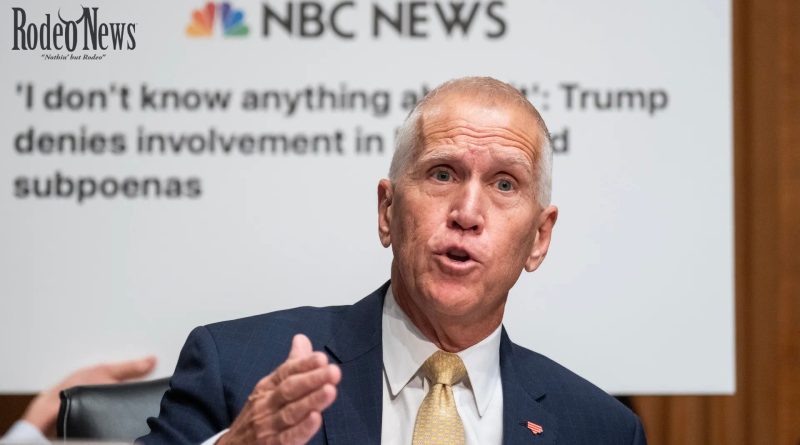
Senator Thom Tillis stunned Washington by announcing he would no longer block Kevin Warsh’s confirmation as Federal Reserve chair. This shift effectively removes one of the biggest obstacles facing former President Donald Trump’s nominee.
Tillis had previously refused to support the Warsh Fed pick due to concerns about a Department of Justice investigation into current Fed Chair Jerome Powell. That probe, however, was dropped just days earlier, satisfying Tillis’ conditions.
The senator emphasized that the investigation posed a serious threat to the Federal Reserve’s independence, a principle he insisted must be protected before any confirmation could proceed. With the probe now closed, Tillis signaled confidence that the process could move forward without undermining the central bank’s credibility.
Why the DOJ Investigation Mattered
At the heart of the controversy was a federal investigation into Jerome Powell tied to renovation costs at the Federal Reserve’s headquarters. Critics argued the probe was politically motivated and risked weakening the Fed’s independence from the executive branch.
The investigation became a flashpoint in the broader power struggle between Trump and Powell. Trump had repeatedly criticized Powell for resisting pressure to cut interest rates aggressively, fueling concerns about political interference in monetary policy.
With the DOJ dropping the case without criminal findings, the political tension eased—at least enough to allow the Warsh Fed pick to advance.
What Happens Next in the Confirmation Process
Now that Tillis has withdrawn his opposition, the Warsh Fed pick is expected to move forward in the Senate Banking Committee. The vote is likely to follow party lines, with Republicans largely supporting Warsh and Democrats remaining skeptical.
If approved by the committee, the nomination will proceed to a full Senate vote, where Warsh’s confirmation could still face intense scrutiny.
Democrats, including prominent figures like Senator Elizabeth Warren, have raised concerns about Warsh’s independence and his perceived alignment with Trump’s economic agenda.
Despite these objections, the path to confirmation now appears significantly clearer than it did just days ago.
Warsh’s Position on Federal Reserve Independence
A central issue throughout the confirmation process has been whether Kevin Warsh would maintain the Federal Reserve’s independence from political pressure.
During his Senate hearing, Warsh emphasized that monetary policy must remain free from political influence. He pledged to focus on core responsibilities such as controlling inflation and maintaining price stability.
This stance is critical given Trump’s history of publicly pressuring the Fed to lower interest rates. Warsh has attempted to strike a balance—aligning with some of Trump’s economic priorities while insisting he would not act as a political instrument.
Still, skepticism remains among critics who fear that the Warsh Fed pick could lead to a more politically influenced central bank.
The Uncertain Future of Jerome Powell
While the Warsh Fed pick moves forward, the future of Jerome Powell remains unclear. His term as Fed chair is nearing its end, and questions persist about whether he will remain on the Federal Reserve Board.
Tillis himself acknowledged that Powell’s next steps would be his own decision, hinting at a possible transition period or early departure.
This uncertainty adds another layer of complexity to an already high-stakes situation. Markets and policymakers alike are watching closely for signals about continuity—or change—at the Fed.
Market and Economic Implications
The Federal Reserve plays a critical role in shaping the U.S. economy, influencing everything from mortgage rates to global financial markets.
A leadership change could signal shifts in monetary policy, particularly regarding interest rates and inflation control. Warsh has previously been associated with more market-oriented and reform-driven approaches, which could lead to significant changes in how the Fed operates.
Investors are particularly focused on whether Warsh would pursue lower interest rates, as Trump has long advocated. At the same time, Warsh’s public commitment to independence may temper expectations of dramatic policy shifts.
Political Tensions Behind the Scenes
The Warsh Fed pick has been caught in a broader political struggle involving the White House, Congress, and the Federal Reserve itself.
Republicans have largely rallied behind Warsh, viewing him as a capable candidate who can steer the economy through uncertain times. Meanwhile, Democrats have framed the nomination as part of a larger effort to politicize the central bank.
This divide reflects deeper disagreements about the role of the Federal Reserve and the extent to which it should remain insulated from political influence.
Why This Moment Is So Critical
The timing of this development is especially important. The U.S. economy faces ongoing challenges, including inflation concerns, global market volatility, and uncertainty about future growth.
Leadership at the Federal Reserve during such a period can have far-reaching consequences—not just for the United States, but for the global economy.
The Warsh Fed pick represents more than just a personnel decision; it is a test of the balance between political power and institutional independence.
Key Takeaways: 5 Major Developments
1. Tillis Removes Major Obstacle
Senator Thom Tillis’ support clears a critical path for Warsh’s confirmation.
2. DOJ Probe Ends
The closure of the investigation into Jerome Powell eliminated the main reason for opposition.
3. Confirmation Moves Forward
The Warsh Fed pick is expected to advance through the Senate Banking Committee and toward a full vote.
4. Independence Remains Central Issue
Warsh has pledged to maintain the Fed’s independence, though skepticism persists.
5. Powell’s Future Uncertain
Questions remain about whether Jerome Powell will stay on the Federal Reserve Board.
Conclusion
The Warsh Fed pick has entered a निर्णitive phase following Senator Tillis’ reversal, marking a turning point in one of the most closely watched economic appointments in recent years.
With the DOJ investigation now behind it, the nomination process is moving forward—but not without lingering questions about Federal Reserve independence, political influence, and the future direction of U.S. monetary policy.
As the Senate prepares for the next steps, all eyes will remain on Kevin Warsh and the broader implications of his potential leadership at the Federal Reserve.