Tesla FSD Crash Raises Fresh Questions About Driver Safety
The Tesla FSD crash in Fairfield, California, has renewed concerns about the limitations of advanced driver-assistance technology after a driver told authorities he was asleep when his vehicle struck a California Highway Patrol patrol car. Two officers suffered serious injuries, while the Tesla driver sustained minor injuries, according to published reports.
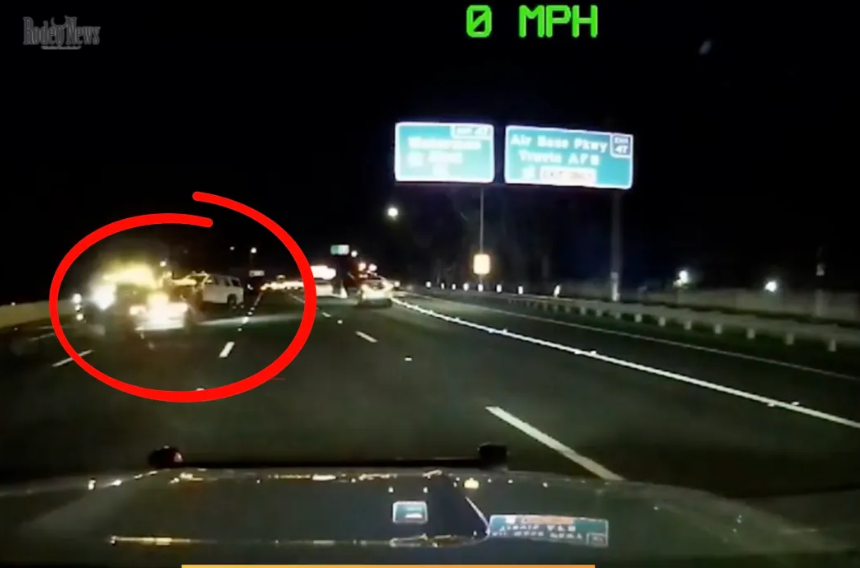
The incident happened shortly before midnight on October 13, 2026, on eastbound Interstate 80 near Air Base Parkway. CHP officers were managing traffic at the scene of an earlier fatal collision when the Tesla approached a section of highway that had been closed to traffic.
Authorities said the closed lanes were marked with road flares, traffic cones and emergency lights. The Tesla nevertheless continued through the closure and collided with a Dodge Charger patrol vehicle occupied by two officers.
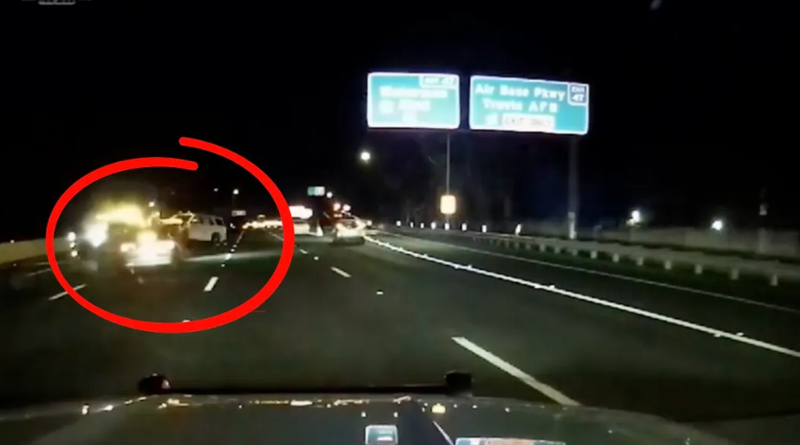
Dashcam footage released by CHP on October 15 captured the collision, providing investigators with important evidence as they work to establish what happened.
Tesla FSD Crash Happened at a Fatal Accident Scene
The collision involving the Tesla occurred about an hour after a separate crash in which a 19-year-old man from San Pablo died.
According to reports, the teenager lost control of his Honda Civic before it was struck by a Chevrolet Tahoe. CHP officers remained at the scene to manage traffic and protect emergency personnel working on the highway.
During those operations, four lanes were closed, with vehicles directed away from the affected area. The Tesla entered the restricted section at freeway speed and struck the parked patrol car.
The 22-year-old Tesla driver, who was from Sacramento, told investigators he had fallen asleep while using the vehicle’s Full Self-Driving feature. Authorities have not publicly confirmed the vehicle model or software version involved in the crash. Investigators will need to examine vehicle data to determine whether the system was active at the time.
Both injured officers were taken to a hospital for treatment and were subsequently released, according to local reporting.
Full Self-Driving Still Requires Driver Supervision
Despite its name, Tesla’s Full Self-Driving system does not make a vehicle fully autonomous. The feature provides driver assistance, but the person behind the wheel must remain attentive and ready to take control.
CHP reiterated that responsibility after the collision, emphasizing that technology does not remove a driver’s obligation to operate a vehicle safely.
The incident highlights an important distinction between automated driving features and fully autonomous transportation. Driver-assistance systems can help with steering, speed control and navigating certain road situations, but they may not respond appropriately to every hazard.
Emergency scenes can be particularly challenging because they may involve unusual traffic patterns, bright flashing lights, temporary lane closures and personnel working close to moving vehicles.
Even when a vehicle is equipped with advanced cameras and software, drivers must remain alert and respond immediately when conditions require intervention.
Previous Tesla Crashes Have Raised Similar Concerns
The Fairfield collision also recalls previous incidents involving Tesla vehicles and stationary emergency vehicles.
In August 2021, the National Highway Traffic Safety Administration opened an investigation into crashes involving Tesla vehicles operating with Autopilot. The investigation focused on collisions with emergency vehicles stopped at crash scenes, including incidents in which warning lights and other precautions were present.
In December 2023, Tesla recalled more than two million vehicles in the United States to introduce additional safeguards intended to improve driver supervision when Autosteer was in use.
However, questions about the effectiveness of driver monitoring and the ability of automated systems to recognize hazards have continued.
In the Fairfield case, investigators must determine whether Full Self-Driving was engaged, how the vehicle responded to the road closure and whether driver-monitoring safeguards operated as intended. The driver’s statement alone does not establish the system’s precise status at the time of impact.
Investigation Will Determine What Happened
The investigation remains ongoing, and several important details have yet to be established. These include the Tesla’s software version, its recorded operating status and the sequence of events immediately before the collision.
Vehicle logs and onboard footage could help investigators reconstruct the crash and determine how the driver-assistance system behaved.
The case also raises broader questions about how drivers understand the capabilities of advanced vehicle technology. A system’s branding may create expectations that exceed what its software is designed to deliver, making clear instructions and effective driver monitoring particularly important.
For now, authorities continue to emphasize that drivers remain responsible for their vehicles, even when assistance features are activated.
The Tesla FSD crash in Fairfield is a reminder that technological advances do not eliminate the need for attention behind the wheel. As automakers continue developing increasingly sophisticated driving systems, ensuring that drivers understand their limitations will remain central to road safety.