Mike Moore Social Media Settlement: Big Tech Warning
The Mike Moore social media settlement strategy is drawing attention across the technology and legal industries after the former Mississippi attorney general who helped take on Big Tobacco began advising state attorneys general on a potentially sweeping response to social media companies.
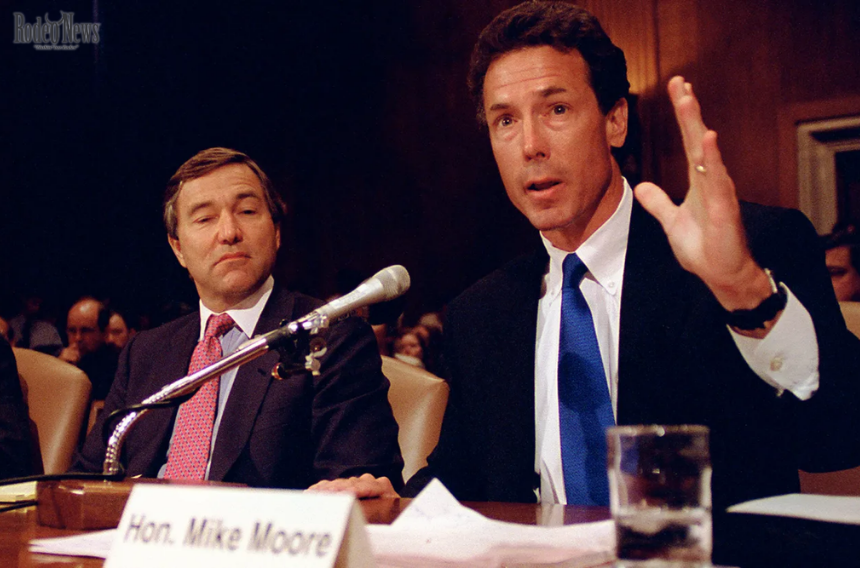
Moore, a central figure in the litigation that eventually produced the landmark 1998 tobacco settlement, now sees similarities between that battle and the growing legal campaign against companies such as Meta, TikTok and YouTube. His argument is that state lawsuits could eventually push the social media industry toward broader safety reforms, particularly for children and teenagers.
The timing is significant. Meta recently agreed to a settlement worth nearly $17 billion, according to the CNBC report, after facing allegations concerning the impact of Facebook and Instagram on young users. The agreement includes new protections for teenagers and could become a template for additional cases involving other technology companies.
For Moore, however, the settlement is only the beginning.
He believes the United States could ultimately need a broader industry-wide agreement rather than a series of separate lawsuits brought by individual states, cities, counties and school districts.
Mike Moore Social Media Settlement Echoes Big Tobacco
Moore’s comparison with Big Tobacco is rooted in his own history.
As Mississippi attorney general, Moore was among the leading figures in the state litigation against tobacco manufacturers during the 1990s. The campaign eventually helped produce the 1998 Master Settlement Agreement, which was valued at approximately $246 billion and became one of the most consequential corporate settlements in U.S. history.
The tobacco litigation focused heavily on the public-health costs associated with smoking.
States argued that tobacco companies had contributed to enormous healthcare expenses while concealing or minimizing important information about the dangers and addictive nature of their products.
The legal strategy was unusual at the time.
Rather than relying only on individual consumers, state governments pursued claims tied to public costs and health consequences. Over time, litigation involving multiple states created enormous pressure on the industry.
Moore now sees a potential parallel with social media.
The products are obviously different. Facebook, Instagram, YouTube and TikTok are digital platforms rather than physical products such as cigarettes.
However, the legal theory developing around social media increasingly focuses on whether companies knowingly designed products in ways that could encourage excessive use, particularly among younger users.
That distinction could become central to future litigation.
Meta’s Landmark Settlement Changes the Equation
The immediate catalyst for the latest discussion is Meta’s settlement with state attorneys general.
Meta agreed to pay almost $17 billion under the settlement described in the CNBC report. Other reports have described the potential value of the agreement as reaching approximately $18 billion, depending on conditions attached to portions of the payment.
The case involved allegations that Facebook and Instagram caused or contributed to harms affecting children and teenagers.
Meta has denied wrongdoing, but the settlement nevertheless represents a major development in the legal fight over social media and youth safety.
The agreement also goes beyond money.
Meta committed to changes affecting how teenagers use its platforms. Those measures include daily usage limitations, nighttime restrictions, stronger age-assurance measures and additional tools for parents and guardians. An independent auditor is expected to monitor compliance for five years.
That makes the settlement particularly important.
A conventional corporate settlement can simply involve a financial payment. Here, the agreement also creates behavioral and product-related obligations.
That is one reason Moore sees the deal as a possible template for the wider industry.
Why the Settlement Could Become a Bigger Legal Template
Moore told CNBC that the agreement should be viewed as a first step rather than the final outcome.
The former attorney general is now working with the newly created Attention Initiative, a nonprofit focused on addressing the effects of social media addiction and youth exposure.
One of his major ideas is a permanent national public education fund.
The objective would be to educate young people and families about the potential dangers of excessive social media use while supporting prevention efforts.
This approach has a direct connection to the tobacco era.
The Truth Initiative, a major public-health organization focused on tobacco prevention, emerged from the broader tobacco settlement environment and is chaired by Moore. The Attention Initiative is drawing inspiration from that model.
Moore believes a similar nationwide effort could be developed for social media.
Instead of allowing individual lawsuits to continue independently, he argues that companies and state attorneys general could eventually negotiate a comprehensive agreement.
That would potentially create consistent rules across the industry.
Meta Is Not the Only Company Facing Pressure
The biggest challenge for the Mike Moore social media settlement strategy is that Meta is only one part of a much larger technology ecosystem.
TikTok and YouTube are also facing scrutiny over how their products affect younger users.
Snap is facing its own lawsuits as well, including litigation involving allegations related to child safety. The broader legal campaign has expanded beyond individual parents and consumers to include states, school districts and other groups.
The Meta settlement could therefore have a domino effect.
If one major company agrees to restrictions, other platforms may face pressure to adopt similar policies.
That is particularly relevant because Meta’s agreement reportedly makes a portion of its potential payment contingent on YouTube and TikTok adopting comparable changes.
The arrangement effectively creates an incentive for competing platforms to participate.
However, cooperation is far from guaranteed.
Google, TikTok and other technology companies compete directly for users, advertising revenue and attention. Agreeing to identical restrictions could therefore create difficult commercial and legal questions.
The Biggest Difference Between Tobacco and Social Media
Despite the similarities, Moore acknowledges that technology presents a much more complicated challenge than tobacco.
Cigarettes are a relatively stable product.
Social media platforms change constantly.
Algorithms are updated. Features are introduced and removed. Artificial intelligence changes how content is recommended. User behavior also evolves rapidly.
That makes it harder for regulators to define exactly what constitutes harmful design.
A feature considered problematic today could be replaced by a completely different technology next year.
There is another important difference.
Social media provides legitimate benefits.
People use platforms to communicate with friends and relatives, discover information, build businesses, promote creative work and participate in communities.
Therefore, the legal question is not simply whether social media has benefits or harms.
Instead, policymakers must determine how much responsibility companies should have for product designs that may encourage excessive engagement.
The Fight Over Engagement Is Central
At the heart of the debate is the business model of social media.
Most major platforms rely heavily on advertising.
More engagement can mean more time spent on a platform. More time can create more opportunities to display advertisements and gather information about user behavior.
Critics argue that this creates incentives for companies to maximize attention.
That does not necessarily mean every design decision is intentionally harmful.
But lawsuits are increasingly examining whether companies knew that certain features could produce negative consequences while continuing to use those features because they benefited the business.
This is one of the areas where the tobacco comparison becomes politically powerful.
In both cases, the central question involves what companies knew about potential harm and what they did with that knowledge.
The evidence and legal standards, however, are very different.
California Case Put Meta Under Major Pressure
The latest Meta settlement came as a federal trial was underway in Oakland, California.
California Attorney General Rob Bonta was among the officials leading the case. The lawsuit was filed in 2023 and accused Meta of violating federal and state laws, including the Children’s Online Privacy Protection Act and consumer-protection laws.
The settlement ended the immediate courtroom battle.
But Bonta indicated that the agreement should not be interpreted as the end of the broader campaign.
He described the settlement conceptually as a floor rather than a ceiling, signaling that regulators could continue pursuing other technology companies.
That message is important for Meta’s competitors.
The settlement establishes a reference point.
Future negotiations could now begin with the question of whether other companies should provide similar financial compensation and implement comparable safety measures.
A National Agreement Could Be More Efficient
Moore argues that the United States should avoid a fragmented legal approach.
If every state, city, county and school district brings its own case, technology companies could spend years defending lawsuits across different jurisdictions.
That could create inconsistent rules.
One state could demand restrictions that another state does not require. A platform might therefore have different obligations depending on where a user lives.
Moore believes a national framework could provide a more efficient solution.
A comprehensive agreement could establish common standards for age verification, parental controls, screen-time restrictions, nighttime access and other safety features.
It could also create a nationwide public education program.
However, reaching such a deal would require technology companies and government officials to agree on common standards.
That could prove significantly more difficult than negotiating with a relatively concentrated tobacco industry.
The Role of Parents and Schools
The legal campaign is also expanding beyond government regulators.
Thousands of school districts have pursued litigation against social media companies, arguing that platform design contributes to problems affecting students.
The lawsuits reflect a growing concern that schools are dealing with consequences that originate outside the classroom.
Educators increasingly face challenges involving online bullying, excessive screen use, harmful content and other digital behaviors.
Parents face similar concerns.
That makes youth safety a particularly powerful political issue.
Companies can argue that parents ultimately control how children use technology. Critics counter that platforms also have a responsibility to design products with reasonable safeguards for minors.
The Meta settlement moves the debate toward the second position by requiring certain protections to become more prominent and, in some cases, default features.
What Happens to TikTok, YouTube and Snap?
The next stage of the battle could involve Meta’s competitors.
YouTube and TikTok are especially important because they operate some of the world’s largest recommendation systems.
Both companies depend heavily on algorithms to determine which videos users see.
If state attorneys general demand protections similar to Meta’s settlement, the companies could face substantial legal and financial pressure.
Snap is another major target.
According to the CNBC report, the company is facing multiple lawsuits, including a New Mexico case involving allegations related to child sexual exploitation. The case is expected to proceed toward trial.
These cases could determine whether the Meta agreement becomes an isolated settlement or the beginning of a broader industry transformation.
The Next Big Question: Can Social Media Be Regulated?
The Mike Moore social media settlement strategy ultimately raises a larger question about how governments should regulate technology.
Traditional regulation can take years.
Technology can change in months.
That creates a fundamental mismatch.
By the time lawmakers establish rules for one generation of social media technology, companies may already be developing another generation of algorithms and artificial-intelligence systems.
Litigation can move faster in certain circumstances.
A major settlement can force companies to make changes without waiting for Congress to pass new legislation.
That is one reason the tobacco comparison resonates with policymakers.
However, lawsuits cannot solve every problem.
Regulators still need clear standards. Companies need to understand what is expected of them. Parents and young people need practical tools. And courts must determine where corporate responsibility ends and individual responsibility begins.
Moore Wants Prevention, Not Just Penalties
Perhaps the most important part of Moore’s current approach is his emphasis on prevention.
A large financial settlement can compensate governments and create pressure for corporate change.
But money alone does not necessarily prevent young people from developing unhealthy relationships with technology.
That is why Moore is advocating for a national education and prevention effort.
The goal would be to make young people more aware of how social media platforms work and how engagement-driven design can influence behavior.
It would also give parents and educators additional resources.
That could ultimately become one of the most lasting consequences of the current legal campaign.
What the Mike Moore Social Media Settlement Could Mean
The Mike Moore social media settlement strategy is still developing.
There is no guarantee that a nationwide master settlement involving Meta, TikTok, YouTube, Snap and other companies will happen.
The technology industry is also far more fragmented than the tobacco industry was during the 1990s.
Still, the latest Meta agreement has established a significant precedent.
It demonstrates that state attorneys general can pressure one of the world’s largest technology companies into accepting both a multibillion-dollar financial commitment and substantial changes to how its platforms operate for young users.
For Moore, that makes the current moment familiar.
The legal strategy that helped transform the tobacco industry is now being adapted to a completely different kind of product.
Whether the comparison ultimately proves accurate remains uncertain.
Social media is more complex, more dynamic and more deeply integrated into everyday life than cigarettes ever were.
Yet the fundamental question is similar: What responsibility should powerful companies bear when their products can create widespread public harm?
That question is unlikely to disappear.
As governments, parents, schools and technology companies continue debating the future of online safety, the Meta settlement could become an early chapter in a much larger regulatory battle.
And if Moore succeeds in turning separate lawsuits into a coordinated national campaign, the technology industry could face its own version of a historic reckoning.
The next phase may determine whether the Meta settlement was simply an expensive legal resolution—or the first major step toward a new set of rules for social media.
Suggested Internal Link
Add a relevant article from your website about Meta, social media regulation, Instagram, Facebook, TikTok, youth safety, or Big Tech lawsuits using natural anchor text such as “social media safety regulations.”