Niger Mutiny: Shocking Attack Exposes Army Rift
A Niger mutiny erupted in the capital Niamey on Saturday, August 29, as mutinous soldiers attacked key military and government sites, including a major airbase at Diori Hamani International Airport and areas around the presidential complex. The violence triggered hours of gunfire and explosions and created one of the most serious challenges yet to Niger’s military leadership since the 2023 coup.
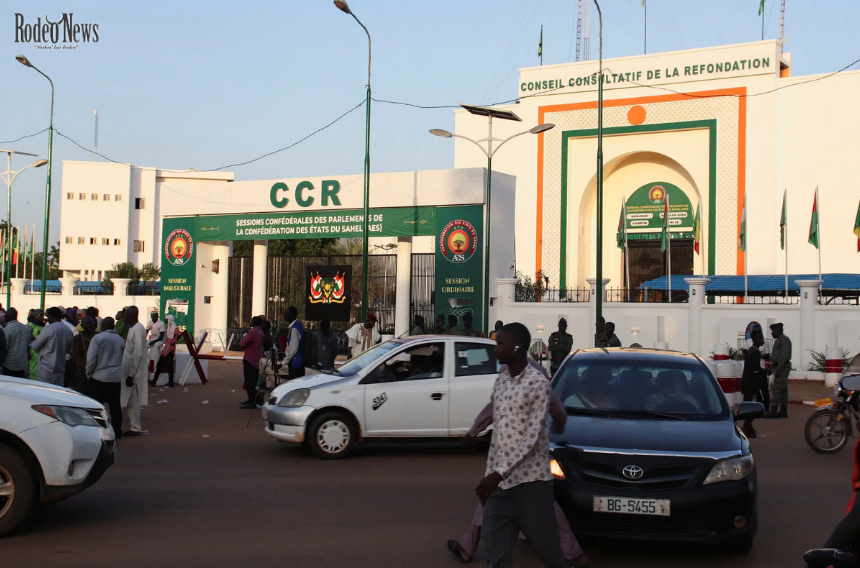
The confrontation was particularly significant because it appeared to involve members of Niger’s own security forces rather than an external militant organization. The unrest therefore exposed tensions inside the military establishment at a time when Niger is already struggling with a persistent jihadist insurgency.
By Sunday, Niger’s authorities said loyalist forces had regained control of the key airbase. However, the incident has raised questions about the stability of the government led by Gen. Abdourahamane Tiani and whether dissatisfaction within the armed forces could become a larger political problem.
Niger Mutiny Targets Strategic Sites in Niamey
The Niger mutiny began during the early hours of Saturday, with sustained gunfire and explosions reported in several parts of Niamey.
One of the main flashpoints was Air Base 101, which is located alongside Diori Hamani International Airport. The facility has major strategic importance because it serves as an important military installation and has previously hosted foreign forces involved in security operations in Niger.
According to Reuters reporting, mutinous soldiers also targeted the presidential area and other sensitive locations in the capital. State television and radio broadcasts were temporarily interrupted during the violence, adding to the sense of uncertainty across the city.
The airport attack was especially significant because the base had already been targeted earlier this year by jihadist militants. That earlier assault demonstrated the vulnerability of one of Niger’s most important military facilities.
This time, however, the attackers were reportedly soldiers involved in an internal military uprising.
That distinction could have major consequences.
An attack by jihadists can be presented as an external security threat. A mutiny involving military personnel raises a different question: why would members of the armed forces turn their weapons against the government and their own commanders?
Government Says Forces Regained Control
Niger’s authorities initially described the situation as a serious security incident while security forces moved to retake positions seized by the mutineers.
By Sunday, the government said its forces had regained control of the key airbase in Niamey. Reuters reported that loyalist troops, including members of the Presidential Guard, helped restore government control. Russian personnel from the Africa Corps also reportedly assisted the authorities in suppressing the rebellion.
The government’s ability to retake the base was an important immediate victory for Tiani.
Nevertheless, restoring physical control over military installations does not automatically resolve the underlying tensions that produced the mutiny.
Reports indicated that dozens of soldiers were killed or arrested following the confrontation. Niger’s state broadcaster showed footage of detained soldiers, while other reports described fighting involving young troops who were dissatisfied with the military leadership.
The precise scale of the fighting and the number of casualties remained subject to changing accounts as authorities worked to secure the capital.
Why the Niger Mutiny Matters
The significance of the Niger mutiny extends far beyond the streets of Niamey.
Niger has been ruled by a military government since July 2023, when Tiani and other officers overthrew President Mohamed Bazoum. The coup dramatically changed Niger’s foreign policy and its relationship with Western countries.
French troops subsequently left the country, followed by the withdrawal of U.S. forces. Niger instead strengthened relationships with Russia and with neighboring military-led governments in Mali and Burkina Faso.
The three countries have increasingly coordinated their security policies through the Alliance of Sahel States.
That strategy has been built around the promise that military governments can provide greater security and sovereignty than the civilian administrations they replaced.
The latest mutiny puts that promise under renewed scrutiny.
If soldiers themselves are becoming frustrated with the government’s handling of security, the junta faces a problem that cannot simply be solved through battlefield operations.
Security Failures Fuel Military Frustration
The underlying security situation provides important context for the unrest.
Niger continues to face attacks from armed groups affiliated with al-Qaeda and Islamic State. The violence is particularly severe in regions close to the country’s borders with Mali and Burkina Faso.
Military forces have suffered heavy losses during counterinsurgency operations. The continued violence has also placed enormous pressure on the government, which came to power partly by promising to improve national security.
The military leadership has therefore faced a difficult contradiction.
The junta justified its seizure of power in 2023 partly on the grounds that the previous government had failed to protect the country from armed groups.
But years later, jihadist organizations remain capable of conducting major attacks.
That reality can generate frustration among soldiers, particularly those deployed to dangerous areas.
Reuters reported that analysts viewed internal military dissatisfaction as an important factor behind the attempted uprising.
The mutiny could therefore represent more than a dispute between individual officers. It could reflect broader dissatisfaction over battlefield conditions, casualties, leadership decisions and the direction of the military government.
A Major Challenge for Abdourahamane Tiani
Gen. Abdourahamane Tiani has remained Niger’s central political and military figure since the 2023 coup.
His position depends heavily on maintaining unity within the armed forces.
That makes the latest uprising particularly sensitive.
Military governments can survive public criticism, diplomatic isolation and economic pressure. However, internal divisions within the security forces are much more dangerous.
The events in Niamey demonstrate that the government cannot assume that every part of the military establishment shares the same assessment of the country’s political and security direction.
The apparent participation of soldiers from different parts of Niger has also raised concerns about whether dissatisfaction could spread beyond the capital.
At the same time, the government retains powerful loyalist forces, including the Presidential Guard. The rapid effort to retake the airport suggests that Tiani still has significant military support.
The question now is whether that support will remain strong after the confrontation.
Air Base 101 Has Strategic Importance
Air Base 101 is not an ordinary military facility.
Its location at Diori Hamani International Airport makes it strategically important for Niger’s military operations and for international security activity in the region.
The base has previously been used by foreign military forces, including American and French personnel. Following the deterioration of relations between Niger and Western governments after the 2023 coup, those forces departed and Russian personnel subsequently became involved at the facility.
The airport has also experienced direct attacks from jihadist groups.
In January 2026, Islamic State-linked militants attacked the airport complex, demonstrating that the facility was already a major target in Niger’s wider security crisis.
The August mutiny therefore placed a critical military installation under attack from inside the security establishment itself.
That makes the incident especially damaging to perceptions of institutional stability.
Russia’s Growing Role in Niger
The Niger mutiny also highlights the changing international security landscape in the Sahel.
Since the departure of Western forces, Niger has moved closer to Russia. Russian Africa Corps personnel have been involved in supporting Niger’s military authorities, including during the latest effort to suppress the uprising.
This relationship represents a significant shift from Niger’s previous security partnerships.
For years, Western governments viewed Niger as an important partner in efforts to combat extremist groups across the Sahel. The 2023 coup changed that relationship dramatically.
Now, Russia has become an increasingly important security partner for the military government.
However, the latest mutiny demonstrates that foreign military assistance cannot eliminate Niger’s internal political and military challenges.
External support can provide equipment, personnel and operational assistance. It cannot necessarily resolve disagreements among local officers or address dissatisfaction caused by battlefield losses.
What Happens Next?
The immediate priority for Niger’s government will be preventing another outbreak of violence.
Authorities will likely focus on identifying the organizers, arresting suspected participants and reinforcing key military installations.
The government will also need to determine whether the mutiny was limited to units in Niamey or whether other soldiers elsewhere were sympathetic to the uprising.
That question could determine how serious the political threat becomes.
If the rebellion was isolated, Tiani may emerge from the crisis with his position strengthened.
He could argue that the government successfully defeated an internal threat and restored order.
If, however, the mutiny reflects deeper dissatisfaction across the military, the situation could become more difficult.
The government would then have to balance punishment against reconciliation.
A widespread purge of officers could eliminate potential challengers but also create further resentment within the armed forces.
Meanwhile, the jihadist threat has not disappeared.
Security forces must continue fighting armed groups while simultaneously dealing with internal military tensions. That creates an extremely difficult environment for the government.
Niger Faces Two Security Crises at Once
The most important lesson from the Niger mutiny may be that the country is facing two overlapping security challenges.
The first is the familiar threat from jihadist organizations operating across the Sahel.
The second is less visible but potentially just as dangerous: political and institutional instability within the military itself.
For Tiani’s government, the second problem may ultimately prove harder to manage.
The junta came to power promising stronger national security and greater independence from foreign powers. It has since dramatically reshaped Niger’s international relationships.
Yet persistent militant violence and the emergence of an internal military rebellion demonstrate how difficult it is to deliver stability in a country facing multiple pressures.
The events in Niamey will therefore be closely watched across the Sahel.
Neighboring Mali and Burkina Faso are also governed by military regimes that have faced similar security challenges. A prolonged crisis in Niger could have consequences for the wider regional alliance between the three countries.
It could also provide jihadist groups with an opportunity.
Any prolonged distraction among Niger’s security forces could weaken counterinsurgency operations and create openings for armed groups operating near the country’s borders.
A Warning Sign for Niger’s Junta
The Niger mutiny may have been contained militarily, but the political consequences are likely to last longer.
Government forces have regained control of the key airbase, and the immediate threat to Tiani’s rule appears to have been reduced.
But the uprising has exposed divisions inside an institution that is essential to the junta’s survival.
The military government now faces the difficult task of restoring discipline without deepening resentment among its own troops.
At the same time, it must continue fighting jihadist groups, manage its increasingly close relationship with Russia and navigate the broader political transformation of the Sahel.
For Niger, the danger is not simply another attempted coup.
The deeper risk is that repeated military and security crises gradually weaken confidence in the government and fracture the institutions responsible for protecting the state.
The fighting in Niamey may have ended, but the questions raised by the uprising remain.
Can Tiani maintain unity within Niger’s military? Can his government improve security against jihadist groups? And can the junta prevent another internal rebellion?
The answers could determine the future of Niger’s military government — and potentially reshape the balance of power across the wider Sahel.