Warsh Signals Higher Rates as Fed Faces a New Inflation Test
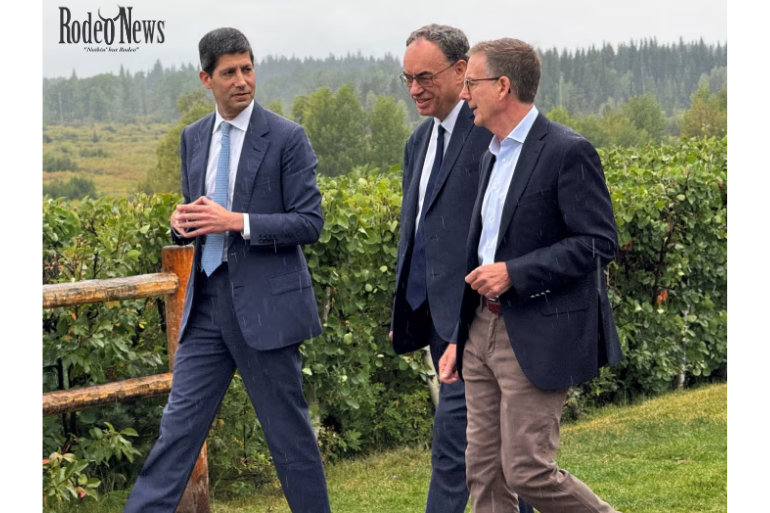
Warsh signals higher rates may be needed to bring U.S. inflation under control after Federal Reserve Chairman Kevin Warsh delivered a notably hawkish message at the Jackson Hole economic symposium.
Warsh stopped short of committing to a rate increase at the Federal Reserve’s September meeting. However, his remarks changed the policy debate by making higher rates appear increasingly plausible if incoming economic data fail to show convincing progress on inflation. TThe Wall Street Journal+1
The shift is important because investors had been looking for clearer signals about Warsh’s strategy since the Fed’s July meeting, when policymakers left interest rates unchanged.
Warsh’s speech offered some of that clarity.
Rather than promising a particular policy move, he emphasized a framework centered on inflation. The message was straightforward: the Fed needs stronger evidence that underlying inflation is moving sustainably toward its 2% target before it can become comfortable with easier monetary policy.
That approach has raised expectations for a possible rate increase at the Fed’s September 15-16 meeting.
Warsh Signals Higher Rates Unless Inflation Improves
The most important change in the policy outlook is the higher hurdle for keeping rates unchanged.
According to The Wall Street Journal, former Fed Vice Chairman Donald Kohn interpreted Warsh’s speech as effectively changing the presumption toward raising rates unless upcoming economic data point in another direction. TThe Wall Street Journal
That does not mean a September hike has been decided.
Warsh deliberately avoided making a commitment. Instead, he stressed that monetary policy would depend on the evidence available before the next meeting.
The distinction matters.
Central banks typically try to avoid locking themselves into a decision weeks before policymakers have seen important inflation, employment and economic-growth data.
For Warsh, however, the challenge is slightly different.
He has previously indicated that the Federal Reserve should rely less on explicit forward guidance and allow financial markets to respond to policymakers’ decisions rather than attempting to tell investors exactly what will happen months in advance.
His Jackson Hole remarks followed that philosophy.
The result was an unusual combination: a clearly more hawkish policy message without a formal promise to raise rates.
Inflation Remains the Fed’s Biggest Problem
The reason Warsh is keeping higher rates on the table is persistent inflation.
Although inflation has eased from earlier peaks, the improvement has not been sufficient for the Fed to declare victory.
Warsh questioned whether recent improvements represented a durable trend. He also argued that inflation remains too high across a broad range of goods and services. TThe Wall Street Journal+1
The Federal Reserve’s target remains 2%.
That target is central to Warsh’s argument.
If policymakers believe inflation is settling above 2%, leaving interest rates unchanged could allow price pressures to become entrenched. If inflation begins accelerating again, the Fed could then be forced to raise rates more aggressively later.
Warsh therefore appears willing to accept the economic costs of tighter monetary policy if that is necessary to restore price stability.
This is why markets interpreted his speech as hawkish.
September Rate Hike Expectations Jump
Financial markets reacted quickly to Warsh’s remarks.
The probability of a September rate increase rose sharply following his speech. One WSJ report said traders lifted the odds of a September increase to roughly 60%, up from about 35% the previous day. TThe Wall Street Journal
Other market measures and analyst estimates have also pointed toward increased expectations for tighter policy.
That does not guarantee a rate hike.
Markets can change rapidly when new inflation or employment data arrive. A surprisingly weak jobs report, softer inflation reading or deterioration in economic activity could alter the calculation before the September meeting.
Still, the change in expectations shows how strongly investors interpreted Warsh’s remarks.
The market is now paying closer attention to whether the Fed will follow through with the tougher stance outlined at Jackson Hole.
Treasury Yields Rise After Warsh’s Speech
Bond markets also responded.
Short-term U.S. Treasury yields moved higher after Warsh emphasized that the Federal Reserve might not be finished fighting inflation. Longer-term yields experienced a more modest increase. TThe Wall Street Journal
The reaction makes economic sense.
Short-term Treasury securities are particularly sensitive to expectations for Federal Reserve policy. If investors believe rates are more likely to rise, yields on shorter-maturity bonds generally adjust quickly.
Longer-term yields depend on a broader combination of factors, including inflation expectations, economic growth, government borrowing and the credibility of monetary policy.
The market response therefore suggests investors believe Warsh has strengthened the Fed’s inflation-fighting credibility.
At the same time, investors remain uncertain about how far the central bank will ultimately go.
Warsh Raises the Bar for Standing Pat
One of the biggest implications of the speech is not simply that rates could rise.
It is that keeping rates unchanged now requires stronger evidence.
That represents an important shift in how investors may interpret upcoming economic reports.
Previously, markets could have viewed weak or mixed data as sufficient reason for the Fed to wait.
After Warsh’s speech, the burden may be moving in the opposite direction.
Policymakers may need clear evidence that inflation is declining before deciding to keep rates unchanged. If that evidence does not appear, a hike becomes easier to justify.
That is why the next few economic reports could be critical.
The August consumer-price report is expected to be particularly important because it will arrive shortly before the September Fed meeting. TThe Wall Street Journal
Employment data will also matter.
The Fed’s challenge is to balance two competing risks.
One is inflation that remains too high.
The other is unnecessarily weakening the labor market and economic growth.
The Fed Faces a Difficult Balancing Act
The U.S. central bank is operating in a complicated environment.
Inflation remains above target, while economic growth has shown signs of moderation. At the same time, financial markets are sensitive to every indication about the future path of interest rates.
That makes Warsh’s position particularly consequential.
If the Fed raises rates in September, borrowing costs could remain elevated for households and businesses. Higher rates can affect mortgages, business investment, consumer credit and financial markets.
But if the Fed waits and inflation proves persistent, policymakers could eventually face an even more difficult situation.
They may have to tighten policy more aggressively later, creating a potentially larger economic shock.
Warsh’s strategy appears designed to prevent that outcome by emphasizing inflation discipline now.
Political Pressure Adds Another Layer
The possibility of a September rate increase also carries political sensitivity.
A rate hike would come only weeks before the U.S. midterm elections. That timing could fuel criticism from political leaders who want lower borrowing costs and faster economic growth.
Warsh has maintained that political considerations do not determine Federal Reserve decisions. TThe Wall Street Journal+1
The issue nevertheless matters for the institution.
The Federal Reserve’s independence has faced heightened scrutiny in recent years. Investors therefore have a strong interest in determining whether monetary-policy decisions are based on economic conditions rather than political pressure.
A rate increase in September could test that perception.
So could a decision to leave rates unchanged.
Either choice is likely to attract political interpretation.
Why Warsh Is Avoiding Traditional Forward Guidance
Another important element of Warsh’s approach is his skepticism toward extensive forward guidance.
Forward guidance became an increasingly important tool for central banks after the global financial crisis. Officials often attempted to influence markets by explaining how long they expected interest rates to remain at particular levels.
Warsh appears less enthusiastic about that approach.
Instead, he has argued for a system in which markets react to actual policy decisions and economic developments.
That makes his communication style different from the approach investors became accustomed to under previous Fed leadership.
It also explains why Warsh can deliver a hawkish speech without explicitly saying that a rate increase is coming.
He wants investors to understand the framework rather than receive a predetermined forecast.
Wall Street Is Watching the Next Inflation Report
The next major test will come from economic data.
Inflation numbers will be crucial because they could determine whether Warsh’s argument for tighter policy gains additional support.
If inflation remains stubbornly high, the case for a September increase could strengthen.
If inflation falls significantly, policymakers may have more room to wait.
Employment data could be equally important.
A sharp deterioration in hiring or a meaningful increase in unemployment could complicate the case for higher rates, even if inflation remains above target.
The Fed is therefore looking at both sides of its mandate.
Warsh’s challenge is to determine which risk is more serious at the September meeting.
What Higher Rates Would Mean for Americans
A Federal Reserve rate increase would not affect every household in exactly the same way.
Borrowers with variable-rate debt could face higher financing costs. Credit-card rates could remain elevated, while businesses may become more cautious about borrowing and investment.
Savers could benefit from higher yields on certain deposits and short-term fixed-income products.
Mortgage rates, however, do not necessarily move one-for-one with the Fed’s policy rate.
Long-term mortgage rates are heavily influenced by Treasury yields and broader financial-market expectations. A Fed hike could therefore produce a smaller mortgage-rate increase than some consumers might expect.
The broader economic effect would depend on how markets interpret the Fed’s decision.
If investors believe a rate increase will successfully restore price stability, longer-term yields could eventually become more stable.
That could help strengthen confidence in the central bank.
The Bigger Question: How High Could Rates Go?
Warsh has not provided a specific path for future rates.
That uncertainty is intentional.
The Fed’s current policy rate is already restrictive enough to slow parts of the economy. The question is whether it is restrictive enough to bring inflation back to 2%.
If policymakers conclude that it is not, further increases could follow.
Analysts at several major financial institutions have already discussed the possibility of rate increases in both September and December if inflation remains stubborn. TThe Wall Street Journal
However, that remains a forecast rather than an official Fed commitment.
The central bank will have to assess incoming data meeting by meeting.
Markets Now Face a New Fed Reality
The significance of Warsh’s Jackson Hole speech goes beyond the possibility of one rate increase.
It changes the way investors may interpret the Fed’s reaction function.
Instead of assuming that policymakers will remain on hold until a clear reason to tighten emerges, investors now have greater reason to consider the opposite possibility.
If inflation does not improve enough, rates could rise.
That shift has already affected Treasury yields and stock markets. TThe Wall Street Journal+1
It also puts greater importance on the credibility of the Federal Reserve’s inflation target.
Warsh is making clear that returning inflation to 2% remains the central bank’s priority.
What Happens Next?
The September Fed meeting will provide the first major test of Warsh’s new approach.
Before then, policymakers will receive additional inflation and employment information.
If the data show persistent inflation, the argument for higher rates will become stronger.
If inflation falls and economic activity weakens, Warsh and his colleagues could decide that holding rates steady is the better option.
For now, however, the message from Jackson Hole is clear.
Warsh signals higher rates are increasingly possible, and investors can no longer assume that the Federal Reserve will simply remain on hold.
Warsh has not promised a September hike.
Instead, he has raised the standard for doing nothing.
That distinction could prove crucial over the next several weeks.
The Federal Reserve is entering a period in which every major economic report could move markets. Investors will be watching inflation, employment, Treasury yields and the dollar for clues about the central bank’s next move.
The biggest question is no longer whether Warsh is concerned about inflation.
He clearly is.
The question is whether the incoming data will give him enough reason to turn that concern into another interest-rate increase.
For markets, households and businesses, the answer could shape the economic outlook for the rest of 2026.