Fed Rate Hikes: 3 Crucial Signals From Warsh
Fed rate hikes are suddenly back at the center of the U.S. economic debate after Federal Reserve Chair Kevin Warsh delivered a notably hawkish message at the Jackson Hole economic symposium.
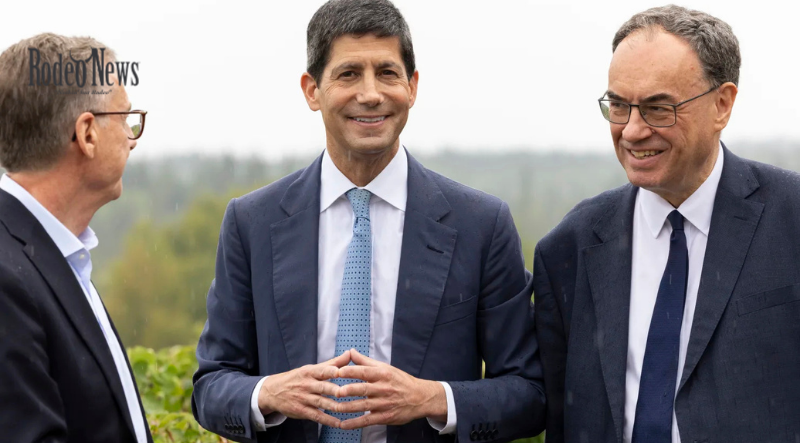
Warsh did not announce a September rate increase. He also avoided the kind of forward guidance that financial markets have traditionally used to anticipate the Fed’s next move. But his message was clear enough to push investors toward a more aggressive view of monetary policy.
The Fed chair said policymakers need to be confident that underlying inflation is moving toward the central bank’s 2% objective at a sufficient pace. If that confidence is missing, he indicated, policymakers still have work to do.
That message changed the market’s expectations almost immediately. The probability of a September rate hike rose sharply after the speech, while Treasury yields moved higher. Barclays has now shifted its forecast and expects two additional 25-basis-point increases this year, in September and December.
For investors, consumers and businesses, the question is no longer simply whether the Fed can cut rates. The bigger question is whether Fed rate hikes could return before the end of 2026.
Fed Rate Hikes Are Back on the Table
Warsh’s Jackson Hole appearance was closely watched because it represented his first major speech at the annual gathering as Fed chair.
His remarks were particularly important because investors had struggled to understand how aggressively he would respond to inflation after taking the chair in May.
At Jackson Hole, Warsh offered a clearer framework.
He argued that recent improvements in inflation have not necessarily demonstrated a lasting improvement in underlying price pressures. That distinction matters because the Fed wants evidence that inflation is moving sustainably toward its 2% target, rather than relying on a handful of favorable monthly reports.
Morningstar’s review of the speech found that economists viewed Warsh’s comments as strongly anti-inflationary, while still stopping short of a commitment to raise rates at the September meeting.
That balance is important.
Warsh is signaling that higher rates remain available as a policy tool. At the same time, he is refusing to tell markets exactly when that tool will be used.
In other words, the Fed is becoming more hawkish without providing a fixed timetable.
1. Inflation Is Now the Fed’s Main Concern
The first major signal from Warsh is the renewed emphasis on inflation.
The Fed has a dual mandate involving price stability and maximum employment. But Warsh’s Jackson Hole speech suggested that inflation currently deserves the greatest attention.
That is significant because the labor market has shown signs of losing momentum. July employment data were weaker than expected, creating a potential argument for caution among policymakers.
Yet Warsh emphasized that the broader economy remains resilient enough that inflation cannot simply be ignored.
Morningstar cited economists who interpreted his comments as putting the burden on incoming inflation data. If upcoming figures remain firm, the case for a rate increase could become considerably stronger.
The message is straightforward: Fed rate hikes are not being considered because the central bank wants to slow an overheating economy at any cost. They are being considered because inflation remains above target.
That distinction could become increasingly important for markets.
If inflation stays stubborn, investors may need to price in higher rates for longer. If inflation falls quickly, however, the Fed could still decide that another increase is unnecessary.
2. September Rate Hike Expectations Have Jumped
The second major signal is visible in financial markets.
Before Warsh’s Jackson Hole speech, traders were assigning substantially lower odds to a September increase. After the speech, those expectations moved sharply higher.
Reuters reported that markets were pricing a 60.4% probability of a September rate hike, according to CME Group’s FedWatch tool, following Warsh’s remarks.
Other market readings have placed the probability in the high-50% range, illustrating just how quickly expectations have shifted.
That does not mean the Fed has decided to raise rates.
Market-implied probabilities change constantly as traders respond to economic data, speeches and movements in Treasury markets. The September decision will ultimately depend on the economic information available to policymakers before the meeting.
Still, the change is meaningful.
Only days earlier, many investors were focused on whether the Fed might eventually lower rates. Now, another rate increase is being treated as a realistic possibility.
That reversal can have major consequences for financial assets.
Higher expected rates can support the U.S. dollar because they increase the potential return on dollar-denominated assets. They can also push short-term Treasury yields higher and create pressure on interest-sensitive stocks.
The market reaction following Warsh’s remarks reflected that dynamic.
3. The Next Inflation and Jobs Reports Could Decide Everything
The third and perhaps most important signal is that Warsh has left the door open to a data-dependent decision.
The Fed’s September meeting is scheduled for Sept. 15-16. Before then, investors will receive additional employment and inflation information that could dramatically change the policy outlook.
That means the Jackson Hole speech should not be interpreted as a guaranteed announcement of a rate increase.
Instead, it established a much higher hurdle for continued patience.
Financial Times reporting noted that upcoming payroll and unemployment data will be particularly important because the labor market has shown signs of weakness even as inflation remains elevated.
This creates a difficult balancing act for the Fed.
If employment deteriorates significantly while inflation cools, policymakers may decide that another rate increase would create unnecessary economic damage.
But if inflation remains stubborn while economic activity stays relatively resilient, the argument for higher rates becomes stronger.
That is why the next several economic reports could be more important than Warsh’s Jackson Hole speech itself.
The speech changed the framework. The data will determine whether the framework leads to action.
Why Barclays Now Expects Two Fed Rate Hikes
One of the clearest signs of the shift came from Barclays.
The investment bank previously expected the Fed to leave interest rates unchanged for the rest of 2026. After analyzing Warsh’s Jackson Hole remarks, however, Barclays changed its forecast.
It now expects two additional 25-basis-point increases, one in September and another in December.
That is a substantial change in expectations.
Barclays described Warsh’s speech as notably hawkish, pointing to his assessment that inflation remains too high and financial conditions are not sufficiently restrictive.
The bank’s forecast does not guarantee that the Fed will follow that path. It does, however, demonstrate how dramatically professional economists are reassessing the outlook.
Other analysts remain more cautious.
MUFG, for example, characterized Warsh’s speech as convincingly hawkish but still noncommittal about the policy path. Its analysts maintained a forecast that the Fed would leave rates unchanged in 2026, while acknowledging that stronger payroll or inflation data could increase the risk of a hike.
That disagreement is important.
There is now a genuine debate over whether Warsh’s speech represents the beginning of a new tightening cycle or simply an attempt to reinforce the Fed’s credibility on inflation.
Treasury Yields React to the Hawkish Message
The bond market has also provided an important signal.
When investors expect higher short-term interest rates, short-dated Treasury yields typically rise because those securities are more directly influenced by expectations for Federal Reserve policy.
Following Warsh’s speech, short-term Treasury yields moved higher as traders increased bets on a September hike. Reuters reported that the two-year Treasury yield climbed significantly following the remarks.
That reaction matters beyond Wall Street.
Treasury yields influence borrowing costs across the economy. Mortgage rates, corporate borrowing costs and other forms of credit can respond to movements in government bond markets.
Therefore, even if the Fed ultimately does not raise its policy rate in September, Warsh’s hawkish message can still tighten financial conditions.
This is one reason central-bank communication is so powerful.
The Fed does not need to change rates immediately to influence markets. Expectations themselves can alter borrowing costs and financial conditions.
What Warsh’s “Quieter Fed” Means for Investors
Another important part of Warsh’s Jackson Hole message was his criticism of traditional forward guidance.
Rather than telling investors what the Fed is likely to do months in advance, Warsh has argued for a more flexible approach that responds to incoming information.
Business Insider described the approach as a move toward a “quieter Fed,” with Warsh emphasizing real-time data instead of rigid policy signaling.
This could fundamentally change how markets interpret Federal Reserve communication.
Under a more predictable approach, investors could use speeches, projections and guidance to estimate the Fed’s next several decisions.
Warsh appears less interested in giving markets that roadmap.
Instead, investors may need to pay closer attention to inflation, employment, Treasury yields, financial conditions and other economic indicators.
That could increase volatility around major data releases.
A weaker-than-expected inflation report could quickly reduce expectations for Fed rate hikes. A stronger report could have the opposite effect.
What Higher Rates Could Mean for Stocks
The prospect of higher rates can be especially challenging for growth-oriented stocks.
When interest rates rise, the present value of future corporate earnings becomes less attractive. Companies that depend heavily on future growth can therefore face greater valuation pressure.
Technology and other high-growth sectors are particularly sensitive to changes in bond yields.
However, the broader stock market does not automatically fall whenever the Fed raises rates.
If higher rates are accompanied by strong economic growth and solid corporate earnings, some companies can continue performing well.
The bigger concern would be a combination of persistent inflation and weakening growth.
That scenario could leave the Fed with fewer attractive choices.
It could either maintain restrictive policy and risk slowing the economy further, or tolerate above-target inflation and risk damaging its credibility.
Warsh’s comments suggest he currently places significant weight on preventing the second outcome.
What Consumers Should Watch
For households, the debate over Fed rate hikes is not simply a Wall Street story.
Higher rates can affect borrowing costs for mortgages, credit cards, auto loans and other forms of consumer credit.
Existing fixed-rate debt is generally less immediately affected by a Fed policy move. Variable-rate borrowing, however, can respond more quickly to changes in financial conditions.
Higher rates can also affect savings accounts and other interest-bearing products.
That means consumers may experience both positive and negative effects from tighter monetary policy.
The broader impact depends on how long rates remain elevated and how financial institutions pass changes through to borrowers and savers.
The Fed Has Not Made a Final Decision
Despite the sharp change in market expectations, it is important not to overstate Warsh’s message.
He did not announce a September rate hike.
Instead, he made clear that the Fed needs stronger evidence that inflation is moving sustainably toward its 2% target.
That leaves policymakers with several options.
They could raise rates in September if inflation remains stubborn.
They could wait for additional information and move later in the year.
Or they could remain on hold if inflation and employment data weaken enough to justify patience.
Reuters reported that investor attention is now focused on the Fed’s Sept. 16 policy decision and the economic reports released before it.
The market therefore faces a crucial few weeks.
What Happens Next?
The next stage of the Fed rate hikes debate will be driven by data rather than speeches.
Investors will closely monitor employment figures, consumer prices and other measures of underlying inflation.
A stronger-than-expected inflation reading could push September rate-hike expectations even higher. Conversely, weaker inflation combined with softer employment could give policymakers a reason to remain patient.
The result is an unusually uncertain policy environment.
Warsh has made his inflation priorities clearer, but he has deliberately avoided promising a specific rate path.
That means investors cannot simply trade on a predetermined Fed roadmap.
Instead, markets will have to respond to each new piece of economic information.
Bottom Line
Kevin Warsh’s Jackson Hole speech has fundamentally changed the conversation around Fed rate hikes.
Three signals stand out: inflation remains the Fed’s primary concern, markets now see a meaningful chance of a September increase, and upcoming economic data will determine whether that possibility becomes reality.
Barclays has gone even further, forecasting two rate increases before the end of the year. Other analysts remain more cautious, arguing that softer inflation and employment data could still keep the Fed on hold.
For now, one thing is clear: expectations for lower interest rates have been pushed aside by a renewed debate over whether the Federal Reserve needs to tighten policy again.
The next major test will come when the economic data arrives.