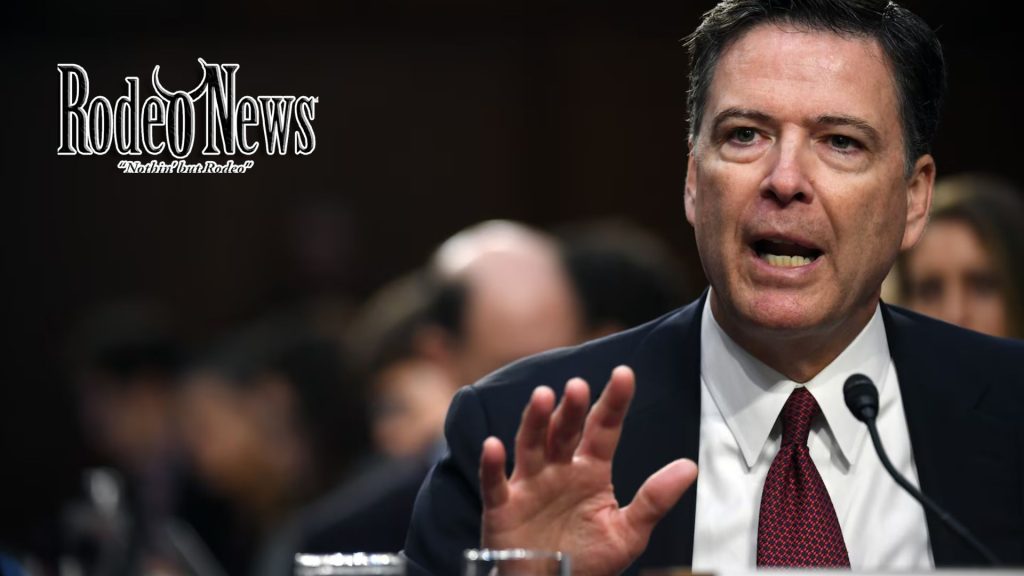
Former FBI Director James B. Comey returned to court on Wednesday as he and his legal team pressed a dramatic challenge: the Justice Department confessed that a full grand jury never reviewed the final indictment against him. That acknowledgment came in a tense hearing before U.S. District Judge Michael S. Nachmanoff — raising serious questions about the constitutional integrity of the case. The Washington Post+2The Washington Post+2
Procedural Breakdown
Prosecutors admitted that when they revised the original indictment — trimming it to two counts after the grand jury rejected a third — they did not resubmit the altered version to the full panel. Instead, only the grand jury foreperson, and one additional juror, signed off on it before it was filed with the court. Washington Post
That means the version of the indictment that’s now the basis of the case never went through the standard full-jury approval process. Judge Nachmanoff pressed the Justice Department hard on this point, even citing a 1969 ruling from the D.C. Circuit that requires full grand jury review.
Claims of Misconduct and Political Influence
Comey’s lawyers, including Michael R. Dreeben and Patrick Fitzgerald, promptly seized on the procedural misstep, arguing that it fundamentally undermines the indictment:
“There is no indictment Mr. Comey is facing,” they asserted.
They further framed the case as a vindictive prosecution, alleging that former President Donald Trump broke down the Justice Department’s traditional independence by directing the charges. According to the defense, Trump’s long-standing public criticism of Comey, his dismissal of a U.S. attorney who declined to press charges, and his open calls — including via social media — for Comey to be prosecuted are proof of animus.
Prosecution Pushback
Justice Department attorneys pushed back, saying Comey has not cleared the extremely high legal bar necessary to throw out the case on vindictiveness grounds. They argue there’s no direct admission that Trump personally ordered the charges and maintain that interim U.S. Attorney Lindsey Halligan made independent prosecutorial decisions.
During the hearing, Assistant U.S. Attorney N. Tyler Lemons called the revision of the indictment a minor technical correction, not a “new indictment.” The Washington Post
Underlying Concerns
The court is already weighing other serious issues:
- Investigative irregularities — A magistrate judge recently raised alarm about “profound investigative missteps” before the grand jury. The Washington Post
- Appointment legitimacy — There’s an ongoing legal challenge to whether Halligan, previously a White House aide with no prosecutorial experience, was lawfully appointed as U.S. attorney. The Washington Post
The Stakes
Comey was indicted in September on two charges: making false statements during a 2020 Senate hearing and obstruction of Congress. The Washington Post He denies the allegations and argues that Trump’s influence over the case represents a dangerous politicization of justice.
If the court finds that the lack of full grand jury approval is a fatal procedural flaw, it could dramatically weaken the government’s case — or even force dismissal