San Diego Mosque Shooting Investigation Takes New Turn
The San Diego mosque shooting investigation has taken a major new turn after a 17-year-old North Carolina girl was charged with three counts of murder and one count of conspiracy in connection with the deadly attack.
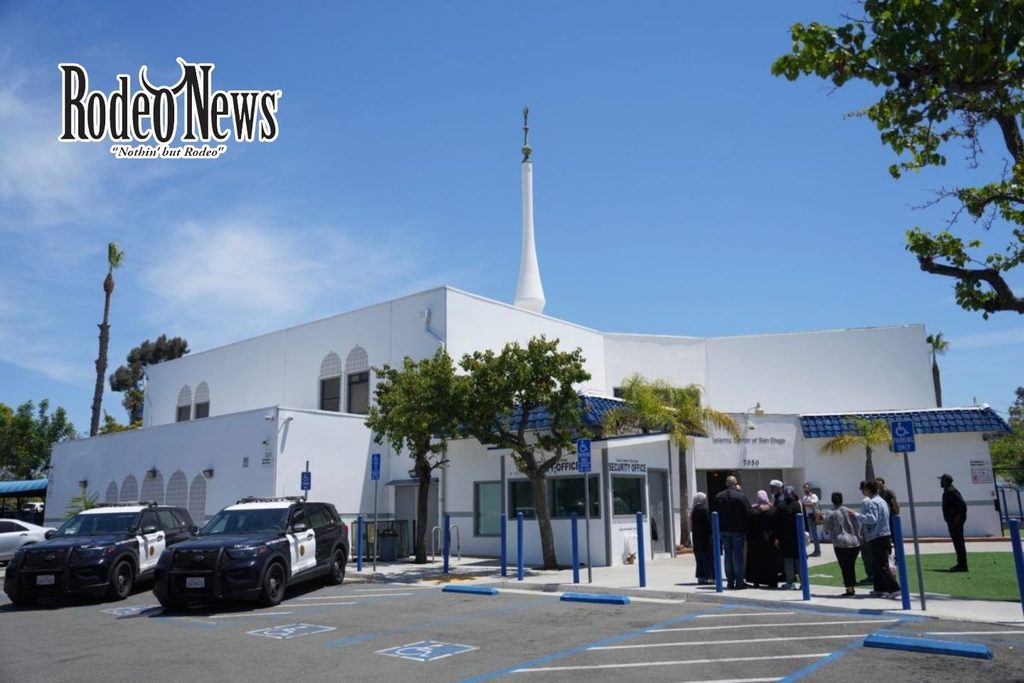
Prosecutors say Sarah L. Santiago, of Winston-Salem, North Carolina, was not physically present when two teenage gunmen attacked the Islamic Center of San Diego in May. However, authorities allege that she agreed beforehand to record and distribute a livestream of the attack and to help circulate writings produced by the shooters.
A grand jury in North Carolina indicted Santiago on Monday, according to Forsyth County District Attorney Jim O’Neill. She was arrested the previous week and is being prosecuted as an adult under North Carolina law.
The case has raised difficult questions about online radicalization, criminal responsibility and the role of people who allegedly support violent attacks from a distance.
Santiago’s attorney, Alan Doorasamy Sr., has said his client is innocent of the allegations. He also said he had not yet received evidence from law enforcement detailing the government’s case against her.
What Happened in the San Diego Mosque Shooting?
The attack occurred May 18 at the Islamic Center of San Diego, where a large number of children were present at the mosque’s school.
Authorities say Cain Clark, 17, and Caleb Vazquez, 18, entered the Islamic Center and opened fire. Three people were killed during the attack: security guard Amin Abdullah, caretaker Mansour Kaziha and Nadir Awad.
The attackers eventually fled the building and later died by suicide in a nearby vehicle, according to investigators.
The security response at the mosque has received particular attention from investigators. Authorities said Abdullah confronted the attackers and initiated a lockdown, helping protect approximately 140 children who were inside the facility.
Officials have credited the people at the mosque with preventing an even larger loss of life.
The shooting therefore became more than an isolated act of violence. Investigators say evidence recovered after the attack pointed toward a wider plan involving additional potential targets.
Teen Accused of Helping Livestream the Attack
According to prosecutors, Santiago’s alleged role was established through the investigation into the digital activity surrounding the shooting.
The indictment says she agreed before the attack to record the livestream as the gunmen carried out the assault. Prosecutors also allege that she distributed the recording and helped publish a manifesto written by the attackers.
Authorities further accuse Santiago of purchasing a patch featuring a white-supremacist symbol and sending it to one of the gunmen before the shooting.
The allegations are significant because Santiago was apparently not at the crime scene. Prosecutors instead argue that her actions demonstrated advance knowledge and participation in the attackers’ plans.
North Carolina law allows prosecutors to pursue aiding-and-abetting charges against someone who allegedly shares the criminal intent of perpetrators and intentionally assists their actions. The penalties can be the same as those imposed on the person who physically commits the crime.
That legal theory is central to the case.
The prosecution does not need to establish that Santiago personally fired a weapon if it can prove the allegations that she knowingly participated in the planned attack and shared the required criminal intent.
San Diego Mosque Shooting Charges Include Three Counts of Murder
Santiago faces three murder counts corresponding to the three people killed during the attack.
The indictment also includes one count of conspiracy.
According to the district attorney, the charges reflect prosecutors’ position that Santiago’s alleged assistance was connected directly enough to the planned violence to make her legally responsible for the deaths.
The case could ultimately become an important test of how criminal law handles people who participate in violent crimes remotely through digital communication.
Modern extremist networks can operate through encrypted platforms, private messaging services and online communities. Investigators say the San Diego case illustrates how individuals can potentially contribute to violent plans without physically traveling to the location where an attack occurs.
However, prosecutors still have to prove the allegations in court.
A criminal charge is not a conviction, and Santiago’s defense has rejected the accusations.
Investigators Say Three People Watched the Livestream
Authorities said three people watched the initial livestream of the attack.
Investigators initially knew that one of the viewers was a woman located in the Eastern time zone. They later identified that person as Santiago, according to O’Neill.
Officials have not said whether the other two viewers have been identified or whether they will face charges.
That distinction could become important as the investigation continues.
Simply watching violent material does not necessarily establish participation in a criminal conspiracy. Prosecutors would need evidence showing that another person knowingly assisted, encouraged or otherwise participated in the criminal conduct.
The district attorney declined to provide further details about the other viewers.
Attackers Allegedly Planned More Violence
The investigation also uncovered evidence suggesting the mosque shooting may have been part of a broader plan.
Authorities said Clark and Vazquez had identified additional potential targets, including a Jewish temple and a predominantly Black high school.
Their writings reportedly contained extreme hostility toward multiple racial, religious and social groups. Investigators said the documents expressed hatred toward Jewish people, Muslims, Black people, women, LGBTQ+ people and political groups across the ideological spectrum.
The writings also reportedly referenced the 2019 Christchurch mosque attacks in New Zealand, in which 51 people were killed.
Officials have described the suspects as being connected to an online extremist environment characterized by intense hatred and radicalization.
Forsyth County District Attorney Jim O’Neill said investigators believe the two gunmen were influenced by an underground online subculture where participants communicate through coded or private platforms.
The investigation is therefore examining not only what happened inside the San Diego mosque but also how the attackers developed their ideology and communicated with others before the violence.
Online Radicalization Becomes a Central Concern
The San Diego mosque shooting case has renewed concerns about how extremist material spreads online.
For years, authorities and researchers have warned that violent movements can use the internet to recruit supporters, circulate propaganda and encourage individuals to imitate previous attacks.
Livestreaming has added another dimension.
When an attacker records violence in real time, the footage can potentially become propaganda itself. Supporters or observers can amplify the material by reposting it, discussing it or distributing accompanying writings.
In this case, prosecutors allege that Santiago played an active role in distributing material connected to the attack.
That allegation distinguishes the case from someone who merely encountered violent content online.
The legal question will be whether prosecutors can demonstrate that Santiago knowingly participated in the plan and understood the consequences of the assistance she allegedly provided.
Prosecutors Pursue Case in North Carolina
Although the shooting happened in California, prosecutors in North Carolina are pursuing charges against Santiago because she lives there.
The decision also has significant legal implications.
Reuters reported that North Carolina authorities chose state charges partly because Santiago can be tried as an adult under state law. If convicted, she could potentially face life imprisonment without parole.
The district attorney has contrasted that potential punishment with possible federal charges, which could carry substantially different sentencing consequences.
Santiago was being held without bond following her arrest.
The case remains at an early stage, meaning the allegations will now move through the North Carolina court system.
Santiago’s Lawyer Says She Is Innocent
Santiago’s defense has challenged the accusations.
Her attorney, Alan Doorasamy Sr., said in a statement that Santiago is innocent of the charges. He also said that he had not received evidence from investigators and did not provide additional details about his client’s alleged relationship with the two shooters.
That defense position is important as prosecutors prepare to establish their case.
The government will have to demonstrate not only that Santiago performed the actions described in the indictment but also that those actions meet the legal requirements for aiding and abetting murder and conspiracy.
The charges themselves do not establish guilt.
As the proceedings continue, evidence concerning digital communications, recordings, online accounts and interactions with the alleged attackers could become central to the case.
Three Victims Remembered After the Attack
The three men killed in the mosque shooting have been remembered for their actions during the attack.
Amin Abdullah, the mosque’s security guard, was credited with confronting the gunmen and helping protect children inside the building.
Mansour Kaziha and Nadir Awad also died during the attack.
Investigators said the actions of those at the Islamic Center helped prevent the attackers from reaching more people.
Authorities have emphasized that approximately 140 children were present at the mosque’s school when the shooting occurred.
The scale of the potential danger has made the deaths especially painful for the local Muslim community.
Tazheen Nizam, executive director of the San Diego office of the Council on American-Islamic Relations, said accountability is necessary for everyone involved while also calling for efforts to dismantle anti-Muslim hatred.
What Happens Next in the San Diego Mosque Shooting Case?
The next phase will focus on the prosecution’s evidence and Santiago’s defense.
Investigators are expected to continue examining communications and online activity surrounding the attack. Authorities may also determine whether additional people played a role in helping the shooters or distributing their material.
The question of the other two livestream viewers remains unresolved publicly.
Meanwhile, prosecutors will have to establish the connection between Santiago’s alleged actions and the murders.
For the victims’ families and the San Diego Muslim community, the case represents another step toward understanding how the attack was planned and how far the network behind it may have extended.
For prosecutors, it represents a broader challenge: determining where criminal responsibility begins when violent plans are organized and supported through digital platforms.
The San Diego mosque shooting investigation has already revealed allegations involving livestreaming, extremist propaganda and planned attacks against multiple communities. The charges against Santiago now place those online activities directly before the criminal justice system.
But the final determination will come from the courts.
Until then, Santiago remains presumed innocent, while prosecutors work to prove that her alleged involvement went beyond online observation and amounted to active participation in a deadly conspiracy.