Full Article
The Mike Moore social media settlement strategy is gaining attention after Meta agreed to a landmark multistate deal over allegations involving the safety of children and teenagers on Facebook and Instagram. Moore, the former Mississippi attorney general who played a central role in the historic legal campaign against Big Tobacco, now believes a similar coordinated approach could help reshape the social media industry.
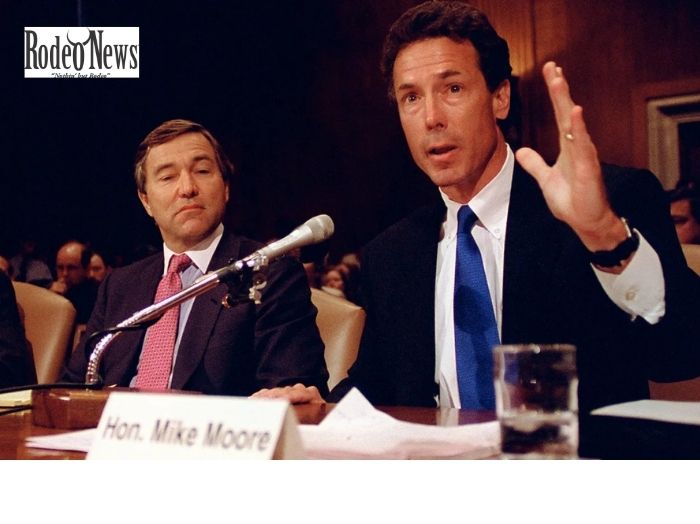
The comparison is striking. In the 1990s, Moore helped lead a legal campaign that eventually produced the $246 billion Tobacco Master Settlement Agreement. Nearly three decades later, he is advising state attorneys general and working with the Attention Initiative as policymakers and lawyers pursue a new wave of cases against technology companies.
The immediate catalyst is Meta’s settlement with a broad coalition of U.S. jurisdictions. The agreement includes billions of dollars in payments and significant changes to how teenagers use Facebook and Instagram. Reuters reported that Meta agreed to pay up to $18 billion over the next decade, including approximately $16.7 billion allocated through the multistate agreements.
But Moore’s bigger goal goes beyond Meta.
He wants the settlement to become a model for broader action across the social media industry.
Mike Moore Social Media Settlement Could Follow the Tobacco Playbook
Moore’s experience with Big Tobacco is central to the current debate.
In 1994, while serving as Mississippi attorney general, Moore filed a lawsuit against tobacco companies over the costs of smoking to the state’s Medicaid system. The litigation helped trigger a broader campaign involving attorneys general from across the country.
That effort ultimately produced the 1998 Tobacco Master Settlement Agreement, under which major tobacco companies agreed to pay states billions of dollars and accept significant restrictions on their marketing practices.
The strategy was notable because it did not rely on a single lawsuit.
Instead, state-level cases created mounting legal, financial and political pressure on the industry.
That history explains why the Mike Moore social media settlement concept is attracting attention today. The idea is not simply to seek damages from one company. It is to use coordinated litigation to encourage industry-wide changes.
The circumstances, however, are considerably different.
Tobacco products are relatively stable. A cigarette sold decades ago remains fundamentally similar to one sold today. Social media is much more complicated.
Platforms constantly change their algorithms, features and business models. They can provide entertainment, communication, education and community while also creating concerns about excessive use, privacy and youth safety.
That difference could make a tobacco-style master settlement much harder to negotiate.
Meta’s $18 Billion Deal Changes the Conversation
The Meta agreement has nevertheless created a significant starting point.
According to Meta’s own announcement, the company reached an agreement with a bipartisan group of state attorneys general covering 52 jurisdictions. The agreement introduces a range of protections for users under 18.
Among the most important provisions are restrictions on how long teenagers can use Meta’s platforms.
The agreement establishes a default two-hour daily limit for teens on Facebook and Instagram. Meta says the limit is cumulative across the two platforms and can only be turned off with parental permission.
There are also nighttime restrictions. By default, teen access is blocked between midnight and 6 a.m.
Notifications will also be muted during school hours, while teenagers will receive prompts after periods of continuous use. Meta says users will receive prompts every 15 minutes and additional reminders when daily usage reaches certain thresholds.
Other provisions address the design of the platforms.
Teenagers will have the ability to select a non-algorithmic feed. They will also be able to turn off autoplay, while likes and reactions will be hidden by default. Meta also agreed to strengthen age-assurance technology and parental controls.
These changes are important because they move the debate beyond simply asking whether social media is harmful.
Instead, regulators are increasingly asking whether technology companies should be required to redesign products to reduce potential harm to young users.
Why Mike Moore Wants a National Public Education Fund
One of Moore’s most notable proposals involves education.
The former attorney general believes legal settlements should include a permanent national public education and prevention program focused on the risks associated with social media.
The reasoning resembles the public-health strategy that followed the tobacco litigation.
The Attention Initiative, which Moore co-leads, is modeled partly on the Truth Initiative, the organization created in the aftermath of the tobacco settlement. The newer group is focused on attention, social media and the potential consequences of addictive digital products.
Moore argues that a national program could be more efficient than having individual states, cities, counties and school districts create separate initiatives.
That distinction could become increasingly important as more lawsuits move through the courts.
Without coordination, different jurisdictions could reach different agreements with different technology companies. The result could be a complicated patchwork of rules.
A national framework, by contrast, could create common expectations for the industry.
The challenge is determining exactly what those expectations should be.
The Biggest Difference Between Tobacco and Social Media
The Mike Moore social media settlement strategy has an obvious historical precedent, but technology presents problems that tobacco did not.
Social media platforms are not inherently one-dimensional products.
Facebook can be used to maintain family connections. Instagram can help creators build businesses. YouTube can provide educational material. TikTok can introduce users to music, news and cultural trends.
The same products can also be designed around engagement.
That creates a difficult regulatory question: Where should the government draw the line between useful technology and harmful design?
Jonathan Caulkins, a professor of public policy at Carnegie Mellon University’s Heinz College, highlighted this problem in comments cited by CNBC. He argued that cigarettes are fundamentally the same type of product, while the future effects of rapidly evolving technologies are much harder to predict.
That uncertainty matters.
A settlement negotiated today could remain in effect for years while artificial intelligence, recommendation algorithms and digital communication continue to evolve.
Rules that make sense in 2026 could become outdated surprisingly quickly.
TikTok and YouTube Could Determine What Happens Next
Another important element of the Meta agreement is its connection to competitors.
Meta has publicly urged TikTok and YouTube to adopt similar protections. The company’s settlement includes a contingent component tied to whether those platforms implement certain measures and make corresponding payments.
That condition could be crucial to Moore’s broader vision.
If only Meta changes its products, teenagers could simply move to another platform.
This is one of the fundamental challenges in regulating social media.
Users do not operate inside a single ecosystem. A teenager might use Instagram, TikTok, YouTube, Snapchat and other applications within the same day.
Therefore, a restriction on one platform may have limited impact if competitors continue offering similar engagement mechanisms without comparable safeguards.
Meta itself has emphasized this argument in its appeal to TikTok and YouTube. The company says consistent industry-wide protections would be more effective because teenagers move between multiple platforms.
That gives regulators another reason to pursue broader agreements.
The Legal Battle Is Far From Finished
The Meta settlement does not end the wider legal fight over social media.
Reuters reported that the agreement covers many states but does not resolve every case involving Meta or other companies. New Mexico and Florida, among others, have continued pursuing their own litigation.
Other technology companies also face lawsuits.
Snap remains a target of litigation involving alleged harms to children. TikTok and YouTube face their own scrutiny, while school districts and other plaintiffs have brought cases involving the effects of social media on young people.
That means the Meta settlement could be viewed as a beginning rather than an ending.
California Attorney General Rob Bonta described the agreement as a floor rather than a ceiling, signaling that the state-level legal campaign could continue beyond the deal with Meta.
For technology companies, that creates a new environment.
Settlements can resolve specific cases, but they can also establish expectations that influence future negotiations.
Will Big Tech Face Its Own Tobacco Moment?
That remains the central question behind the Mike Moore social media settlement debate.
The parallels are clear enough to attract serious attention.
Both industries have faced accusations that their business practices can create significant public-health consequences. Both have been challenged by state attorneys general. Both have faced questions about whether companies knew more about potential harms than they publicly acknowledged.
There is also a strategic similarity.
Rather than waiting for a single federal law to resolve every issue, state attorneys general can use litigation to create pressure from multiple directions.
But there is a major difference in the nature of the products.
Tobacco regulation ultimately focused on a physical product with well-established health consequences. Social media regulation must address algorithms, recommendation systems, notifications, age verification, advertising, parental controls and rapidly changing technology.
That makes a comprehensive settlement much more difficult.
The Role of Parents Could Become More Important
The Meta agreement also places considerable emphasis on parents.
The company says parents will receive new controls and information concerning their teenagers’ usage. Parents can also require certain protective settings and receive alerts related to secondary accounts or interactions with potentially suspicious accounts.
Supporters argue that giving parents greater control is an important part of protecting children.
Critics, however, have raised questions about whether parental controls alone can address problems created by platform design.
There is also the question of age verification.
Technology companies must determine whether users are children or teenagers without creating unnecessary privacy risks. That is a technically difficult problem, particularly when young users may provide inaccurate birth dates or attempt to circumvent restrictions.
Meta says it is strengthening its age-assurance technology and seeking greater cooperation from app stores.
The debate therefore extends beyond social media companies.
App stores, parents, schools, regulators and technology platforms could all become part of the emerging child-safety framework.
AI Adds Another Layer of Complexity
Artificial intelligence could make the regulatory challenge even more complicated.
Social platforms increasingly incorporate AI into recommendation systems, content moderation and conversational products. At the same time, AI assistants and chatbot services are creating new forms of interaction between young people and technology.
Meta has already introduced additional measures involving teen interactions with its AI systems. In July, the company announced plans to alert supervising parents when certain teen conversations with Meta AI indicate potential distress, while also developing additional safeguards.
That development illustrates why technology regulation cannot remain focused exclusively on traditional social networking.
The definition of a “social media platform” is becoming less clear.
Future settlements may need language broad enough to address technologies that do not yet exist.
What Moore’s Strategy Could Mean for the Industry
The significance of the Mike Moore social media settlement strategy ultimately depends on what happens after the Meta agreement.
If other major platforms adopt similar restrictions, the settlement could become a blueprint for industry-wide standards.
If they do not, the legal campaign could become more fragmented, with individual companies negotiating separate agreements with states and other plaintiffs.
There is also the possibility that Congress or federal regulators eventually establish broader national standards.
For now, state litigation is moving faster.
The Meta deal demonstrates that state attorneys general can negotiate substantial financial settlements while also securing changes to the design and operation of digital products.
That combination could prove more influential than the financial penalty alone.
The money is significant, but the lasting impact may come from the product restrictions.
A two-hour daily limit, nighttime blocks, age-assurance systems, parental controls and changes to recommendation features could influence how the industry approaches young users for years.
A New Era of Social Media Accountability
The Mike Moore social media settlement debate represents a broader shift in how society views technology companies.
For years, social media regulation largely focused on privacy, misinformation, competition and content moderation.
The new wave of litigation is increasingly focused on product design and its potential impact on children.
That is a more consequential challenge.
If regulators establish that platforms must actively design products around youth safety, technology companies could face a fundamentally different set of responsibilities.
Moore’s involvement gives the movement an important historical connection.
He helped demonstrate in the 1990s that state-level litigation could force an industry to negotiate on a scale that once seemed unlikely. Now, he is trying to apply some of those lessons to an industry that is far more dynamic and technologically complex.
Whether the tobacco playbook can work again is still uncertain.
But the Meta settlement has already changed the starting point.
The question is no longer whether social media companies can avoid the issue.
It is how far regulators, courts and the industry will go in determining what safer social media should look like.
And if Moore gets his way, the next stage may not be another isolated lawsuit.
It could be a coordinated settlement that reaches across the entire social media industry.
External Sources
- CNBC — Original report on Mike Moore and the social media settlement strategy
- Reuters — Meta’s $18 billion settlement with U.S. states
- Meta Newsroom — Agreement with state attorneys general and teen protections
- Meta Newsroom — Open letter to TikTok and YouTube
Internal Link Suggestions
Because no target website/domain was supplied, I have not invented internal URLs. Add 2–3 links from your own site using anchors such as:
- “social media regulation” → your existing article about technology regulation.
- “Meta and Instagram” → your existing Meta/Facebook/Instagram coverage.
- “online child safety” → your existing article about children’s internet safety.
SEO Notes
- Focus keyword: Mike Moore social media settlement
- Keyword placement: Title, meta description, slug, opening paragraph, H2 section and body
- Title length: Under 60 characters
- Slug: Short and keyword-focused
- Meta description: Under 160 characters
- Article length: 1,200+ words
- Readability: Short paragraphs, active construction and transition words
- Search intent: News + analysis
- Primary topic: Mike Moore’s attempt to apply lessons from Big Tobacco litigation to social media regulation
- Image ALT: Includes the exact focus keyword