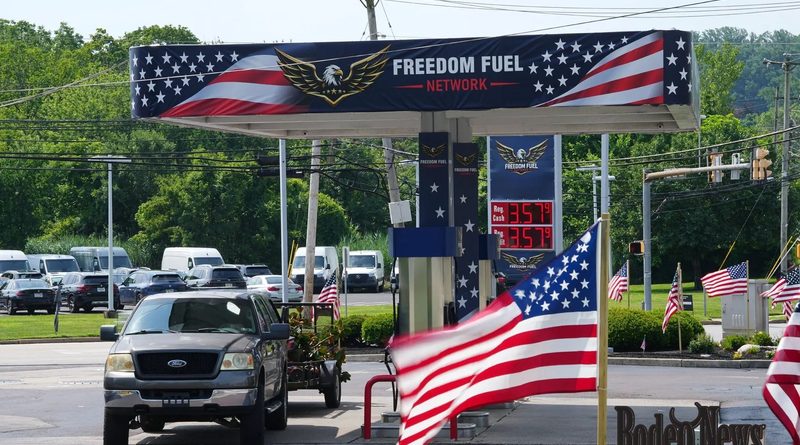
Freedom Fuel Lawsuit Puts Cheap Gas Under Scrutiny
The Freedom Fuel lawsuit has raised fresh questions about how a network of discount gas stations was able to offer unusually low prices after receiving public praise from President Donald Trump.
Mansfield Oil Company of Gainesville, a Georgia-based fuel supplier, filed a federal lawsuit in Pennsylvania accusing New Jersey businessman Syed Kazmi and his company, KRSM Inc., of failing to pay for nearly $4 million worth of gasoline.
According to the lawsuit, KRSM obtained more than 1.1 million gallons of fuel from a Pennsylvania terminal between late May and early July. Mansfield alleges that it was never paid for the gasoline, which was worth approximately $4 million.
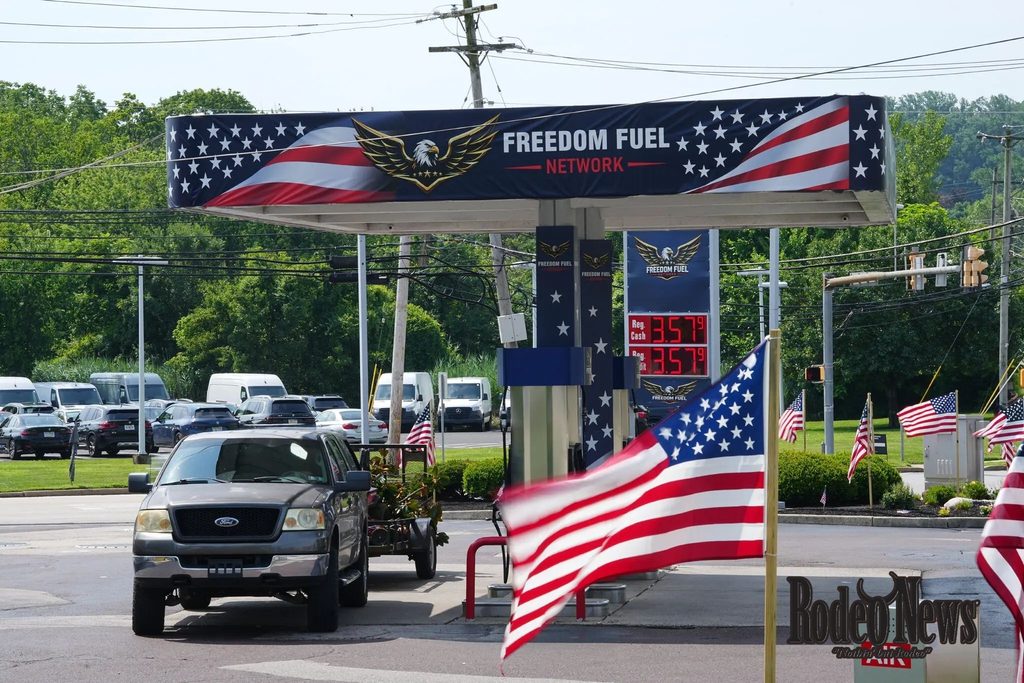
Some of the disputed fuel was reportedly supplied to stations associated with the Freedom Fuel Network, a discount gasoline operation that attracted national attention after Trump promoted its unusually low prices.
The allegations have not been proven in court. KRSM and Kazmi deny wrongdoing and have described the case as an accounting dispute involving allegedly incorrect fuel invoices.
Freedom Fuel Lawsuit Centers on Nearly $4 Million in Gas
The heart of the Freedom Fuel lawsuit is a dispute between Mansfield Oil and KRSM.
Court filings say KRSM purchased roughly 1.12 million gallons of gasoline from a fuel terminal in Delaware County, Pennsylvania. The fuel was obtained through a commercial arrangement that allowed payment after delivery.
Mansfield alleges that the company ultimately failed to make the required payments.
The supplier claims the unpaid balance reached $3,998,868.46. Mansfield is seeking the money through federal court, along with additional amounts including interest and legal costs.
The company argues that KRSM was able to sell the fuel at exceptionally low prices because it did not pay the supplier.
That allegation is particularly significant because Freedom Fuel became known for offering gasoline below prevailing market prices.
However, the lawsuit does not accuse Freedom Fuel Network itself of stealing fuel. It also does not name the network or its individual stations as defendants.
Instead, the case focuses on KRSM and Kazmi.
That distinction is important because the legal allegations against the fuel buyer do not automatically establish wrongdoing by every gas station that may have received the disputed gasoline.
Trump Previously Praised Freedom Fuel Prices
The controversy comes weeks after Trump publicly promoted Freedom Fuel for selling gasoline at unusually low prices.
The network gained attention in early July when several participating stations offered regular gasoline for approximately $3.47 per gallon.
The price was deliberately associated with Trump because he is the 47th president of the United States.
Trump praised the stations publicly, saying they were offering inexpensive gasoline because they supported the country. The pricing attracted significant attention at a time when American consumers were dealing with elevated fuel costs.
Freedom Fuel’s prices were substantially below those of many competing stations in the region.
That immediately raised questions about how the business could maintain such discounts.
Industry observers and media reports had already examined the network’s ownership structure, business model and access to fuel before the lawsuit added another layer of scrutiny.
The Freedom Fuel lawsuit now provides a possible explanation for at least some of the gasoline supplied to participating stations, although the court case has not established that the network itself knowingly received or sold improperly obtained fuel.
Mansfield Oil Says KRSM Did Not Pay
Mansfield’s allegations are straightforward.
The company says KRSM received fuel from its supply account but did not pay the resulting invoices.
According to the lawsuit, the transactions occurred over several weeks between May and July.
The supplier says KRSM collected approximately 150 loads of gasoline. Mansfield alleges that despite the deliveries, payment was never received.
The company eventually turned to federal court to recover the money.
The case was filed on August 19 in the U.S. District Court for the Eastern District of Pennsylvania.
The supplier has characterized the dispute as much more serious than a simple billing disagreement.
Mansfield’s attorney told The Washington Post that some of the fuel was supplied to at least 10 Pennsylvania stations listed on the Freedom Fuel Network website.
However, the exact amount of disputed gasoline that reached Freedom Fuel locations has not been publicly established.
That leaves an important question unanswered: how much, if any, of the nearly $4 million in disputed fuel ultimately contributed to the network’s low retail prices?
KRSM Rejects the Allegations
Kazmi and KRSM have pushed back against Mansfield’s claims.
Their attorney described the case as an accounting dispute involving fuel invoices that were allegedly mispriced by Mansfield.
Kazmi also disputed the amounts Mansfield said were owed.
That response means the central financial dispute remains unresolved.
The lawsuit represents allegations rather than a final judicial determination. Mansfield will have to establish its claims through the legal process, while KRSM will have an opportunity to present its defenses and challenge the supplier’s accounting.
A preliminary order has nevertheless already placed restrictions on KRSM’s finances.
A federal judge ordered Kazmi and KRSM to maintain at least $2.75 million in a bank account while the case proceeds, according to court documents reported by NBC Philadelphia.
The order does not mean Mansfield has won the entire case. Instead, it preserves funds while the court considers the underlying dispute.
Why the Freedom Fuel Lawsuit Matters
The case has attracted attention because of the unusual circumstances surrounding Freedom Fuel.
The network did not simply launch as another regional gas station brand. Its low prices became a national political talking point after Trump’s public endorsement.
The initial $3.47 price was significantly below prices at many competing stations.
That created an obvious economic question.
How could stations sell gasoline so cheaply when fuel itself carries substantial wholesale and distribution costs?
Before the lawsuit, the public explanation focused largely on reduced margins and a desire to provide consumers with lower prices.
Now the Mansfield case has introduced another possibility involving the supply chain.
If the allegations are eventually proven, unpaid fuel could help explain how at least some gasoline entered the network at a cost structure that allowed unusually low retail prices.
But it is important not to overstate the connection.
The lawsuit does not establish that all Freedom Fuel gasoline was unpaid for. It does not establish that Freedom Fuel executives participated in any alleged wrongdoing. And it does not prove that every station in the network benefited from the disputed transactions.
Those questions would require additional evidence.
Freedom Fuel Network Faces More Questions
The Freedom Fuel lawsuit is not the only controversy surrounding the network.
The company’s ownership structure has already attracted scrutiny.
Reports have linked a number of Freedom Fuel locations to businesses associated with Kazmi and his brother, Shamikh Kazmi.
That connection has become more significant following Mansfield’s lawsuit because Syed Kazmi is directly named as a defendant.
The network has also faced questions about regulatory compliance at some participating locations.
The Philadelphia Inquirer previously reported that several New Jersey Freedom Fuel stations had accumulated environmental violations dating back to 2023.
Those issues are separate from Mansfield’s lawsuit.
Nevertheless, together they have increased scrutiny of a gas network that quickly went from an obscure regional operation to a brand promoted at the national political level.
White House Denies Connection to Kazmi
The controversy has also prompted questions about the White House’s relationship with Freedom Fuel.
The administration has sought to distance itself from Kazmi and KRSM.
A White House official told The Washington Post that the Trump administration had “zero contact or dealings” with Kazmi and KRSM.
That statement is significant because Trump personally promoted Freedom Fuel’s low prices.
It suggests that the administration’s public support for the network should not be interpreted as an endorsement of the companies now facing litigation.
The White House has also maintained that the network is privately operated.
The legal dispute therefore creates a complicated picture: a gas network publicly praised by the president is now connected through some of its participating stations to a company facing a multimillion-dollar fuel-payment lawsuit.
That does not establish political wrongdoing, but it explains why the case has attracted unusually high attention.
The $3.47 Gas Price Became a Political Symbol
Freedom Fuel’s pricing strategy was designed to attract attention.
The $3.47 price was a clear reference to Trump’s position as the nation’s 47th president.
At the time, gasoline prices remained a major economic and political issue.
For motorists, lower prices offered immediate financial relief.
For Trump, the stations provided a visible example of his argument that fuel costs could be reduced.
That made Freedom Fuel more than a conventional business story.
The network became part of a broader political debate over gasoline prices, energy policy and the cost of living.
The Freedom Fuel lawsuit has now complicated that narrative.
Instead of focusing exclusively on cheap gasoline, reporters and investigators are examining the supply chain behind the prices and the companies involved in delivering fuel to the stations.
A Judge Has Already Taken Action
Although the underlying allegations remain contested, the court has already taken a financial preservation step.
The judge ordered KRSM and Kazmi to keep at least $2.75 million in a bank account while the lawsuit proceeds.
Such an order is designed to preserve assets that could potentially be used to satisfy a judgment if Mansfield ultimately prevails.
It does not determine the final outcome.
The case will continue through the federal court system, where both sides can submit evidence and arguments.
Mansfield will seek to demonstrate that the fuel was delivered under agreed terms and that KRSM failed to make the required payments.
KRSM, meanwhile, is expected to challenge the supplier’s calculations and argue that the disputed invoices do not accurately represent the amount owed.
What Happens Next in the Freedom Fuel Lawsuit?
The next stage of the Freedom Fuel lawsuit will focus on the financial records surrounding the fuel transactions.
Those records could prove critical.
Investigators and lawyers may examine delivery documents, terminal records, invoices, payment histories and communications between Mansfield and KRSM.
They may also seek to establish where the fuel ultimately went.
That last question could be especially important because of the connection to Freedom Fuel.
If court evidence shows that substantial quantities of the disputed fuel were delivered to Freedom Fuel stations, the case could provide more information about the network’s early supply chain.
However, that still would not necessarily mean that the station operators knew about any alleged failure to pay.
Determining knowledge and responsibility would require separate evidence.
Consumers Are Left With More Questions
For drivers who visited Freedom Fuel stations because of their low prices, the lawsuit creates an unexpected twist.
The appeal of the network was simple: cheaper gasoline.
But the legal dispute has shifted attention from the pump price to the business arrangements behind it.
Consumers generally have little visibility into the complex chain that moves gasoline from suppliers and terminals to retail stations.
The Mansfield case demonstrates how those relationships can become central to the viability of a retail fuel business.
If a supplier is not paid, the financial consequences can eventually reach retailers and consumers.
For Freedom Fuel, the timing is particularly difficult because the network’s brand was built around its ability to offer unusually cheap gasoline.
The Case Is Far From Over
The Freedom Fuel lawsuit is still in its early stages.
Mansfield has made serious allegations, but KRSM disputes them. The courts will ultimately determine whether the supplier is entitled to the nearly $4 million it claims.
Meanwhile, Freedom Fuel itself has not been accused in the lawsuit of wrongdoing.
That distinction should remain central as the case develops.
What is already clear is that the legal dispute has added a major new chapter to the story of a gas station network that became famous for selling fuel at prices that appeared almost too good to be true.
The lawsuit does not yet answer every question about Freedom Fuel’s pricing.
It does, however, provide a new reason to examine the network’s supply chain, ownership relationships and business practices.
As the court case moves forward, financial records could reveal how the disputed fuel was purchased, where it was delivered and whether the unusual economics behind Freedom Fuel’s early prices can be explained.
For now, the case remains a contested legal dispute.
But with millions of dollars in gasoline at the center, a presidential endorsement in the background and a growing network of discount stations under scrutiny, the Freedom Fuel lawsuit is likely to remain closely watched.