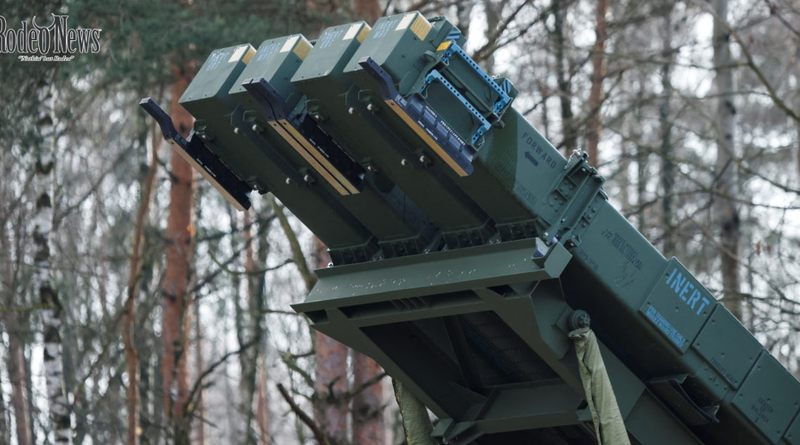
Patriot Missile Stocks in Europe Hit Critical Level
Patriot missile stocks in Europe have fallen to what U.S. and NATO officials describe as a “beyond critical” level, raising fresh concerns about the ability of American and allied forces to defend European territory against a potential Russian missile attack.
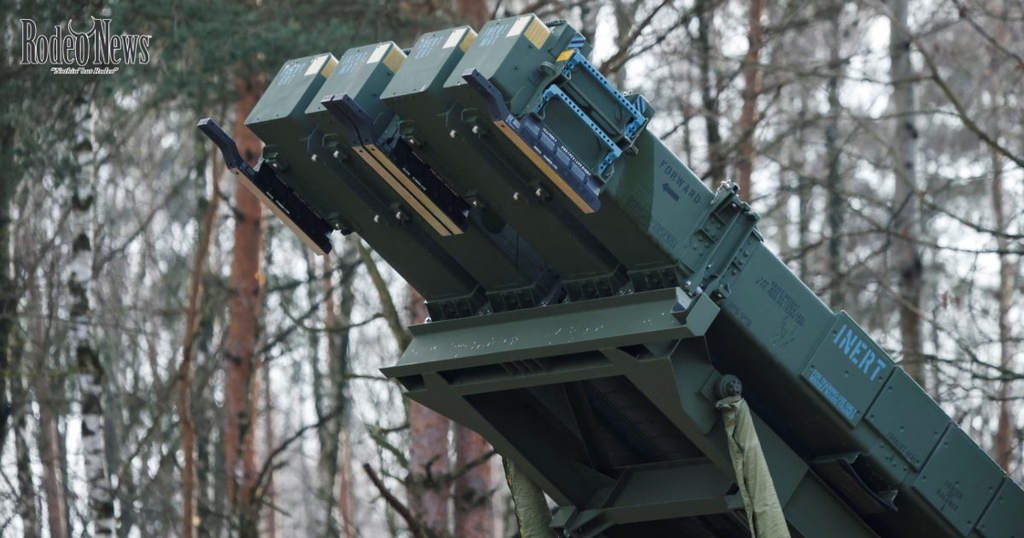
The shortage is largely linked to the ongoing war with Iran, which has required the United States to deploy and use large numbers of advanced missile interceptors in the Middle East. At the same time, years of U.S. military support for Ukraine have further reduced available Patriot supplies.
The warning, reported by The Associated Press and published by PBS NewsHour, highlights a difficult challenge for NATO: the alliance is facing a growing demand for sophisticated air defenses at a time when production cannot quickly replace missiles being fired in combat.
Patriot Missile Stocks in Europe Face a Serious Shortfall
Patriot systems are among the most important air-defense capabilities available to the United States and its NATO allies. They are designed to intercept incoming threats, including high-speed ballistic missiles, before they reach important military or civilian targets.
According to U.S. and NATO officials cited by AP, American forces in Europe do not have enough Patriot interceptors to defend against a sustained ballistic missile attack. The U.S. defense official described the European stockpile as being in a particularly vulnerable position.
That does not mean NATO’s air defenses have disappeared. Rather, the concern is that the number of available interceptors is too small to provide the level of protection planners would want during a prolonged missile campaign.
A single attack could consume multiple expensive interceptors. A sustained attack could require substantially more.
This creates a strategic problem because NATO planners must prepare for the possibility of a major conflict involving Russia while the United States is simultaneously supporting military operations in other regions.
Iran War Has Accelerated the Problem
The biggest recent pressure on U.S. missile inventories has come from the war with Iran.
American forces and regional partners have used advanced air-defense systems to counter Iranian drones and missiles. Patriot interceptors have been moved from other locations toward the Middle East as Washington sought to protect U.S. personnel and allied territory.
The result has been a reduction in the number of interceptors available elsewhere, including Europe.
AP reported that the conflict has reached the six-month mark, making the continuing consumption of precision weapons and defensive interceptors increasingly significant for U.S. military planners.
The pressure is not limited to Patriot missiles. A recent analysis from the Center for Strategic and International Studies said the war has also substantially reduced stocks of other advanced missile-defense weapons, including Terminal High Altitude Area Defense interceptors.
The Atlantic Council similarly reported that the Iran war has depleted a large portion of U.S. Patriot interceptor stocks and warned that replenishment could take years.
Ukraine Has Also Increased Demand for Patriots
The shortage did not begin with the Iran conflict.
Ukraine has relied heavily on Western air-defense systems since Russia launched its full-scale invasion in 2022. Patriot batteries have become particularly important because they can engage some of the most dangerous ballistic missile threats used by Russian forces.
The United States has supplied Patriot systems and interceptors to Ukraine, while other NATO members have contributed systems and ammunition of their own.
Those transfers have helped Ukraine defend cities, military facilities and critical infrastructure. However, they have also reduced the amount of equipment available in Western inventories.
The competing demands illustrate the difficult choices facing NATO governments.
Ukraine needs air defense immediately. American forces in the Middle East need protection from Iranian missiles and drones. Meanwhile, NATO countries must retain enough defensive capacity to deter or respond to a potential Russian attack.
There is no simple way to satisfy all three requirements while production remains limited.
Why Patriot Missile Stocks Matter to NATO
The Patriot system is valuable because ballistic missiles are extremely difficult to intercept.
A ballistic missile can travel at very high speed and may approach its target on a steep trajectory. Defending against such a threat requires sophisticated radar, command systems and highly capable interceptors.
For NATO, that makes Patriot batteries an important part of the broader integrated air-defense network.
The concern is particularly serious around high-value targets such as military headquarters, air bases, power infrastructure and other strategic facilities.
If a country has only a limited number of interceptors, commanders may have to make difficult decisions about which threats to engage.
That could include accepting greater risk against certain incoming missiles in order to preserve interceptors for more dangerous attacks.
Such a calculation can reduce the effectiveness of the overall defensive system.
Europe Has Alternatives, But They Cannot Easily Replace Patriot
European countries are working to strengthen their own missile-defense capabilities.
France and Italy, for example, are developing and deploying the SAMP/T family of air-defense systems. The newer SAMP/T NG is expected to provide a more capable European alternative for certain missile-defense missions.
However, alternatives cannot immediately solve the Patriot shortage.
The European defense industry has its own production constraints, while advanced missile systems require years of development, testing, procurement and deployment.
Recent reporting has also highlighted efforts by European governments to increase production and develop additional sources of air-defense missiles. France has discussed accelerating deliveries and supporting greater European missile production as demand rises.
The challenge is therefore not simply buying another system off the shelf. NATO needs trained crews, launchers, radars, command networks, spare parts and sufficient stocks of interceptors.
U.S. Missile Production Cannot Quickly Close the Gap
One of the biggest concerns is the time required to rebuild depleted inventories.
The United States has been working to increase production of advanced missile-defense weapons, but manufacturing capacity cannot be expanded overnight.
The CSIS analysis cited by AP has warned that replenishing some depleted missile inventories could take several years.
That creates a potential gap between today’s battlefield requirements and tomorrow’s production.
Missiles fired during combat are consumed immediately. A new production facility, by contrast, may take years to reach full output.
The Pentagon has emphasized that the U.S. military retains the capabilities required to conduct its missions. But outside analysts and officials have continued to warn that depleted inventories could reduce flexibility in a prolonged conflict.
NATO Faces a Difficult Strategic Calculation
The shortage comes at a sensitive time for European security.
Russia continues to maintain a large missile and drone arsenal and has demonstrated its ability to conduct sustained attacks against Ukraine.
NATO governments therefore have to consider what would happen if Russia attempted a major missile campaign against alliance territory.
A prolonged attack would place enormous demands on air-defense systems.
Even if NATO had enough launchers and radar coverage, the number of available interceptors could become a limiting factor.
This is why the current situation is more than an issue involving a single weapons system. It raises broader questions about ammunition production, industrial capacity and the ability of Western countries to sustain a high-intensity conflict.
The Bigger Lesson From the Iran War
The depletion of Patriot missile stocks is part of a wider lesson emerging from the Iran conflict: modern warfare can consume sophisticated weapons far faster than peacetime production systems can replace them.
For decades, many Western military industries operated around relatively low peacetime demand. Large inventories were expensive to maintain, while specialized weapons required complex manufacturing processes.
The experience of Ukraine and now the Iran war has exposed the consequences of that model.
Modern air defense is particularly demanding because defenders may need to fire expensive interceptors repeatedly against incoming missiles and drones.
An attacker can sometimes launch relatively inexpensive weapons in large numbers. The defender must decide whether each incoming threat is important enough to justify using a much more expensive interceptor.
That imbalance can put enormous pressure on stockpiles.
What Happens Next?
The immediate priority for the United States and NATO will likely be balancing operational requirements in the Middle East with the need to maintain credible defenses in Europe and elsewhere.
Washington can move additional interceptors between theaters, but every transfer creates a trade-off.
Meanwhile, European governments are under increasing pressure to invest in domestic air-defense production and expand their own inventories.
Ukraine’s continuing requirements add another layer to the problem.
The long-term answer will likely involve increased production rather than simply moving existing missiles from one region to another.
That means expanding factories, securing supply chains, increasing skilled manufacturing capacity and negotiating long-term procurement contracts.
The United States and its allies have already begun taking steps in that direction. But industrial expansion takes time.
A Warning for Europe’s Defense Strategy
The report about Patriot missile stocks in Europe provides a stark reminder that military strength is not determined only by the number of aircraft, ships or missile batteries a country possesses.
Stockpiles matter.
A missile-defense system without enough interceptors can become increasingly constrained during a prolonged conflict.
For NATO, the challenge is therefore to ensure that its air-defense architecture is backed by enough ammunition to withstand sustained attacks.
The Iran war has exposed how quickly advanced missile inventories can be consumed when multiple theaters demand the same weapons.
Ukraine has demonstrated the importance of maintaining strong air defenses against ballistic missiles and drones. Europe now faces the task of preparing its own defenses while the United States remains heavily committed elsewhere.
The immediate shortage may eventually ease as production increases. But rebuilding inventories will take time, and the gap between current demand and future manufacturing capacity remains a serious strategic concern.
For NATO planners, the message is clear: having advanced missile-defense technology is only part of the equation. The alliance also needs enough interceptors to keep those systems operating when the missiles start flying.
Conclusion
The decline in Patriot missile stocks in Europe has become a significant warning sign for NATO’s defense planning.
The Iran war has consumed large quantities of U.S. missile interceptors, while years of assistance to Ukraine have already placed pressure on American and European inventories. Alternative European systems can help, but they cannot immediately replace the capabilities provided by Patriot.
The United States and its allies now face a race between battlefield demand and industrial production.
Until new manufacturing capacity comes online and stockpiles are rebuilt, NATO will have to carefully manage its limited supply of advanced air-defense missiles.
For Europe, the episode could ultimately become a turning point. Greater investment in domestic production, larger ammunition reserves and stronger European air-defense networks may become essential parts of the continent’s security strategy.
The immediate concern, however, remains the same: whether NATO has enough interceptors available today to defend against a serious and sustained missile threat.
Source: PBS NewsHour / Associated Press.
Suggested internal links: Link to your existing articles about NATO, Russia, Ukraine, European defense spending, or the Iran war.
Suggested external links: PBS NewsHour/AP source and credible defense-policy sources such as CSIS and the Atlantic Council.