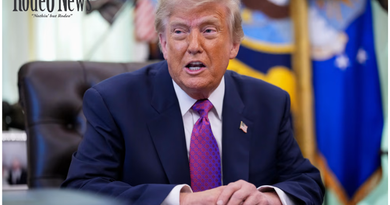
Trump Iran Ceasefire Revealed: 5-Day Ultimatum Shocks Global Stage
The fragile Trump Iran ceasefire is now facing its most critical moment yet, as former U.S. President Donald Trump has issued a stark ultimatum to Tehran: resolve internal divisions within days or risk a return to full-scale conflict. The announcement has intensified global attention, with diplomats and analysts warning that the narrow window for peace may be closing rapidly.
According to multiple reports, Trump has given Iran between three to five days to unify its leadership and present a clear negotiating position. Without that, the ceasefire extension—already hanging by a thread—could collapse.
A Ceasefire Built on Unstable Ground
The current Trump Iran ceasefire emerged after weeks of escalating military confrontation in early April 2026. Brokered with the help of regional mediators, including Pakistan, the agreement initially paused hostilities and opened a pathway toward negotiations.
However, the ceasefire has never been fully stable.
Despite the agreement, tensions persisted in key strategic areas such as the Strait of Hormuz. Military incidents, conflicting interpretations of the deal, and continued economic pressure from the United States have all contributed to an uneasy calm rather than true peace.
Trump’s decision to extend the ceasefire—despite earlier threats of escalation—was seen as a tactical move. It allowed time for diplomacy while maintaining pressure on Iran through a naval blockade and economic strain.
Still, the latest ultimatum signals that patience in Washington may be running out.
Iran’s Internal Power Struggle Complicates Talks
At the heart of the crisis lies a deepening political divide within Iran itself. U.S. officials believe that Tehran’s leadership is fractured, making it difficult to reach or enforce any agreement.
This internal power struggle intensified following the assassination of a key political figure earlier in 2026, which disrupted the balance between competing factions.
As a result, negotiations have become inconsistent and unpredictable.
At one point, Iran signaled willingness to return to talks through intermediaries. Yet within 24 hours, it reversed course, demanding that the United States lift its naval blockade before any further discussions. This back-and-forth has frustrated U.S. negotiators and raised doubts about whether Iran can present a unified position at all.
Trump’s ultimatum directly targets this issue. His administration is essentially demanding clarity: who speaks for Iran, and can they commit to a deal?
The Naval Blockade: Pressure or Provocation?
A central sticking point in the Trump Iran ceasefire is the ongoing U.S. naval blockade.
The blockade has severely impacted Iran’s economy, restricting trade and limiting its ability to export oil—one of its primary sources of revenue. Trump has repeatedly defended the strategy as necessary leverage to force Iran back to the negotiating table.
Critics, however, argue that the blockade undermines the spirit of the ceasefire.
Iranian officials have labeled it an act of economic warfare, insisting that no meaningful negotiations can occur unless the blockade is lifted. Meanwhile, analysts warn that the strategy may harden Iran’s stance rather than soften it.
This disagreement has become one of the biggest obstacles to progress, with both sides refusing to budge.
Diplomacy on the Brink
Efforts to revive negotiations have largely stalled.
A planned round of talks in Islamabad was postponed after Iranian representatives failed to appear, highlighting the ongoing uncertainty within Tehran’s leadership.
Vice President JD Vance, who has been leading diplomatic efforts, was reportedly preparing for renewed discussions before Iran abruptly withdrew. The sudden reversal has fueled concerns that time is running out for a peaceful resolution.
Still, Trump has not abandoned diplomacy entirely.
Officials say the administration is waiting for a clear signal from Iran’s supreme leadership before making its next move. If such a signal does not arrive within the deadline, however, military options remain firmly on the table.
Global Markets React to Ceasefire Uncertainty
The instability surrounding the Trump Iran ceasefire is already having ripple effects across global markets.
Stock markets have shown signs of recovery amid hopes that the ceasefire will hold, but volatility remains high. Oil prices, in particular, have fluctuated sharply in response to developments in the conflict.
Even minor incidents—such as attacks on shipping routes—have caused immediate spikes in energy prices, underscoring the global economic stakes of the situation.
Financial analysts warn that a breakdown in the ceasefire could trigger a broader economic shock, especially if disruptions to oil supply intensify.
Public Pressure and Political Calculations
Back in the United States, the war has sparked growing debate over presidential authority and military engagement.
Lawmakers have questioned whether the administration has the legal authority to continue hostilities without explicit congressional approval. Although recent efforts to limit Trump’s war powers have failed narrowly, the issue remains politically sensitive.
At the same time, public opinion appears divided.
While some Americans support a strong stance against Iran, others are wary of prolonged military involvement. This domestic pressure adds another layer of complexity to Trump’s decision-making as the ceasefire deadline approaches.
What Happens If the Deadline Passes?
The key question now is what will happen if Iran fails to meet Trump’s demands within the given timeframe.
Several scenarios are possible:
- Renewed military strikes: The U.S. could resume or escalate attacks on Iranian targets.
- Extended stalemate: The ceasefire could continue informally, with neither side committing to peace or war.
- Last-minute breakthrough: Diplomatic efforts could succeed just before the deadline.
Experts say the most likely outcome lies somewhere in between—a prolonged period of uncertainty marked by intermittent tensions and limited engagement.
However, the risk of escalation remains high.
A Conflict Defined by Uncertainty
The Trump Iran ceasefire has become a defining example of modern geopolitical conflict: fast-moving, unpredictable, and deeply influenced by internal politics on both sides.
Unlike traditional wars, where clear lines are drawn, this conflict exists in a gray area between war and peace.
On one hand, active fighting has largely paused. On the other, economic pressure, military posturing, and political rhetoric continue to fuel tensions.
This ambiguity makes the situation particularly dangerous.
Without a clear resolution, even small incidents could spiral into a larger conflict.
The Role of International Mediators
Amid the uncertainty, international mediators continue to play a crucial role.
Countries like Pakistan have worked behind the scenes to facilitate dialogue between Washington and Tehran. Their efforts were instrumental in securing the initial ceasefire and remain vital to any future agreement.
However, their influence has limits.
Ultimately, the success of any negotiation depends on the willingness of both the United States and Iran to compromise—something that has so far proven elusive.
Conclusion: A Narrow Path to Peace
As the deadline approaches, the future of the Trump Iran ceasefire hangs in the balance.
Trump’s ultimatum has raised the stakes, forcing Iran to confront its internal divisions while signaling that the United States may not wait much longer for progress.
For now, the world watches and waits.
Whether the coming days bring renewed conflict or a breakthrough in diplomacy will depend on decisions made behind closed doors in Tehran and Washington.
One thing is certain: the window for peace is narrowing, and the consequences of failure could be far-reaching.