
📰 Full Article (1200+ words)
Voyager 1 Shutdown: NASA’s Risky Plan to Save a Dying Spacecraft
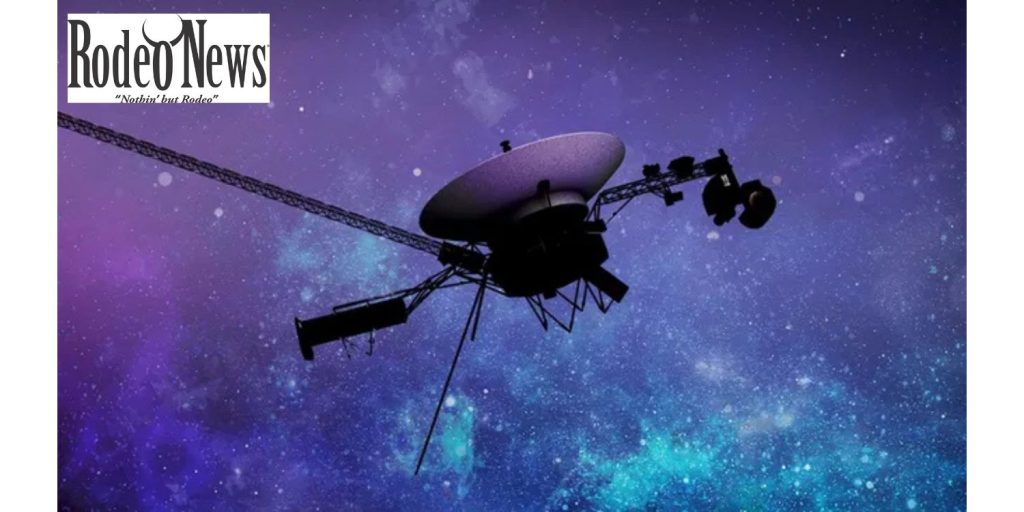
The Voyager 1 shutdown of yet another onboard instrument marks a critical moment in space exploration history, as NASA engineers race against time to keep humanity’s most distant spacecraft alive. Nearly five decades after its launch, the probe is now facing a severe power crisis—forcing scientists to make difficult decisions that could determine how much longer it continues sending data back to Earth.
Meanwhile, a bold and risky solution—known as the “Big Bang” maneuver—is being prepared to extend the spacecraft’s lifespan. However, the success of this strategy is far from guaranteed.
A Historic Spacecraft Nearing Its Limits
Launched in 1977, NASA’s Voyager 1 was originally designed for a five-year mission. Instead, it has become the longest-running space mission in history and the first human-made object to enter interstellar space.
Today, the spacecraft is more than 15 billion miles from Earth, traveling through a region beyond the Sun’s influence. At this distance, even a simple command takes nearly 23 hours to reach the probe, with another 23 hours required for confirmation.
However, despite its remarkable achievements, Voyager 1 is now entering its final operational phase.
Why the Voyager 1 Shutdown Was Necessary
The recent Voyager 1 shutdown involves turning off the Low-Energy Charged Particles (LECP) instrument—one of the spacecraft’s longest-running scientific tools.
This instrument has played a vital role in:
- Measuring cosmic rays and charged particles
- Studying the structure of interstellar space
- Detecting variations in particle density beyond the heliosphere
But NASA engineers made the difficult decision to power it down for one reason: energy survival.
Voyager 1 relies on a nuclear power source known as a radioisotope thermoelectric generator (RTG). Over time, this system naturally loses power as its fuel decays. In fact, the spacecraft loses about 4 watts of power every year, steadily reducing its ability to operate instruments.
More urgently, a recent unexpected power drop in early 2026 pushed the spacecraft dangerously close to triggering its automatic shutdown system.
To prevent that worst-case scenario, engineers acted proactively by shutting down the LECP instrument.
A Spacecraft Running on Its Last Watts
At launch, Voyager 1 generated roughly 470 watts of power. Today, only a fraction of that remains.
As a result:
- Non-essential systems have already been turned off
- Scientific instruments have been gradually retired
- Only two instruments remain operational
These remaining tools are focused on gathering essential data about magnetic fields and plasma waves—key to understanding interstellar space.
Each shutdown is a calculated trade-off:
Less science now means more time to operate later.
The “Big Bang” Maneuver Explained
To buy more time, NASA engineers are developing an ambitious fix called the “Big Bang” maneuver.
Despite its dramatic name, this is not an explosion. Instead, it refers to a simultaneous reconfiguration of multiple spacecraft systems to reduce power consumption.
The plan involves:
- Turning off higher-power components
- Switching to lower-energy alternatives
- Redistributing limited power resources
- Maintaining enough heat to keep systems functional
According to NASA, this approach could potentially extend the mission by several years if successful.
Why the Big Bang Is So Risky
The Big Bang maneuver is considered high-risk for several reasons.
1. No Real-Time Control
Because of the extreme distance, engineers cannot control Voyager 1 in real time. Every command takes nearly two days for a round trip.
2. Complex System Changes
The maneuver requires changing multiple systems simultaneously. A single miscalculation could:
- Disable critical components
- Cut off communication
- End the mission permanently
3. Aging Hardware
Voyager 1’s systems were built using 1970s technology. After nearly 50 years in space, the hardware is:
- Fragile
- Degraded
- Unpredictable
In short, this is not just a software update—it’s a gamble with a historic spacecraft.
Testing on Voyager 2 First
To reduce risk, NASA will first test the Big Bang maneuver on Voyager 2, the probe’s twin spacecraft.
Voyager 2:
- Has slightly more available power
- Is closer to Earth
- Offers a safer testing environment
If the maneuver succeeds, engineers will attempt the same process on Voyager 1 later in 2026.
A Race Against Time
The recent Voyager 1 shutdown has bought engineers roughly one year of “breathing room” to prepare and test the Big Bang strategy.
However, the timeline is tight.
Without further intervention:
- The spacecraft could lose the ability to operate instruments within a few years
- Eventually, it may no longer transmit data at all
Some projections suggest Voyager 1 could continue limited operations into the early 2030s, but only if power is carefully managed.
Why Voyager 1 Still Matters
Even with just two instruments, Voyager 1 remains scientifically invaluable.
It is currently the only spacecraft:
- Operating in interstellar space
- Sending direct measurements from beyond the heliosphere
The data it provides helps scientists understand:
- Cosmic radiation
- Magnetic fields between stars
- The structure of the interstellar medium
These insights cannot be replicated by any other mission.
The Emotional Weight of the Mission
For many scientists and engineers, the Voyager program is more than just a mission—it is a lifetime achievement.
Some of the original engineers have retired, while new generations continue their work. Yet the spacecraft itself remains a symbol of human ingenuity and persistence.
As one report noted, shutting down instruments is not a sign of failure, but rather:
A deliberate effort to keep Voyager alive a little longer.
The Beginning of the End—or a New Chapter?
The Voyager 1 shutdown highlights a harsh reality: even the most successful missions must eventually come to an end.
However, the Big Bang maneuver offers a final chance to extend the spacecraft’s life and continue its journey through interstellar space.
If successful, Voyager 1 could:
- Continue transmitting data into the next decade
- Reach new distance milestones
- Provide even deeper insights into the unknown
If it fails, humanity may lose contact with the most distant object it has ever created.
Conclusion
The Voyager 1 shutdown is not just a technical adjustment—it is a defining moment in space exploration.
Faced with a dying power supply, NASA engineers are making calculated sacrifices to keep the spacecraft alive. At the same time, they are preparing one of the most daring maneuvers in the mission’s history.
The outcome remains uncertain. Yet regardless of what happens next, Voyager 1 has already secured its place as one of humanity’s greatest achievements—continuing to explore the cosmos long after its original mission ended.