Yaroslavl Oil Refinery Strike: 5 Key Facts Revealed
The Yaroslavl oil refinery strike has placed one of Russia’s largest oil-processing facilities at the center of renewed Ukrainian attacks on Russian energy infrastructure. Ukrainian officials said drones targeted the Slavneft-YANOS refinery in Yaroslavl during an overnight operation on Aug. 28, while reports from the area described a fire at the facility.
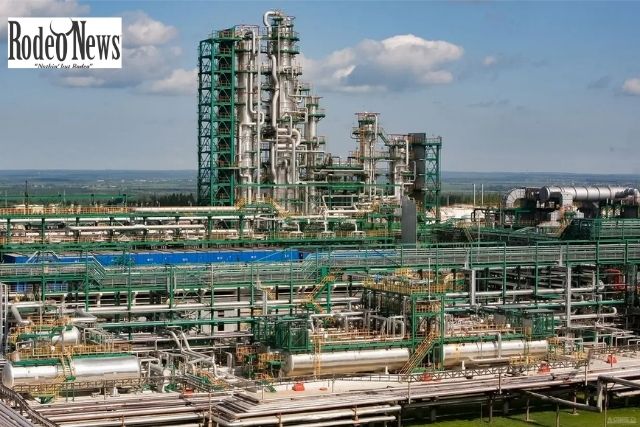
Ukraine’s General Staff confirmed that the refinery was among the targets of the overnight operation and said the extent of the damage was still being assessed. The attack came as Russia and Ukraine continued a heavy exchange of long-range drone and missile strikes.
The incident is significant because YANOS is not a minor industrial site. The refinery is a major component of Russia’s petroleum-processing network, making repeated attacks on the facility part of a broader Ukrainian effort to put pressure on Russian fuel production.
Here are five key facts about the latest Yaroslavl oil refinery strike.
1. Yaroslavl Oil Refinery Strike Targeted Slavneft-YANOS
The reported target was the Slavneft-YANOS refinery, also known as the Novo-Yaroslavl Oil Refinery.
Ukraine’s General Staff identified the facility as the target of the overnight operation. According to the statement, the refinery is one of Russia’s largest oil-processing facilities, while damage was still being assessed after the strike.
The refinery’s location also makes the incident strategically notable. Yaroslavl lies deep inside Russia, well away from Ukraine’s internationally recognized border.
That means an attack on the site demonstrates the continuing reach of Ukraine’s long-range drone campaign.
The facility has also been targeted previously. Ukrainian strikes on the Yaroslavl refinery have been reported several times during 2026, including incidents in March and August.
Repeated attacks matter because damage to energy infrastructure can accumulate over time. Even when a refinery avoids a complete shutdown, individual processing units, storage facilities, pipelines or other equipment can require inspection and repairs.
2. A Fire Was Reported After the Drone Attack
Reports from Russian and Ukrainian sources indicated that a fire broke out following the overnight drone operation.
The Moscow Times reported that Russian and Ukrainian authorities confirmed a drone attack in the region and that a fire occurred at the refinery. Russian regional authorities also reported casualties from falling drone debris elsewhere in Yaroslavl.
However, the precise scale of damage to the refinery remains an important unanswered question.
Ukraine’s General Staff said the damage was still being assessed. Therefore, early reports should not automatically be interpreted as evidence that the entire refinery was disabled.
That distinction is particularly important when assessing attacks on major energy facilities.
A refinery can suffer a localized fire without losing all of its production capacity. Conversely, damage to a strategically important processing unit can have a much greater impact than the size of the visible fire might suggest.
For that reason, satellite imagery, official statements, industrial reports and subsequent information about refinery operations will be important in determining the real consequences of the strike.
3. The Strike Fits Ukraine’s Broader Energy Campaign
The Yaroslavl oil refinery strike did not happen in isolation.
Ukraine has increasingly used long-range drones to attack Russian oil refineries, fuel depots and other energy-related infrastructure. The strategy appears designed to place additional pressure on Russia’s ability to process crude oil and maintain a stable domestic fuel supply.
Recent reporting indicates that Russia has faced increasing fuel pressures as Ukrainian strikes have affected refinery operations. The Guardian reported that Russia has been seeking additional gasoline supplies from abroad as domestic refining capacity has come under pressure.
The pattern suggests that Ukraine is attempting to exploit a vulnerability in Russia’s economy.
Russia remains one of the world’s major oil producers. However, producing crude oil is not the same as turning that crude into gasoline, diesel, aviation fuel and other refined products.
Refining capacity is therefore critical.
When several facilities experience disruptions at the same time, the effects can extend beyond the individual refinery. Fuel distribution can become more difficult, prices can rise, and authorities may need to redirect supplies between regions.
That is one reason Ukrainian attacks on refineries have attracted increasing attention.
4. The Yaroslavl Oil Refinery Is a High-Value Industrial Target
The strategic importance of YANOS comes from its size and role in Russia’s energy system.
Recent reporting has described the refinery as having the capacity to process approximately 15 million metric tons of crude oil annually. Its product range includes gasoline, diesel, aviation-related fuels, lubricants and other petroleum products.
That makes the facility important not only for the commercial energy market but potentially for wider Russian logistics.
Fuel is essential to almost every part of a modern military system. Aircraft, armored vehicles, trucks, ships and generators all depend on reliable energy supplies.
However, it would be misleading to claim that a single refinery strike can immediately cripple Russia’s military.
Russia has multiple refineries, fuel reserves and alternative supply routes. It can also redirect petroleum products between regions.
The significance instead comes from cumulative pressure.
If attacks repeatedly disrupt several refineries, Russia may have fewer options for replacing lost production. That can increase transportation costs and make the overall energy system less flexible.
5. The Attack Comes Amid a Wider Escalation
The latest strike also occurred during a particularly intense period of aerial warfare.
While Ukrainian drones were reportedly targeting sites inside Russia, Russian forces launched another large-scale aerial attack against Ukraine.
Reuters reported that Russian strikes on Aug. 28 damaged warehouses, homes and apartment buildings and affected major logistics infrastructure. At least one person was killed in one of the attacks, while additional casualties and damage were reported in several Ukrainian regions.
The Guardian similarly reported a major Russian attack involving drones and missiles and noted continuing pressure on Russia’s domestic fuel supply following Ukrainian strikes against refineries.
This broader context is important.
The war has increasingly become a contest involving long-range strikes against infrastructure far behind the front lines. Both sides are attempting to disrupt military logistics, industrial production, energy supplies and other systems that support the war effort.
The result is an increasingly important role for long-range drones.
What Does the Yaroslavl Oil Refinery Strike Mean for Russia?
The immediate impact of the strike will depend on the actual damage sustained by the refinery.
If the damage is limited, YANOS could potentially return to normal operations after inspections and repairs. If critical processing equipment was damaged, however, the consequences could last considerably longer.
The most important issue is therefore not simply whether a fire occurred.
It is whether the attack disrupted a major processing unit and, if so, how long that unit remains offline.
This is where the cumulative nature of Ukraine’s campaign becomes important.
Recent reporting has described repeated attacks on Russian refineries and growing difficulties in maintaining fuel supplies. The Guardian reported that Russia has increasingly relied on imports and alternative arrangements as refinery disruptions have intensified.
At the same time, Russia has been taking steps to strengthen protection around critical infrastructure.
Reuters reported that Russian President Vladimir Putin signed a decree allowing the state to temporarily take control of infrastructure considered insufficiently protected against drone attacks. The measure applies to facilities considered important to national security and economic stability.
That response illustrates the growing strategic importance of Ukraine’s drone campaign.
Why Ukrainian Drones Are Targeting Russian Refineries
Ukraine’s long-range drone strategy has several potential objectives.
First, attacks can reduce Russia’s refining capacity.
Second, they can increase the cost of protecting energy infrastructure. Russia may need to deploy additional air-defense systems, electronic warfare equipment, security personnel and other resources around industrial facilities.
Third, disruptions can create economic pressure.
Fourth, attacks can force Russia to move fuel over longer distances or seek additional supplies from other countries.
None of these effects necessarily produces an immediate battlefield breakthrough. Instead, the strategy is based on gradually increasing the costs of sustaining a large-scale war.
The repeated targeting of refineries suggests that Ukraine considers Russian energy infrastructure a major strategic vulnerability.
What Happens Next?
The next stage will be determining how much damage the Yaroslavl facility suffered.
Information about production levels, damaged processing units and the duration of any operational disruption will provide a clearer picture of the strike’s impact.
Independent satellite imagery and commercial energy data could also help establish whether the refinery has resumed normal operations.
Meanwhile, Russia is likely to continue strengthening defenses around its major industrial sites.
The latest Yaroslavl oil refinery strike therefore represents more than another overnight drone incident. It is part of a broader struggle over Russia’s energy infrastructure and Ukraine’s ability to conduct deep strikes against economically important targets.
For Ukraine, the goal appears to be sustained pressure on a critical component of Russia’s war economy.
For Russia, the challenge is increasingly twofold: protecting facilities deep inside its territory while maintaining sufficient fuel production despite repeated attacks.
As the conflict continues, the ability of both sides to protect and disrupt energy infrastructure could become an increasingly important factor in the wider war.
Bottom Line
The Yaroslavl oil refinery strike highlights the growing reach of Ukraine’s long-range drone campaign. The Slavneft-YANOS refinery is a major Russian industrial facility, and a fire was reported after the overnight attack.
Yet the ultimate significance of the incident will depend on the extent and duration of the damage.
If key processing equipment was disabled, the strike could contribute to the broader pressure already facing Russia’s refining sector. If the damage proves limited, its main impact may be the additional cost Russia faces in defending critical infrastructure.
Either way, the attack underscores a major development in the war: Ukraine is increasingly using long-range drones to take the fight far beyond the front line and directly challenge the infrastructure supporting Russia’s economy and military effort.