Ali G Movie Backlash: 5 Shocking Facts
The Ali G movie backlash is growing in the U.K. after the trailer for Sacha Baron Cohen’s new film, Ali G: Who Iz I?, triggered criticism over accusations that the character relies on outdated and racist stereotypes. A campaign is now urging cinemas around the world to refuse to screen the movie when it arrives in theaters in October.
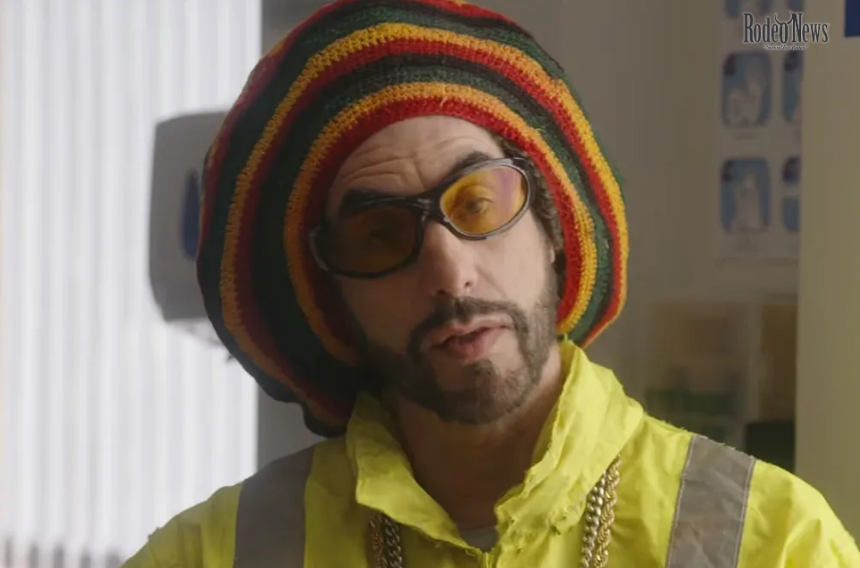
The controversy comes more than two decades after Cohen first introduced Ali G, a deliberately exaggerated character who presents himself as a white man from Staines who imitates elements of Black British and Jamaican culture.
The new film is scheduled for release on October 23, 2026. It marks Ali G’s return to the big screen more than 20 years after Ali G Indahouse.
However, the latest controversy has raised an important question: Can a character built around early-2000s shock comedy still work in 2026?
Here are five major facts behind the Ali G movie backlash.
1. The Ali G movie is facing a worldwide cinema campaign
The backlash escalated after Amazon MGM released the trailer for Ali G: Who Iz I? earlier this week.
The trailer immediately generated criticism online, with some viewers arguing that Cohen’s portrayal has become outdated. Particular attention has focused on Ali G’s appearance, including fake dreadlocks and a Rastafarian-style hat, as well as jokes involving race, class and gender.
The response prompted NewsCord, described as a news comparison and media-monitoring platform, to launch a campaign calling on cinemas not to screen the film.
According to NewsCord, more than 36,000 emails had been sent or requested through the campaign by Friday. The organization is targeting major cinema chains in the U.K., United States, Canada, Australia, Europe and other markets.
The campaign argues that cinemas have the power to decide which films they book and is encouraging members of the public to contact exhibitors directly.
That does not mean the movie has been banned.
Instead, the campaign represents an attempt to influence cinema booking decisions before the film’s October release.
2. Critics say Ali G’s humor has not aged well
The central issue behind the Ali G movie backlash is the question of whether the character’s satire still works.
When Ali G debuted in 1998 on Channel 4’s The 11 O’Clock Show, the character was designed as a satire of a white suburban man who adopts slang, fashion and mannerisms that he associates with Black and Jamaican culture.
The joke was intended to expose ignorance and cultural appropriation.
However, critics have argued for years that audiences can interpret the character differently from the way Cohen intended.
Black British comedians criticized the character as far back as 2000. One contemporary criticism described Ali G as an “alibi for racism,” arguing that the character could allow audiences to laugh at Black culture while maintaining a sense of political correctness.
Those concerns have returned with the new film.
British writer and broadcaster Afua Hirsch has also criticized the revival, arguing that the character’s appearance, language and treatment of women are no longer aligned with contemporary culture.
That creates a difficult problem for the filmmakers.
Ali G was created partly because the character was deliberately inappropriate. But comedy that depends on cultural provocation can change meaning as society changes.
What was viewed as boundary-pushing satire in the early 2000s may be interpreted as simply offensive decades later.
3. Picturehouse did not actually cancel the film
One of the biggest developments surrounding the Ali G movie backlash concerns Picturehouse Cinemas.
NewsCord shared a response from the U.K. cinema chain saying it currently had no plans to screen Ali G: Who Iz I?.
The response quickly circulated online as evidence that the campaign had already convinced a major cinema chain to reject the movie.
But Variety reported that this interpretation was misleading.
According to Variety’s reporting, the Picturehouse message was a standard customer-service response concerning a film that had not yet been booked by the company.
There has been no confirmed decision that Picturehouse is permanently refusing to show the movie.
That distinction matters.
A cinema chain not having a film on its schedule is very different from formally banning or rejecting the film because of a controversy.
Industry representatives have also pushed back against the idea that cinemas should act as censors.
Phil Clapp of the U.K. Cinema Association said cinemas are not supposed to act as “censors or arbiters of public taste.” He explained that exhibitors ultimately decide what to show based on factors including the likely response from their audiences.
The film has also not yet been shown to exhibitors, meaning cinema companies have not necessarily had the opportunity to evaluate the finished movie.
4. Sacha Baron Cohen appears to have expected controversy
The Ali G movie backlash may be intense, but Sacha Baron Cohen appears to have anticipated that reviving the character would generate criticism.
After sharing the trailer, Cohen joked about bringing Ali G back during an era when comedians can face significant consequences for politically incorrect jokes.
His comment was widely interpreted as a deliberate acknowledgment of the controversy surrounding the character.
That approach is consistent with Cohen’s career.
His most famous characters, including Ali G, Borat and Brüno, have generally been designed to provoke reactions.
Rather than avoiding uncomfortable subjects, Cohen has frequently built comedy around them.
The challenge in 2026 is that the cultural environment surrounding those characters has changed considerably.
Social media can amplify criticism within hours.
A trailer that might once have generated newspaper debate can now produce thousands of reactions almost instantly.
The controversy can therefore become part of the marketing cycle before audiences have even seen the full movie.
Whether that helps or hurts the film remains uncertain.
For Cohen, controversy has historically been closely connected to publicity.
But there is a difference between generating attention and generating an audience.
5. The film’s October release is still scheduled
Despite the controversy, Ali G: Who Iz I? remains scheduled for theatrical release on October 23, 2026.
The movie represents Ali G’s first major feature-length return in more than two decades.
Cohen reprises the role and also makes his feature directing debut with the project, according to recent coverage.
The film is being presented as a new mockumentary continuing the style associated with Cohen’s earlier work.
The trailer shows Ali G interacting with real people and public figures while addressing modern topics through the character’s deliberately absurd perspective.
The movie also brings back the mockumentary approach that helped define Cohen’s earlier career.
However, audiences will have to wait until the theatrical release to see whether the full film offers more context for the controversial material shown in the trailer.
That could significantly change the conversation.
A trailer provides only a small sample of a movie.
Some viewers may find that the finished film offers more sophisticated satire than the initial footage suggests.
Others may conclude that the character’s central joke has simply become too dated.
Why the Ali G movie controversy is different in 2026
The return of Ali G raises a broader question about comedy.
Satire depends heavily on context.
A comedian can create a character that behaves badly because the audience is supposed to recognize that behavior as ridiculous. But if audiences interpret the character differently, the intended joke can become difficult to separate from the behavior being mocked.
That debate has surrounded Ali G for years.
Cohen’s defenders argue that the character is not intended to represent Black people. Instead, Ali G is a white character parodying people who appropriate Black culture without understanding it.
Critics counter that the distinction may not always matter when audiences are confronted with racial stereotypes.
That tension is at the heart of the current debate.
The internet has also changed the way people encounter controversial comedy.
A clip can be removed from its original context and shared independently.
Someone who has never watched Da Ali G Show can encounter a short video of the character without understanding the satirical framework behind it.
That can produce very different reactions from those of longtime fans.
Ali G’s history with controversy
Ali G first appeared in 1998 and quickly became one of Cohen’s best-known creations.
The character was deliberately designed to be ridiculous.
Ali G’s exaggerated slang, clothing and supposed knowledge were used to create uncomfortable interviews and expose the assumptions of both the character and the people interacting with him.
The character later received his own series, Da Ali G Show, before appearing in the 2002 movie Ali G Indahouse.
Cohen eventually retired the character from regular use.
His later career focused heavily on other controversial personas, most famously Borat.
The return of Ali G therefore represents a major nostalgia play.
For fans who grew up watching the original character, the new film may feel like a return to a familiar form of comedy.
For younger audiences, however, the character may look very different.
They may encounter the jokes without the cultural context that surrounded the original series.
Could the backlash hurt the film?
The answer is not yet clear.
Controversy can sometimes increase interest in a movie.
A campaign against a film can generate free publicity, social-media discussion and curiosity among people who otherwise would not have heard about it.
That could potentially benefit Ali G: Who Iz I?.
At the same time, a sustained boycott campaign could discourage some audiences and make cinema chains more cautious about booking the film.
Exhibitors are businesses.
They have to consider whether audiences will buy tickets, whether screenings will attract controversy and whether another movie could perform better in the same time slot.
That means the most important test may not be the online debate.
It may be the box office.
If audiences turn out in large numbers, the controversy could ultimately become part of the film’s publicity.
If audiences stay away, cinema chains could have little reason to expand screenings.
What happens next?
The immediate focus will be on the film’s marketing campaign and cinema bookings.
NewsCord is continuing to encourage people to contact major exhibitors, while critics are likely to intensify their arguments as the October release approaches.
Meanwhile, Cohen and Amazon MGM will have to navigate a difficult promotional environment.
The filmmakers could respond directly to the criticism, ignore it or lean into the controversy as part of the movie’s marketing.
So far, Cohen’s public response suggests that he is not particularly interested in retreating from the character’s provocative identity.
The final film may also provide a clearer indication of what Cohen is attempting to say with Ali G in 2026.
Until then, much of the debate will remain based on a relatively short trailer.
The bigger debate over provocative comedy
The Ali G movie backlash is ultimately about more than one film.
It reflects a larger debate over how comedy should deal with race, stereotypes, cultural appropriation and political correctness.
Cohen built his reputation by deliberately crossing boundaries.
His work often depends on audiences feeling uncomfortable before realizing that the discomfort is part of the joke.
But cultural boundaries do not remain fixed.
A joke that was accepted by mainstream audiences 20 years ago can receive a very different response today.
That does not necessarily mean provocative comedy should disappear.
It does mean comedians and filmmakers face a more complicated audience landscape.
For Ali G: Who Iz I?, the question will be whether Cohen can use a character created nearly three decades ago to make audiences laugh while still offering enough satire and context to justify the character’s return.
Ali G movie backlash: What to remember
The controversy surrounding Ali G: Who Iz I? is growing, but the movie has not been officially banned from cinemas.
NewsCord has launched a campaign urging exhibitors to refuse to screen it and says more than 36,000 emails have been sent through the campaign.
Picturehouse’s statement that it currently has no plans to show the movie was widely portrayed as a boycott victory, but Variety reported that the response was a standard reply and does not represent a confirmed decision to reject the film.
The movie remains scheduled for October 23.
For now, the debate is centered on whether Ali G’s provocative style remains effective satire or has become an outdated collection of stereotypes.
The answer will ultimately come from audiences.
When Ali G: Who Iz I? reaches theaters, viewers will have the opportunity to judge the entire film rather than a two-minute trailer.
Until then, the Ali G movie backlash is likely to remain one of the most closely watched controversies surrounding an upcoming comedy release.