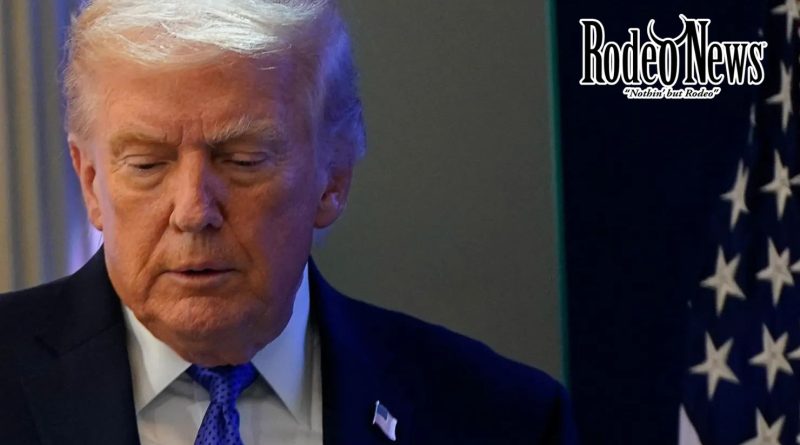
European Markets Slip as New Trump Tariff Policy Sparks Global Trade Uncertainty
European stock markets struggled on Monday as investors responded nervously to fresh developments in U.S. trade policy, with key benchmarks such as the STOXX 600 and Germany’s DAX index edging lower amid renewed uncertainty following President Donald Trump’s announcement of a new global tariff regime.
The pan-European STOXX 600 dipped around 0.3%, reversing some of last week’s gains, while the DAX — Europe’s influential German benchmark — led declines, sliding roughly 0.4–0.7% in early trading.
Trade Policy Back in Focus
Markets had been buoyed last week after the U.S. Supreme Court struck down a broad tranche of former president Trump’s earlier tariff measures, a move that temporarily eased concerns over a potential global trade escalation. However, over the weekend Trump countered by announcing a new global tariff of up to 15%, which injected fresh uncertainty into investor sentiment and raised questions about the future of trade relations with the European Union and other major trading partners.
The renewed tariff announcement has complicated the outlook for exporters and sectors heavily exposed to global trade flows, prompting traders to reassess risk positions. Although the European Commission has indicated that existing trade deals remain unchanged, ambiguity over long-term policy direction has been enough to spur a cautious mood in markets.
Sector Performance and Market Dynamics
Across major European equities, technology and industrial stocks led the downward trend, reflecting concerns over potential slowing global demand if trade tensions escalate further. Conversely, sectors perceived as more domestically focused — such as banking — showed relative resilience, with modest gains in some cases.
Elsewhere, select stocks bucked the broader weakness: Italy’s utility giant Enel climbed roughly 3–4% after unveiling expanded capital expenditure plans, while chemical maker Johnson Matthey suffered steep losses following disappointing unit performance.
Investor Sentiment and FX Movements
The renewed trade policy uncertainty also weighed on foreign exchange and commodities markets. The U.S. dollar weakened against major counterparts — particularly the euro — as traders sought refuge in alternative assets. Precious metals such as gold and silver rallied, reinforcing their safe-haven appeal amid tightening geopolitical and economic uncertainty.
What Analysts Are Watching
Market strategists are now monitoring several key dynamics:
- Tariff implementation and duration: The temporary nature of the new tariff measures — initially set at 15% for a defined period — leaves investors grappling with uncertainty around future extensions or changes.
- Policy responses from the EU: Brussels has said trade agreements remain intact, but hesitation over how to respond if tariffs persist could influence investor confidence.
- Economic data: Upcoming indicators from the eurozone — including business climate surveys and inflation figures — will be watched for signs of resilience or slowdown amid the trade backdrop.
Broader Market Ripple Effects
While European markets retreated on Monday, global equities showed mixed trends. Asian markets rallied in some regions where trade barriers might indirectly benefit local exporters, illustrating the complex interplay of global supply chains and policy shifts. Meanwhile, U.S. stock futures also faced pressure, underscoring the global reach of the trade policy developments.
Investors will also keep an eye on upcoming corporate earnings from major multinational firms sensitive to overseas demand, as well as geopolitical developments that could further sway market sentiment in the weeks ahead.