Giant Ancient Octopus Revealed: A Prehistoric Ocean Predator
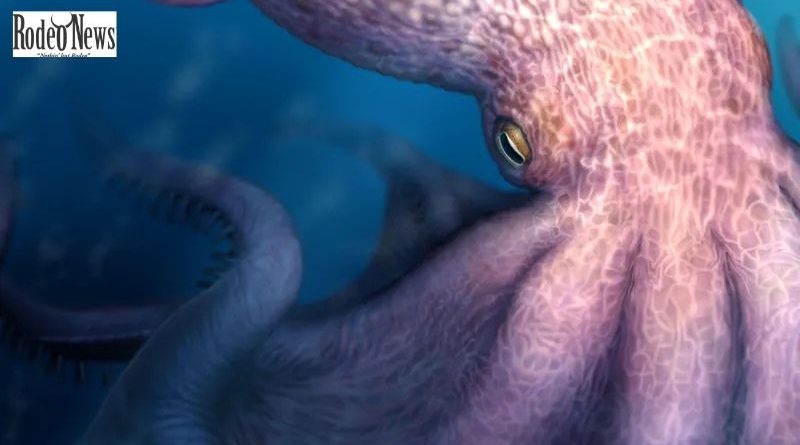
A giant ancient octopus stretching up to 19 meters in length may have ruled Earth’s oceans millions of years ago, according to groundbreaking scientific research. The discovery is reshaping long-held beliefs about prehistoric marine ecosystems and revealing that soft-bodied creatures may have been far more powerful than previously thought.
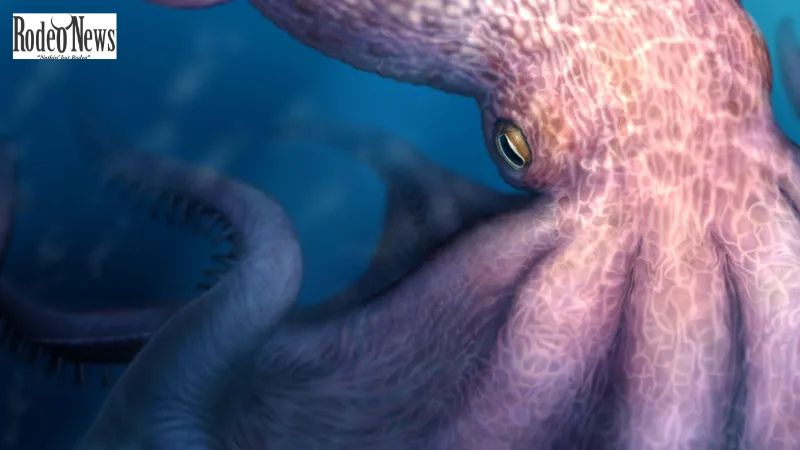
Scientists now say this massive, kraken-like creature was not just a passive inhabitant of ancient seas—it was likely a dominant predator capable of crushing bones and competing with some of the ocean’s most feared reptiles.
A Discovery That Changes Prehistoric Ocean History
The research focuses on fossilized remains of ancient octopus jaws, known as beaks. Unlike bones, soft-bodied animals such as octopuses rarely fossilize, making discoveries like this extremely rare.
However, by analyzing dozens of fossilized beaks, researchers were able to reconstruct the size and behavior of these long-extinct creatures. The findings suggest that the giant ancient octopus could grow up to 19 meters (around 62 feet), making it one of the largest invertebrates ever identified.
This size rivals—and possibly exceeds—many marine predators of the time, including mosasaurs and plesiosaurs.
The Rise of a “Kraken-Like” Predator
The creature has often been compared to the mythical kraken, a legendary sea monster said to drag ships into the depths. While the myth may be exaggerated, the reality appears no less fascinating.
Scientists identified species such as Nanaimoteuthis haggarti, which lived during the Late Cretaceous period, roughly 100 million years ago.
This giant ancient octopus likely used its long, flexible arms to capture prey and a powerful beak to crush shells and bones—similar to modern octopuses, but on a much larger and more dangerous scale.
Evidence Hidden in Fossilized Beaks
The key to this discovery lies in the condition of fossilized beaks. Researchers found that many of these structures showed heavy wear and damage.
This suggests that the giant ancient octopus frequently consumed hard prey, including shellfish and possibly even bone from larger animals.
The wear patterns also revealed something even more intriguing: asymmetry. This means the creatures may have favored one side of their body when feeding—similar to how humans are right- or left-handed.
Such behavior indicates a level of neurological complexity rarely associated with prehistoric invertebrates.
Intelligence Beneath the Waves
Modern octopuses are already known to be among the most intelligent creatures in the ocean. They can solve puzzles, use tools, and even recognize individual humans.
According to research, these ancient relatives may have shared similar traits. Their behavior, inferred from fossil evidence, suggests advanced hunting strategies and adaptability.
Octopuses today possess highly complex nervous systems, with distributed neural networks in their arms that allow independent movement and decision-making.
If their ancient counterparts had similar capabilities, it would mean the giant ancient octopus was not only powerful—but also highly intelligent.
Challenging the Dominance of Marine Reptiles
For decades, scientists believed that prehistoric oceans were dominated almost entirely by large vertebrates such as marine reptiles and sharks.
This new discovery challenges that assumption.
The giant ancient octopus appears to have occupied the top tier of the food chain, competing directly with—or even preying upon—other apex predators.
This changes our understanding of ancient ecosystems. Instead of a hierarchy led solely by vertebrates, it now seems that massive invertebrates also played a crucial role.
How Big Was This Creature Really?
To put things into perspective, the largest modern octopus species—the giant Pacific octopus—typically reaches around five meters in arm span.
By comparison, the giant ancient octopus may have been nearly four times larger.
At lengths approaching 19 meters, it would have dwarfed most modern marine creatures and rivaled even the largest prehistoric predators.
This enormous size would have provided significant advantages:
- Greater reach to capture prey
- Stronger grip using long arms
- More powerful beak force
- Ability to dominate large hunting territories
Life in the Cretaceous Seas
The Late Cretaceous period was a time of incredible biodiversity in Earth’s oceans. Giant marine reptiles, early sharks, and countless smaller organisms coexisted in a complex ecosystem.
The presence of a giant ancient octopus adds a new layer to this environment.
Rather than being overshadowed by reptiles, these creatures may have actively hunted alongside them. Their flexibility, intelligence, and strength would have made them formidable competitors.
Moreover, their soft bodies allowed them to maneuver in ways rigid skeletons could not—squeezing into tight spaces, ambushing prey, and adapting quickly to changing conditions.
Why This Discovery Matters
This discovery is significant for several reasons.
1. It Expands Our Understanding of Evolution
It shows that invertebrates evolved into large, dominant predators—not just small or secondary species.
2. It Highlights Gaps in the Fossil Record
Soft-bodied animals rarely fossilize, meaning many ancient species may still be undiscovered.
3. It Challenges Scientific Assumptions
The idea that only vertebrates dominated ancient oceans is now being reconsidered.
4. It Opens New Research Opportunities
Scientists are now searching for more fossil evidence to better understand these creatures and their role in prehistoric ecosystems.
Could Creatures Like This Exist Today?
While no modern octopus comes close to this size, the discovery raises intriguing questions.
The deep ocean remains one of the least explored parts of Earth. Many species are still unknown, and some scientists believe large, undiscovered creatures could still exist in the depths.
However, there is currently no evidence of anything approaching the size of the giant ancient octopus alive today.
Still, the discovery reminds us that the ocean has always been full of surprises—and may continue to be.
The Future of Ancient Ocean Research
Scientists plan to continue studying fossilized beaks and using advanced techniques such as digital fossil mining to uncover more evidence.
These methods allow researchers to identify hidden fossils within rock samples without physically breaking them apart.
As technology improves, more discoveries like this are expected, potentially revealing even larger or more complex ancient creatures.
Conclusion
The discovery of a giant ancient octopus up to 19 meters long is a remarkable breakthrough in paleontology.
It paints a vivid picture of prehistoric oceans as dynamic, competitive environments where intelligence and adaptability were just as important as size and strength.
Far from being minor players, these massive invertebrates may have stood at the very top of the food chain—true rulers of the ancient seas.
As research continues, one thing is becoming clear: the story of life on Earth is far more complex—and far more fascinating—than we ever imagined.