Starlink Restrictions in Ukraine: 5 Critical Risks
Ukraine’s reported Starlink restrictions have disrupted military drone missions, raising fresh questions about battlefield communications as Russian attacks damage critical energy infrastructure.
Ukraine is facing renewed security concerns after military officials reported unexpected restrictions on Starlink satellite communications, a technology that has become essential to the country’s battlefield operations. The reported changes affected certain terminals used in motion and disrupted some drone missions, according to Ukrainian officials and military representatives cited in reports published on October 14, 2026.
The Starlink restrictions in Ukraine have attracted particular attention because they emerged amid rising tensions between Kyiv and Washington. At the same time, Russian forces continued attacks on Ukrainian energy facilities, leaving hundreds of thousands of people without electricity, according to Ukrainian authorities.
The developments have raised questions about Ukraine’s reliance on privately operated satellite infrastructure during wartime. However, the available reporting does not establish that the restrictions were imposed because of political pressure or that they were directly coordinated with the broader diplomatic dispute.
For Ukraine, the immediate challenge is maintaining reliable communications for military operations while protecting civilians and critical infrastructure from continuing attacks.
1. Starlink Restrictions in Ukraine Disrupt Drone Missions
Ukrainian officials said SpaceX introduced speed restrictions affecting Starlink terminals operating while in motion. Serhii Beskrestnov, an adviser to President Volodymyr Zelenskyy, reported that the restrictions disrupted several military missions.
According to Ukrainian military representatives cited by Reuters, connectivity interruptions occurred during drone flights at speeds considerably below the reported threshold. The interruptions reportedly lasted between 10 and 20 seconds, making aircraft more difficult to control.
The reported restrictions affected some operations involving unmanned aerial vehicles, commonly known as drones. These systems have become increasingly important to Ukraine’s military strategy, supporting reconnaissance, logistics and strikes against military targets.
Even a short communications interruption can create operational difficulties when a remotely controlled aircraft is moving at high speed. Operators may temporarily lose the ability to respond to changing conditions, increasing the risk of a failed mission or the loss of equipment.
Ukraine’s military representatives said some missions had to be canceled. The full operational impact, however, has not been independently established.
SpaceX had not publicly explained the reported restrictions in the available reporting as of October 14.
2. Why Starlink Is Important to Ukraine’s Military
Starlink is a satellite internet network operated by SpaceX, the aerospace company founded by Elon Musk. The system uses satellites in low Earth orbit to provide internet connectivity in locations where conventional communications infrastructure may be unavailable, damaged or unreliable.
Since Russia launched its full-scale invasion of Ukraine in February 2022, satellite communications have played an important role in maintaining connectivity for Ukrainian forces.
Military units need reliable communications to coordinate movements, exchange information and maintain contact across dispersed positions. Conventional cellular networks and terrestrial infrastructure can be vulnerable to power failures, physical damage and electronic interference.
Satellite connectivity provides another communications option. Its usefulness has extended beyond conventional internet access to include logistical coordination and support for certain drone operations.
However, Starlink is a privately operated service. Its availability depends on technical systems, service policies and decisions made by the company operating the network.
That dependence creates a strategic vulnerability for any military that relies heavily on a commercial communications provider. A technical change or service restriction can have consequences beyond ordinary internet access when the technology supports critical operational activities.
The latest reports have therefore renewed discussion about whether Ukraine needs more diversified communications systems to reduce the risks associated with dependence on a single provider.
3. The Political Timing Raises Questions
The reported Starlink restrictions emerged during a period of heightened diplomatic tension involving Ukraine, the United States and Russia.
Washington has pressed Kyiv to limit attacks on Russian oil infrastructure amid concerns about energy markets and the wider war. Meanwhile, Ukrainian officials have continued to seek international support for their country’s defense.
The timing of the satellite restrictions has prompted speculation about whether political considerations played a role. Some Ukrainian figures have suggested that the changes may be connected to the broader political situation.
Nevertheless, timing alone does not establish a causal relationship.
As of October 14, publicly available reporting had not demonstrated that the United States directed SpaceX to impose the restrictions or that the company acted to influence Ukraine’s military strategy. SpaceX’s explanation for the reported changes was also not available in the cited reports.
The distinction matters because satellite communications involve technical, commercial and national security considerations. Without a clear explanation from the company or additional documentary evidence, conclusions about political motives remain unverified.
For Ukraine, the uncertainty itself presents a challenge. Military planners must account for the possibility that a critical commercial service could change its operating conditions with limited notice, regardless of the reasons behind a particular decision.
The incident could consequently strengthen calls for clearer service arrangements, advance notification procedures and alternative communications capabilities.
4. Russian Attacks Intensify Pressure on Ukraine’s Energy System
The reported communications disruption coincided with another serious development: renewed Russian attacks on Ukrainian energy infrastructure.
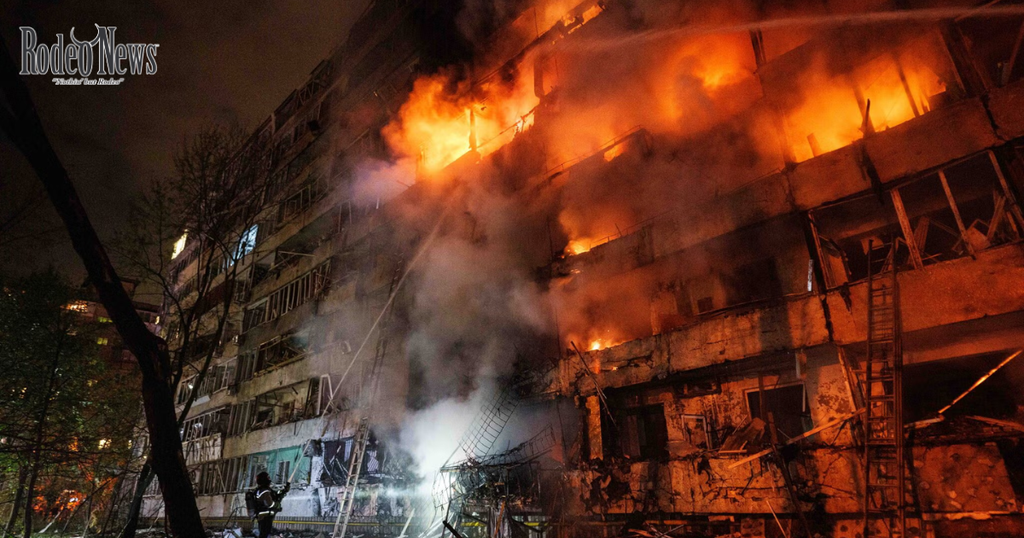
President Zelenskyy said Russian forces launched 39 ballistic missiles and more than 120 attack drones during attacks affecting Kyiv, Kharkiv and other areas. Ukrainian authorities reported significant damage to energy facilities.
According to Ukrainian officials, approximately 600,000 people were without electricity on the morning of October 14. The attacks also affected power-generation facilities and other infrastructure essential to maintaining electricity supplies.
These figures reflect statements attributed to Ukrainian authorities and may be updated as assessments continue.
Damage to energy infrastructure can have consequences far beyond temporary blackouts. Electricity supports hospitals, water systems, communications networks, public transportation and heating services. Prolonged outages can therefore affect both civilian safety and economic activity.
The timing is particularly concerning as Ukraine prepares for colder weather, when demand for heating and reliable electricity can increase.
Repairing damaged facilities may also be difficult when attacks continue. Energy operators must restore equipment, reroute supplies and protect essential services while facing the possibility of additional strikes.
The situation highlights the interconnected nature of Ukraine’s security challenges. Military communications, electricity generation and civilian infrastructure all depend on systems that can be disrupted by technical failures or physical attacks.
5. What the Developments Mean for Ukraine’s Security
The combination of reported Starlink restrictions and attacks on energy infrastructure underscores several risks for Ukraine.
Dependence on commercial technology
Commercial satellite networks can provide capabilities that would otherwise be difficult or expensive to build independently. Yet dependence on a single provider can create vulnerabilities when service availability changes unexpectedly.
Ukraine may need to strengthen arrangements with multiple communications providers and develop backup systems that can operate if one network becomes unavailable.
Diversification would not necessarily eliminate every disruption. Different technologies have their own limitations, costs and vulnerabilities. However, a broader communications portfolio could reduce dependence on a single service.
Pressure on military logistics
Communications disruptions can complicate coordination among units operating across large areas. Where satellite connectivity supports logistical activity, interruptions may affect the movement of supplies and the ability to respond quickly to changing circumstances.
The actual consequences depend on the equipment involved, the duration of an outage and the availability of alternative communications channels.
Greater uncertainty for defense planning
Military planners must prepare for both deliberate attacks and unexpected technology failures. The latest reports illustrate how changes outside a battlefield commander’s direct control can affect operational decisions.
Reliable contingency planning therefore requires alternative systems, clear procedures and regular testing to ensure that backup capabilities remain functional.
Civilian infrastructure remains vulnerable
The reported energy damage also demonstrates that military and civilian security cannot be separated completely. Electricity and communications are essential to the functioning of modern societies.
Protecting these systems requires investment in physical security, repair capacity, emergency supplies and contingency arrangements that allow essential services to continue during disruptions.
6. Could Ukraine Reduce Its Dependence on Starlink?
Reducing dependence on one satellite network is a complex technical and financial challenge.
Ukraine would need to consider a combination of satellite providers, terrestrial communications, secure radio networks and other systems suited to different operational requirements.
European satellite operators could potentially offer additional options, although replacing Starlink’s capabilities would require careful evaluation of coverage, bandwidth, reliability, deployment time and cost.
Different systems are not necessarily interchangeable. A service suitable for routine internet access may not meet the requirements of military communications in a contested environment.
Any alternative would also need to withstand the practical challenges of wartime operations. Equipment must be available in sufficient quantities, personnel must be trained to use it, and the systems must remain functional when power supplies or conventional networks are damaged.
Transitioning between providers can also create logistical complications. Hardware, software, security procedures and operating practices may differ significantly.
For these reasons, a diversified approach would likely require planning and investment rather than a simple, immediate replacement.
The reported disruption could nevertheless encourage Ukraine and its partners to accelerate work on resilient communications infrastructure. European governments may also see a strategic reason to expand satellite capabilities that can support both civilian connectivity and security requirements.
7. What to Watch Next
Several developments will help clarify the significance of the reported restrictions.
First, SpaceX’s explanation will be important. Information about the technical reasons for the changes, the services affected and any plans to restore normal operations could help determine whether the disruption reflects a temporary adjustment or a broader policy change.
Second, Ukraine’s military response will matter. Officials may provide further information about alternative communications arrangements and the extent to which the restrictions affected operations.
Third, the diplomatic response could shape future arrangements. Discussions between Kyiv, Washington, European governments and private technology companies may influence how critical satellite services are managed during conflicts.
Fourth, damage assessments from the energy attacks will remain significant. Authorities will need to establish how quickly damaged facilities can be repaired and whether additional outages are likely.
Finally, independent confirmation will be important. Statements from officials involved in the conflict provide essential information, but assessments of military effects, technical causes and political responsibility may change as further evidence becomes available.
Conclusion: Ukraine Faces a Critical Communications Challenge
The reported Starlink restrictions in Ukraine have highlighted the strategic importance of satellite communications in modern warfare. The disruption of some drone missions, combined with renewed attacks on energy infrastructure, has placed additional pressure on a country already managing extensive wartime challenges.
The episode also raises a broader question about the role of private technology companies in national security. Commercial systems can provide essential capabilities, but reliance on privately controlled infrastructure creates risks when service conditions change unexpectedly.
For Ukraine, improving communications resilience will likely require a combination of technical diversification, clearer arrangements with providers and investment in reliable backup systems.
At the same time, the reported timing of the restrictions should not be mistaken for proof of political coordination. Further information from SpaceX and independent verification will be needed to establish the reasons behind the changes.
What is already clear is that reliable communications and resilient energy infrastructure remain central to Ukraine’s ability to defend itself and protect its population. As the war continues, the country’s ability to maintain both will remain a major security concern.