Tofu Every Day: 7 Surprising Health Benefits Revealed

Tofu every day may be a healthy choice for people looking to increase their protein intake, support heart health, and incorporate more plant-based foods into their diets. Made from soybeans, tofu is a versatile source of protein that provides several essential nutrients while offering an alternative to meat and other animal-based foods.
However, is eating tofu every day actually good for your health? And are the concerns surrounding soy, hormones, and long-term consumption supported by scientific evidence?
Nutrition experts generally consider tofu a nutritious food for most people. Research suggests that soy foods can offer several potential health benefits, particularly when they replace foods higher in saturated fat. Nevertheless, the nutritional value of a tofu-based meal depends on portion size, cooking methods, accompanying ingredients, and the overall quality of a person’s diet.
According to information published by Harvard Health Publishing, tofu provides protein, calcium, manganese, copper, and selenium. Its nutritional composition varies depending on the type of tofu and how it is produced. Harvard Health
Here is what the available evidence reveals about eating tofu regularly, the benefits it may offer, and the precautions worth considering before making it a daily dietary staple.
What Makes Tofu a Healthy Food?
Tofu is made by coagulating soy milk and pressing the resulting curds into blocks. Originating in China, it has become a staple ingredient in many Asian cuisines and is now widely used in plant-based diets worldwide.
Its popularity comes from its nutritional profile, affordability, and versatility.
Unlike many plant-based foods, soy contains all nine essential amino acids that the human body needs to obtain from food. This makes soy a complete protein source.
Tofu also contains unsaturated fats and several minerals important for normal bodily functions. Depending on the coagulant used during production, certain varieties can provide substantial amounts of calcium.
Different types of tofu serve different culinary purposes.
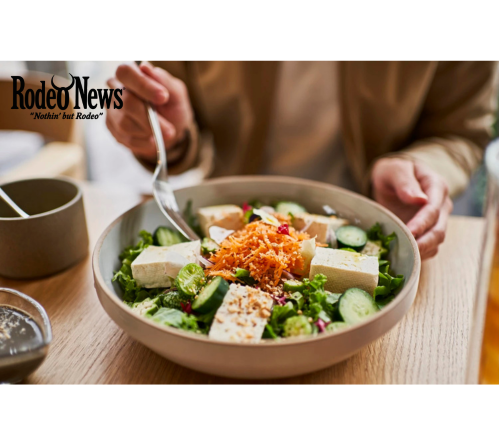
Silken tofu works well in soups, smoothies, sauces, and creamy desserts. Firm and extra-firm tofu are better suited to grilling, baking, stir-frying, and other cooking methods that require the tofu to retain its shape.
These characteristics make tofu a practical option for people who want to eat more plant-based meals without sacrificing protein.
Harvard Health explains that tofu can fit into a heart-conscious eating pattern, especially when used in place of less healthy protein sources. Harvard Health
1. Tofu Every Day Can Help Increase Protein Intake
One of the biggest advantages of eating tofu regularly is its protein content.
Protein plays an essential role in building and maintaining muscles, repairing tissues, producing enzymes, and supporting normal immune function. The body also uses amino acids from dietary protein for numerous other biological processes.
People who reduce their consumption of meat sometimes worry about getting enough protein. Tofu offers a convenient alternative because it can be incorporated into breakfast, lunch, dinner, and snacks.
For example, firm tofu can be added to vegetable stir-fries, while crumbled tofu can replace scrambled eggs in a plant-based breakfast. Silken tofu can also be blended into smoothies to increase their protein content.
The exact amount of protein depends on the product and serving size, so checking the nutrition label is useful.
Why this matters: Eating tofu every day can help people meet their protein needs when it is included as part of a balanced diet.
However, tofu does not need to be the only protein source in a person’s meals. Beans, lentils, nuts, seeds, eggs, dairy products, fish, and other foods can contribute to overall protein intake.
Combining different protein sources also helps create a varied diet that supplies a wider range of nutrients.
2. Tofu May Support Better Heart Health
Heart health is another reason nutrition experts frequently recommend replacing some animal-based protein sources with plant-based alternatives.
Tofu generally contains relatively little saturated fat compared with fatty cuts of meat. It also supplies unsaturated fats, which can be beneficial when they replace saturated fats in the diet.
The distinction is important because overall dietary patterns influence cardiovascular health.
For example, replacing a meal centered on fatty red meat with tofu, vegetables, and whole grains may reduce saturated fat intake while adding a variety of plant-derived nutrients.
Research has also examined whether eating soy foods is associated with a lower risk of cardiovascular disease.
A study published in the journal Circulation in 2020 examined soy intake and heart disease risk among U.S. adults. Harvard T.H. Chan School of Public Health subsequently reported findings from this research indicating that people who ate tofu at least once a week had an 18% lower risk of heart disease than those who rarely ate it. Harvard Chan School of Public Health
Nevertheless, this finding should be interpreted carefully.
An association does not establish that tofu alone prevents heart disease. People who eat tofu regularly may also have other dietary or lifestyle habits that influence their health.
The practical takeaway is straightforward: tofu can be part of a heart-conscious diet, particularly when it replaces foods high in saturated fat.
Cooking methods matter, too. Deep-frying tofu or covering it with salty sauces can change the nutritional profile of an otherwise healthy meal.
Steaming, baking, grilling, or lightly stir-frying tofu with vegetables can be useful alternatives.
3. Tofu Can Provide Important Nutrients for Bone Health
Strong bones require more than calcium alone.
Calcium is a major structural component of bones, while protein, magnesium, phosphorus, and other nutrients contribute to normal bone maintenance.
Tofu can provide some of these nutrients, although the amounts vary considerably between products.
In particular, calcium-set tofu may be a useful source of dietary calcium. During production, manufacturers sometimes use calcium salts to help coagulate soy milk.
Other varieties may contain substantially less calcium.
This is why comparing nutrition labels can be helpful, especially for people who rely on plant-based foods for much of their calcium intake.
Tofu can also be combined with other nutrient-rich foods, including leafy green vegetables, beans, seeds, and calcium-fortified plant milks.
Harvard Health identifies tofu as a useful source of calcium in many diets and notes that the amount depends partly on how the product is made. Harvard Health
For adults concerned about maintaining bone strength as they age, tofu can contribute to a broader nutritional strategy.
However, eating tofu alone cannot guarantee strong bones. Adequate overall nutrition, regular weight-bearing activity, and other lifestyle factors remain important.
People with osteoporosis or other bone-related conditions should discuss their individual nutritional needs with a qualified healthcare professional.
4. Tofu Every Day May Help Support a Healthy Eating Pattern
Tofu can make balanced meals easier to prepare.
Because it has a mild flavor, it absorbs marinades and seasonings well. This allows it to fit into many different cuisines without requiring complicated preparation.
It can be grilled with herbs, simmered in soup, baked with spices, or cooked alongside vegetables.
Tofu can also replace some meat in familiar dishes, including curries, noodle bowls, rice dishes, and stir-fries.
This flexibility can help people introduce more plant-based foods into their diets without making drastic changes to their eating habits.
The key is to consider what tofu replaces.
For example, replacing a heavily processed meat product with tofu and vegetables may improve a meal’s overall nutritional balance.
By contrast, adding tofu to an already adequate meal without considering total portions may simply increase calorie intake.
Harvard Health emphasizes that the benefits of soy foods depend partly on the foods they replace and the quality of the diet as a whole. Harvard Health
Therefore, the goal should not necessarily be to eat as much tofu as possible.
Instead, tofu can serve as one component of a varied eating pattern that includes vegetables, fruits, whole grains, legumes, nuts, and other appropriate protein sources.
5. Soy’s Relationship With Hormones Is More Complicated Than It Seems
Few aspects of tofu nutrition generate as much confusion as the relationship between soy and hormones.
Soybeans contain compounds called isoflavones. These substances are classified as phytoestrogens because their chemical structures allow them to interact with estrogen receptors in the body.
However, phytoestrogens are not identical to the estrogen produced by the human body.
Their biological effects can differ depending on the compound, the person’s physiology, and other factors.
Concerns about soy have sometimes led to claims that eating tofu regularly disrupts hormone levels or causes feminizing effects in men.
These claims often oversimplify the available evidence.
Harvard T.H. Chan School of Public Health explains that research on soy has produced varied findings, but population studies generally suggest neutral or potentially beneficial associations with several health outcomes. It also notes that soy isoflavones can have different effects depending on the circumstances in which they are studied. The Nutrition Source
This distinction matters because findings from laboratory experiments or animal studies do not automatically establish what happens when humans consume ordinary portions of tofu.
For most adults, eating traditional soy foods as part of a balanced diet is generally considered safe.
However, concentrated isoflavone supplements are not equivalent to eating tofu. Supplements can deliver different amounts of particular compounds and should not automatically be assumed to provide the same benefits as whole foods.
People with specific hormone-sensitive medical conditions should discuss questions about soy intake with their healthcare professionals rather than relying on generalized claims.
The bottom line is that current evidence does not support treating ordinary tofu consumption as inherently harmful to hormonal health.
6. Tofu Can Be a Useful Option for Weight Management
Tofu may also fit into an eating pattern designed to support a healthy weight.
It provides protein, which contributes to normal body functions and can help make meals satisfying. Depending on the variety and preparation method, tofu can offer substantial protein without the higher saturated fat content associated with some animal-based alternatives.
Nevertheless, tofu is not a weight-loss food in the sense that eating it automatically causes weight reduction.
Body weight is influenced by multiple factors, including total energy intake, physical activity, sleep, genetics, medications, and underlying health conditions.
The way tofu is prepared also matters.
For example, steamed tofu with vegetables and a moderate portion of rice creates a different meal from deep-fried tofu served with a calorie-dense sauce.
Both dishes can fit into different eating patterns, but their overall nutritional profiles may differ.
People trying to manage their weight can experiment with tofu as a substitute for some higher-calorie ingredients while paying attention to portion sizes and overall dietary balance.
It is also important not to rely on tofu alone for weight management.
A sustainable approach generally includes a variety of nutrient-dense foods, adequate protein, regular physical activity, and eating habits that can be maintained over time.
7. Tofu Offers a Convenient Way to Eat More Plant-Based Foods
Another advantage of tofu is its practicality.
Fresh meat and fish can require careful handling and preparation. Tofu, meanwhile, is often available in packaged blocks that can be stored according to the product’s instructions and prepared in numerous ways.
Its versatility makes it suitable for quick weekday meals as well as more elaborate dishes.
For example, a simple tofu meal can be prepared by pressing firm tofu, cutting it into cubes, and lightly seasoning it with garlic, ginger, and a small amount of soy sauce.
The cubes can then be baked or stir-fried and served with vegetables and brown rice.
For a different option, silken tofu can be added to miso soup or blended into a savory sauce.
Tofu can also be combined with lentils, chickpeas, or other beans to create meals with varied textures and flavors.
These options can help people reduce their reliance on meat without eliminating other food groups unnecessarily.
Plant-based eating does not require every meal to be vegetarian or vegan. Even replacing some meat-centered meals with dishes featuring tofu, beans, or lentils can increase dietary variety.
The broader benefit is the opportunity to build meals around different sources of protein and other plant foods.
Is It Safe to Eat Tofu Every Day?
For most adults, eating tofu every day can be compatible with a healthy diet.
However, daily consumption is not necessary for everyone, and there is no single serving size that is ideal for every person.
Nutritional needs vary according to age, body size, activity level, medical history, and the rest of the diet.
The U.S. National Center for Complementary and Integrative Health reports that soy foods have been studied for a range of potential health effects, including cholesterol levels, blood pressure, bone density, and menopausal symptoms. It also notes that the evidence varies by outcome and that some people experience digestive side effects. NCCIH
Several considerations are worth keeping in mind before making tofu a daily staple.
People With Soy Allergies Should Avoid Tofu
Tofu is made from soybeans, so it is unsuitable for people with a soy allergy.
Allergic reactions can vary in severity. Anyone who suspects a soy allergy should seek appropriate medical assessment and avoid exposure as advised by a healthcare professional.
Watch Sodium and Added Ingredients
Plain tofu is generally a versatile ingredient, but prepared tofu dishes can contain substantial amounts of sodium, added sugar, or oil.
Packaged marinades, commercial sauces, and deep-frying can significantly change the nutritional profile of a meal.
Choosing simple ingredients and adjusting seasonings can help keep meals balanced.
Pay Attention to Digestive Symptoms
Some people experience bloating, gas, or other digestive symptoms after consuming soy foods.
The National Center for Complementary and Integrative Health identifies gastrointestinal symptoms among the potential side effects associated with soy consumption. NCCIH
People who experience persistent or troublesome symptoms should consider their overall diet and seek professional advice if needed.
Consider Medication and Individual Health Needs
Soy foods can interact with certain medications in specific circumstances. For example, the National Center for Complementary and Integrative Health reports a potential interaction involving soy products and monoamine oxidase inhibitors, a class of medications.
Anyone taking prescription medication and considering substantial dietary changes should consult a healthcare professional or pharmacist about relevant interactions. NCCIH
People with specific medical conditions may also require individualized dietary advice.
The general principle is to distinguish ordinary tofu consumption from concentrated soy supplements, which can have different compositions and exposures.
How Much Tofu Should You Eat Each Day?
There is no universal daily tofu requirement.
Some people may enjoy tofu several times a week, while others may choose to include it more frequently as part of a plant-based diet.
The appropriate amount depends on individual protein requirements, total food intake, and the other sources of protein in the diet.
Rather than following a rigid daily target, consider tofu’s role within your overall meals.
For example, a balanced day of eating might include:
- Breakfast: Oatmeal with fruit, nuts, and milk or a fortified alternative.
- Lunch: A tofu and vegetable stir-fry with brown rice.
- Snack: Fresh fruit, yogurt, or a handful of nuts.
- Dinner: Lentil soup or grilled fish with vegetables and whole grains.
This example illustrates how tofu can fit alongside other nutritious foods rather than becoming the sole focus of a diet.
People who eat exclusively plant-based foods may need additional planning to obtain adequate amounts of certain nutrients, depending on their food choices.
A registered dietitian can help develop a dietary pattern that meets individual nutritional needs.
How to Make Tofu Part of a Healthy Daily Diet
If you want to eat tofu regularly, a few practical strategies can make it easier.
Choose the right texture. Firm tofu is convenient for baking, grilling, and stir-frying, while silken tofu works well in soups and blended dishes.
Experiment with seasonings. Garlic, ginger, lemon juice, herbs, chili, and spices can add flavor without requiring large quantities of salt or sugar.
Pair tofu with vegetables. Broccoli, spinach, carrots, peppers, mushrooms, and other vegetables provide a range of nutrients and textures.
Include whole grains. Rice, oats, quinoa, and other whole grains can complement tofu in balanced meals.
Vary your protein sources. Rotate tofu with beans, lentils, peas, nuts, seeds, eggs, fish, dairy products, or other foods that fit your dietary preferences.
Use cooking methods that suit your goals. Baking, steaming, grilling, and moderate stir-frying provide alternatives to deep-frying.
These strategies can help make tofu a practical part of a balanced diet without turning any single food into a nutritional necessity.
The Bottom Line: Is Eating Tofu Every Day Healthy?
For most adults, tofu every day can be a healthy choice when it forms part of a balanced and varied diet.
Tofu supplies complete protein and can provide calcium and other essential nutrients. Research also suggests that soy foods may offer cardiovascular benefits, particularly when they replace some foods higher in saturated fat.
Additionally, tofu’s versatility makes it easier to prepare plant-based meals that are satisfying, convenient, and adaptable to different cuisines.
However, the benefits depend on the broader dietary pattern. Tofu cannot compensate for an otherwise unbalanced diet, and eating it every day does not guarantee weight loss, stronger bones, or protection against disease.
People with soy allergies, persistent digestive symptoms, or specific medical concerns should seek appropriate guidance about their dietary choices.
For everyone else, the most practical approach is to enjoy tofu in reasonable portions, prepare it in ways that suit individual nutritional goals, and combine it with a wide variety of other nutritious foods.
Ultimately, tofu does not need to be a miracle food to deserve a place on the plate. Its nutritional value, flexibility, and ability to replace less healthy protein choices make it a useful option for many people seeking to improve their everyday eating habits.