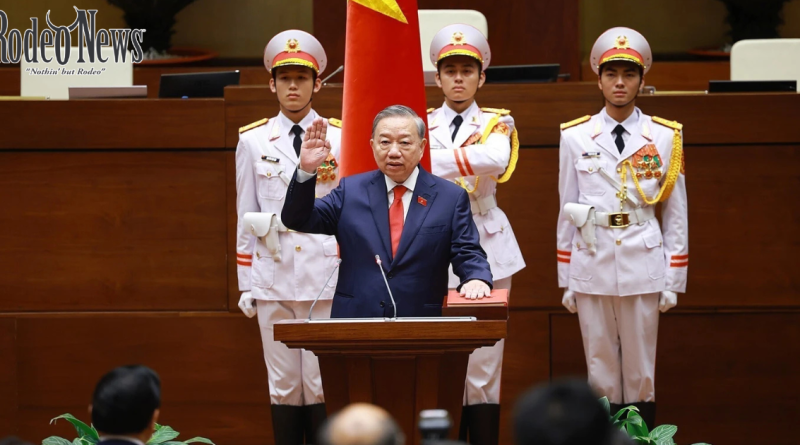
Vietnam President To Lam Power Shift Shocking Move Reshapes Leadership
The rise of Vietnam President To Lam marks one of the most significant political shifts in the country’s modern history. In a unanimous decision by the National Assembly, To Lam—already serving as General Secretary of the Communist Party—has now assumed the presidency, consolidating control over both the party and the state.
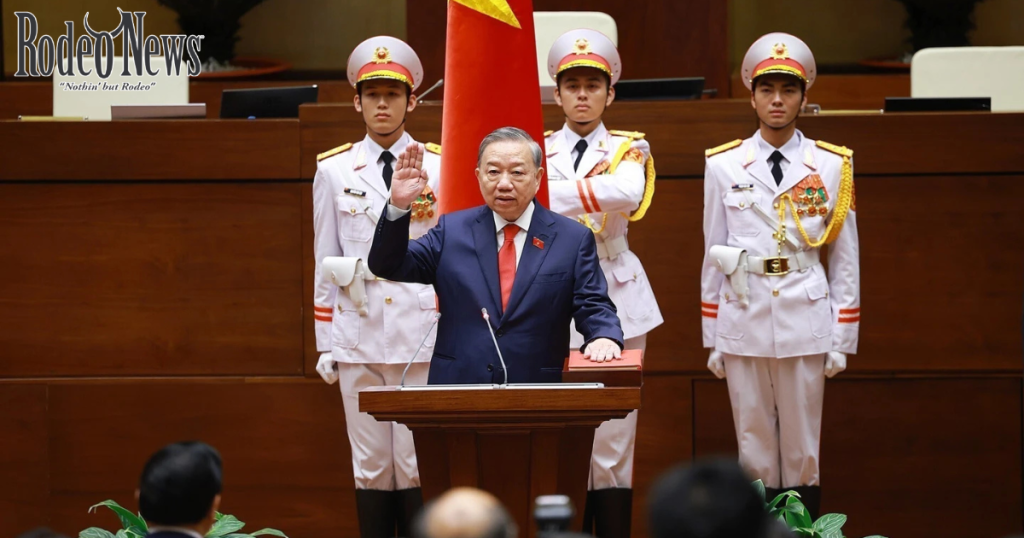
This unprecedented move signals a departure from Vietnam’s long-standing leadership model and introduces a new era of centralized authority. Analysts say the development could reshape governance, economic policy, and Vietnam’s global positioning for years to come.
A Historic Break From Collective Leadership
For decades, Vietnam operated under a system of “collective leadership,” where key roles—including party chief, president, and prime minister—were divided among different individuals.
However, the appointment of To Lam as president while retaining his role as party chief breaks with this tradition.
This consolidation mirrors political structures seen in Xi Jinping’s China, where centralized authority allows for faster decision-making but raises concerns about checks and balances.
Supporters argue that unified leadership can streamline governance and accelerate reforms. Critics, meanwhile, warn that it could weaken institutional oversight and increase the risk of authoritarianism.
How To Lam Rose to Power
The journey of Vietnam President To Lam to the pinnacle of power has been shaped by decades of political and security experience.
A former public security minister, Lam built his reputation through a sweeping anti-corruption campaign that removed numerous high-ranking officials.
His rise was further cemented in early 2026 when he was re-elected as General Secretary of the Communist Party—positioning him as the country’s most powerful political figure even before assuming the presidency.
At 69 years old, Lam now holds what many analysts describe as a “double mandate,” giving him unparalleled influence over Vietnam’s political direction.
New Leadership Team: Le Minh Hung as Prime Minister
Alongside Lam’s appointment, Le Minh Hung has been elected as Vietnam’s new prime minister.
Hung, a former central bank governor, brings economic expertise to the role at a time when Vietnam is aiming for rapid growth and modernization.
His leadership is expected to focus on:
- Technological innovation
- Digital transformation
- Strengthening the private sector
- Enhancing economic resilience
Together, Lam and Hung represent a leadership duo combining political authority with economic strategy—an approach designed to push Vietnam toward long-term development goals.
Economic Ambitions: Targeting 10% Growth
One of the defining priorities of Vietnam President To Lam is economic transformation.
Vietnam has set an ambitious target of achieving annual growth rates exceeding 10% in the coming years, aiming to become a high-income country by 2045.
To achieve this, the government plans to:
- Transition from low-cost manufacturing to high-value industries
- Invest in technology and innovation
- Expand the role of private enterprises
- Improve infrastructure and digital capabilities
Despite strong recent growth—around 7–8% annually—Vietnam faces significant challenges, including global economic uncertainty, trade tensions, and climate risks.
Echoes of China’s Governance Model
The consolidation of power under Vietnam President To Lam has drawn comparisons to China’s political system.
Like China under Xi Jinping, Vietnam may now operate with a more centralized decision-making structure.
This model offers several potential advantages:
- Faster policy implementation
- Greater consistency in long-term planning
- Stronger control over national strategy
However, it also raises concerns about reduced transparency and limited institutional checks.
Vietnam’s leadership must carefully balance efficiency with accountability to maintain both domestic stability and international confidence.
Foreign Policy: Balancing Global Powers
Vietnam’s foreign policy—often described as “bamboo diplomacy”—is expected to continue under Lam’s leadership.
This strategy involves maintaining balanced relations with major powers such as the United States and China while preserving national independence.
As global tensions rise, particularly in trade and geopolitics, Vietnam faces increasing pressure to navigate complex international dynamics.
Lam’s centralized authority could enable quicker responses to global challenges, but it also places greater responsibility on a single leadership structure.
Risks and Concerns Over Centralized Power
While the rise of Vietnam President To Lam has been welcomed by some as a step toward stronger governance, it has also sparked debate.
Key concerns include:
- Reduced institutional oversight
- Potential for increased corruption
- Limited political pluralism
- Risks of policy missteps without checks and balances
Analysts warn that rapid reforms could outpace the development of institutions needed to support them effectively.
At the same time, Vietnam’s leadership has emphasized stability and growth as top priorities, suggesting that centralized authority may be seen as necessary to achieve national goals.
A Turning Point for Vietnam’s Future
The appointment of Vietnam President To Lam represents more than just a leadership change—it marks a turning point in how the country is governed.
By consolidating power, Vietnam is signaling a shift toward a more decisive and potentially more assertive political model.
This transformation could have far-reaching implications, including:
- Accelerated economic reforms
- Greater global influence
- Structural changes in governance
- Increased scrutiny from international observers
What Happens Next?
As Vietnam enters this new era, the world will be watching closely.
Key questions remain:
- Can centralized leadership deliver sustained economic growth?
- Will reforms improve living standards across the country?
- How will Vietnam balance efficiency with accountability?
- What impact will this shift have on regional and global politics?
The answers to these questions will define the legacy of Vietnam President To Lam and shape Vietnam’s trajectory for decades to come.
Conclusion: A Bold and Defining Political Shift
The emergence of Vietnam President To Lam as the country’s most powerful leader in decades signals a bold new direction.
By combining the roles of party chief and president, Vietnam has moved away from its traditional governance model toward a more centralized system—one that mirrors elements of China’s political structure while maintaining its own unique identity.
Whether this shift leads to greater prosperity or new challenges remains to be seen.
What is certain, however, is that Vietnam is entering a transformative period—one defined by ambition, change, and a reimagining of its political future.