Ukraine New Aircraft: 3 Surprises Already in Testing
Ukraine’s new aircraft developments are already undergoing testing, according to the commander of the Ukrainian Air Force’s aviation branch, Colonel Oleksandr Diakiv. The announcement offers a rare glimpse into Kyiv’s continuing effort to adapt its combat aviation to a rapidly changing battlefield.
Diakiv said work on several new aviation developments is essentially complete and that some of them have already entered testing. He also indicated that the aircraft carrying these capabilities are expected to enter combat, while deliberately withholding specific details.
The comments suggest that Ukraine’s aviation strategy is moving beyond simply receiving Western aircraft. Instead, Ukrainian forces are attempting to transform existing platforms, integrate new weapons and develop tactics suited to a battlefield dominated by air defenses, electronic warfare and increasingly sophisticated drones.
The result could be a more flexible Ukrainian air force capable of using different aircraft for a wider range of missions.
Ukraine New Aircraft Developments Already Being Tested
The most significant part of Diakiv’s announcement is that the developments are not merely theoretical.
According to the Ukrainian commander, work has essentially been completed on the new developments and some are already going through testing. He indicated that they are being prepared for real combat use.
That is important because aviation modernization can take years when it involves conventional procurement, training and infrastructure.
Ukraine is taking a different approach.
After more than four years of full-scale war, Ukrainian aviation units have accumulated extensive battlefield experience. That experience has forced engineers and military planners to make rapid changes to aircraft, weapons and operating procedures.
Diakiv emphasized that Ukrainian aircraft have continually expanded their capabilities during the war, including through the integration of new types of weapons.
This means the phrase “new aircraft developments” does not necessarily refer to an entirely new fighter designed and manufactured from scratch.
Instead, the announcement appears to cover a broader range of aviation improvements, including new configurations, weapons integration, tactics and technical solutions.
Ukrainian MiG-29 and Su-27 Fighters Are Becoming More Flexible
One of the clearest examples of Ukraine’s approach involves its Soviet-era fighter fleet.
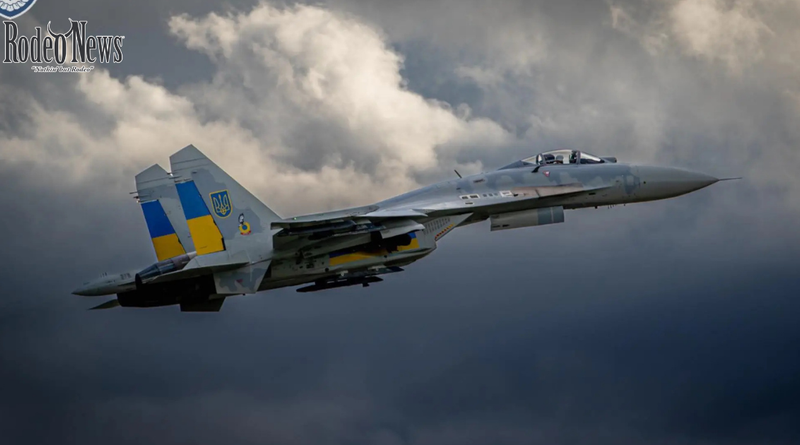
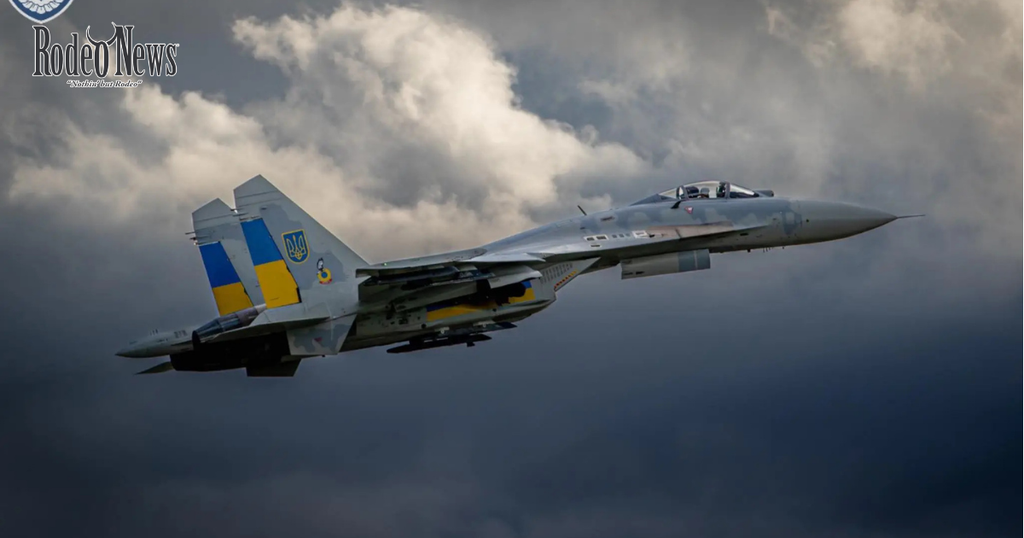
Diakiv said that Ukrainian MiG-29 and Su-27 aircraft are now being used as multifunctional platforms capable of conducting both air-to-air and air-to-ground missions.
That represents a significant evolution from the traditional role of these aircraft.
The MiG-29 was originally designed primarily as an air-superiority fighter, while the Su-27 was developed as a long-range air-superiority platform. Ukraine has increasingly adapted both aircraft to the realities of modern warfare.
The transformation has been driven by necessity.
Ukraine operates under constant threat from Russian surface-to-air missile systems, fighter aircraft and electronic warfare. Flying deep into heavily defended areas can expose pilots and aircraft to serious risks.
As a result, Ukrainian aviation has had to find ways to deliver weapons while limiting exposure.
The ability to use aircraft as multifunctional platforms gives commanders greater flexibility.
A fighter can potentially contribute to air defense during one mission and support ground operations during another. This flexibility becomes particularly valuable when the number of available aircraft is limited.
The “Surprise” Could Be More Than a New Fighter
Diakiv’s comments have generated attention because of his suggestion that Ukraine has “surprises” for its neighbors.
However, the statement should not automatically be interpreted as confirmation that Ukraine has secretly developed a completely new fighter aircraft.
The Ukrainian military has not publicly disclosed the full nature of the developments.
Instead, the commander confirmed that new aviation solutions are being tested and that aircraft using them are expected to enter combat.
That deliberate ambiguity may itself be part of the strategy.
Modern warfare depends heavily on intelligence.
If Ukraine publicly revealed exactly which aircraft had been modified, what weapons they carry and how they are intended to operate, Russia could potentially adjust its air-defense deployments and electronic warfare measures.
Keeping some details secret can therefore provide an operational advantage.
For Ukraine, the element of surprise could be valuable at a time when Russian forces are also rapidly adapting.
Why Air Defense Is Driving Ukrainian Innovation
The development of new aviation capabilities cannot be separated from Russia’s extensive air-defense network.
Ukrainian pilots face a battlefield containing long-range surface-to-air missile systems, tactical air defenses, fighter aircraft and electronic warfare systems.
At the same time, Russian forces increasingly use drones and precision weapons to attack Ukrainian infrastructure and military positions.
That environment makes traditional air-power concepts much harder to apply.
Ukraine therefore needs aircraft that can perform missions without unnecessarily exposing pilots.
It also needs weapons that can be launched from greater distances, allowing aircraft to remain outside the most dangerous portions of Russian air-defense coverage.
This has already changed the way Ukrainian pilots operate.
Diakiv said Ukrainian aviation is constantly adapting because of enemy air defenses, fighter aviation and electronic warfare. He described the war as a prolonged, highly technological conflict taking place across multiple domains.
That experience is now shaping future aviation development.
Ukraine Is Building a Different Kind of Air Force
The announcement comes as Ukraine is also restructuring its aviation organization around Western standards.
According to ArmyInform, Ukraine plans to transition aviation brigades toward an aviation-wing structure as part of its adaptation to Western aircraft. One such unit, the 107th Separate Aviation Wing, is already operating.
This organizational change is important because the arrival of Western fighters requires more than simply putting new aircraft on runways.
Ukraine must develop new maintenance systems, training pipelines, logistics networks and command structures.
It must also integrate different aircraft into a broader force.
That process is already underway.
The Ukrainian Air Force has selected three Western fighter platforms around which it intends to build its future force: the American F-16, Swedish JAS 39 Gripen and French Rafale.
The three aircraft have different capabilities and operating concepts.
The F-16 offers a large international user base and extensive weapons integration. The Gripen is known for its ability to operate from relatively austere locations and for its design emphasis on rapid turnaround. The Rafale provides another modern multirole option with advanced sensors and weapons capabilities.
For Ukraine, operating several Western platforms could create both opportunities and logistical challenges.
The F-16 Is Only Part of the Transition
Ukraine’s acquisition of F-16 fighters has received enormous international attention.
However, the broader transformation of Ukrainian aviation involves much more than one aircraft type.
The country is gradually moving from a predominantly Soviet-designed fleet toward a mixed force that includes Western fighters, upgraded legacy aircraft, drones and increasingly sophisticated weapons.
That transition will not happen overnight.
Training pilots is only one part of the challenge. Ukraine also needs technicians, spare parts, weapons, simulators, maintenance facilities and secure communications.
The integration of all those systems can take years.
Yet the war is forcing Ukraine to compress that timeline.
The new developments described by Diakiv demonstrate how Ukrainian engineers and military personnel are attempting to make improvements during wartime rather than waiting for a complete postwar modernization program.
Drones Are Changing the Meaning of Air Power
Another factor behind Ukraine’s aviation evolution is the explosive growth of drone warfare.
Drones now play a role in reconnaissance, strike missions, electronic warfare and air defense.
Ukraine has also been developing interceptor drones to counter Russian unmanned systems. Earlier in August, Ukrainian officials said domestically developed jet-powered interceptor drones were already undergoing combat testing against Russian jet-powered threats.
This illustrates how quickly the aviation battlefield is changing.
Aircraft are no longer operating in isolation.
A modern air operation can involve fighters, drones, ground-based air defenses, electronic warfare systems and long-range weapons working together.
That makes integration increasingly important.
Ukraine’s experience may therefore produce aviation concepts that differ from traditional Western air-force doctrine.
Ukrainian Battlefield Experience Is Becoming a Military Asset
Diakiv argued that Ukraine’s combat experience is now helping shape the development of its aviation capabilities.
That experience is unusually extensive.
Ukrainian pilots have spent years operating under the threat of sophisticated Russian air defenses. They have learned how to coordinate aircraft with drones, ground units and long-range weapons while dealing with electronic interference.
Those lessons can be incorporated into new equipment much faster than they might be in peacetime.
In that sense, Ukraine’s aviation modernization is not simply about acquiring technology.
It is also about converting battlefield experience into technology and tactics.
An aircraft modification that appears relatively small on paper can become significant if it solves a recurring operational problem.
Russia Will Be Watching Closely
Any new Ukrainian aviation capability will almost certainly attract Russian attention.
Moscow has invested heavily in air defense, electronic warfare and fighter aviation during the war. If Ukraine introduces new methods of employing its aircraft, Russian forces will likely attempt to identify and counter them.
This creates a continuous cycle.
Ukraine develops a new capability.
Russia studies it and develops countermeasures.
Ukraine then modifies its approach again.
The process is one reason Diakiv’s decision to keep details secret is significant.
The less Russia knows before the systems enter combat, the harder it becomes to prepare a specific countermeasure.
That does not guarantee battlefield success, but it can increase the value of surprise.
Ukraine’s Aviation Future Is Taking Shape
The latest announcement comes alongside a much broader transformation.
Ukraine is receiving and preparing to operate Western fighter aircraft while simultaneously upgrading its existing Soviet-era fleet.
At the same time, it is restructuring aviation units, developing new weapons, experimenting with drones and building experience in combat environments that few other air forces have experienced at such scale.
The goal is not simply to replace old aircraft with new ones.
It is to create an integrated combat aviation system capable of surviving in heavily contested airspace.
That is a difficult challenge.
Russia retains a much larger overall military-industrial base and continues to deploy large numbers of missiles, drones and aircraft.
Ukraine therefore has to compensate through innovation, precision, intelligence and efficient use of limited resources.
What Comes Next for Ukraine’s New Aircraft?
For now, the most important details remain undisclosed.
Diakiv has confirmed that new aviation developments are essentially complete and that some are already undergoing testing. He also indicated that aircraft using these developments will enter combat.
Exactly what those developments involve remains unclear.
They could include aircraft modifications, weapons integration, new mission configurations or other technologies designed to improve survivability and strike effectiveness.
What is clear is that Ukraine is not waiting for the war to end before modernizing its air force.
The country is developing new capabilities while fighting.
That approach has already transformed the role of aircraft such as the MiG-29 and Su-27, which are now being used as more versatile platforms.
Meanwhile, the planned integration of F-16s, Gripens and Rafales points toward a future Ukrainian air force built around Western aircraft while retaining valuable experience from its existing fleet.
The next major question is when the new developments will appear on the battlefield.
If Ukraine succeeds in introducing them without revealing their capabilities beforehand, the first operational deployments could provide Kyiv with an important tactical advantage.
For now, however, the details remain a closely guarded secret.
One thing is already clear: Ukraine’s aviation war is entering another stage, and its commanders believe the country still has technological surprises in reserve.