Full Article
Kevin Warsh Inflation Warning Puts Fed Rate Hike Back in Focus
The latest Kevin Warsh inflation warning has put interest rates back at the center of the U.S. economic debate. Federal Reserve Chair Kevin Warsh said inflation remains too high and indicated that policymakers may have more work to do if price pressures fail to move convincingly toward the central bank’s 2% target.
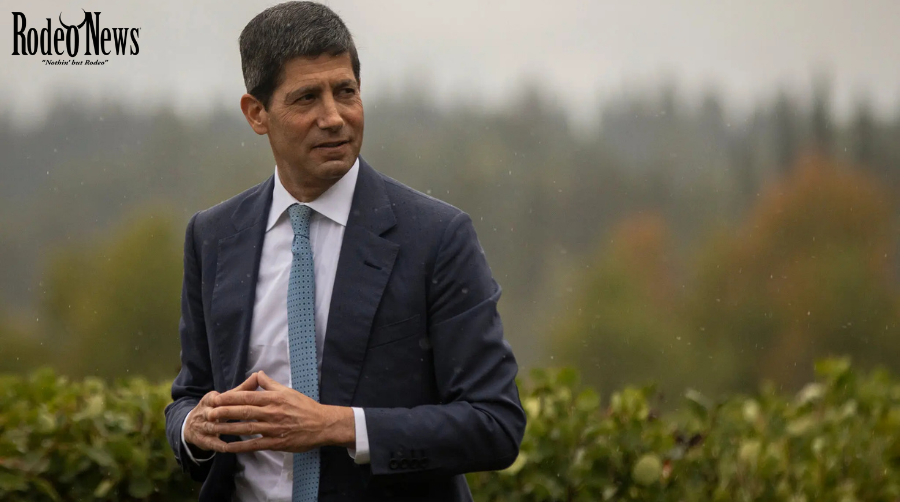
Warsh made the comments during his first major appearance as Fed chair at the annual Jackson Hole economic symposium in Wyoming. His remarks were closely watched by investors because markets had been looking for clues about whether the Federal Reserve could cut rates, hold them steady or potentially raise them again.
Instead, Warsh delivered a message focused firmly on inflation.
He acknowledged that some recent economic data have shown modest improvement. However, he argued that the underlying inflation picture has not improved enough to give the Fed confidence that price growth is moving sustainably toward its target.
That leaves the door open to another rate increase, particularly if upcoming economic reports fail to show further progress.
Why Kevin Warsh Inflation Comments Matter
The significance of the Kevin Warsh inflation message goes beyond a single speech.
The Federal Reserve has spent years trying to bring inflation back to its 2% objective. While price pressures have eased from their pandemic-era highs, inflation has remained above the Fed’s preferred level for an extended period.
Warsh’s comments suggest that the central bank is not prepared to declare victory simply because some headline measures have moderated.
That distinction is important.
A temporary decline in inflation does not necessarily mean underlying price pressures have disappeared. Housing costs, services, goods and other components of consumer prices can continue to push inflation higher even when energy prices move in the opposite direction.
Warsh emphasized the need for confidence that underlying inflation is moving toward the Fed’s objective at a sufficient pace. If that confidence is missing, he suggested that policymakers still have work to do.
For financial markets, that message represents a major change in expectations.
Investors had been hoping that weakening parts of the economy could eventually give the Fed room to lower borrowing costs. Warsh instead highlighted the possibility that inflation could require tighter policy.
September Fed Meeting Now Under Greater Pressure
The next major test comes at the Federal Reserve’s September meeting.
Warsh did not explicitly promise that the central bank would raise interest rates. His approach remains dependent on incoming economic data. Nevertheless, his comments have increased the possibility of a rate increase if inflation fails to improve.
Market expectations shifted after the speech, with investors increasing their bets on tighter monetary policy. Bond yields also reacted as traders reassessed the likelihood of higher short-term rates.
The Fed’s September decision will therefore depend heavily on the inflation and employment reports released before the meeting.
A meaningful decline in underlying inflation could allow officials to leave rates unchanged.
A renewed increase, however, could strengthen the case for another hike.
This creates a difficult balancing act for Warsh and other policymakers. The central bank must control inflation without unnecessarily weakening economic activity.
Warsh Says the Economy Is Not Clearly Being Held Back
Another important part of Warsh’s message concerns the broader economy.
The Fed chair indicated that he does not view overall financial conditions as clearly restrictive enough to prevent economic activity from continuing. That assessment matters because interest rates are supposed to slow demand when inflation is too strong.
If borrowing costs are already sufficiently restrictive, another increase could create unnecessary economic damage.
But if consumers and businesses remain resilient, policymakers may have more room to keep rates elevated or increase them without immediately triggering a severe downturn.
Warsh’s assessment suggests that he currently sees an economy with enough strength to withstand continued attention to inflation.
Recent reporting has also highlighted continued consumer and business activity despite elevated borrowing costs. That complicates the argument that the Fed must quickly lower rates to protect growth.
For investors, this creates an important question: Is inflation the bigger threat, or is weakening growth becoming the bigger threat?
Warsh appears increasingly focused on the first risk.
Inflation Remains Above the Fed’s Target
The Federal Reserve’s long-term inflation objective is 2%.
The challenge is that inflation has remained above that level for a prolonged period.
Recent price pressures have also been affected by energy costs and broader economic developments. Higher fuel prices can filter through the economy by raising transportation, manufacturing and business expenses.
Those increases can eventually reach consumers through higher prices for goods and services.
That makes the inflation problem particularly complicated.
The Fed cannot directly control global oil prices. However, policymakers can influence overall demand through interest rates. If inflation becomes embedded in expectations and business pricing decisions, tighter monetary policy can be used to reduce demand and prevent the problem from becoming permanent.
Warsh’s argument appears to be that the Fed needs stronger evidence that underlying inflation is moving in the right direction before policymakers can become comfortable with easier monetary policy.
Kevin Warsh Inflation Strategy Differs From Earlier Fed Communication
Warsh has also attracted attention for his approach to communicating monetary policy.
Traditional Federal Reserve communication often gives markets some indication of where policymakers believe interest rates are headed. Warsh has been more reluctant to provide explicit forward guidance.
That creates both advantages and disadvantages.
On one hand, a less predictable Fed can maintain greater flexibility. Policymakers can respond to new data without being locked into statements made weeks earlier.
On the other hand, financial markets depend heavily on expectations. Limited guidance can increase uncertainty about future interest rates, particularly when inflation and economic growth are moving in different directions.
Reuters reported that Warsh offered somewhat more insight during his Jackson Hole appearance while still avoiding traditional forward guidance. His comments gave investors a better sense of how he might respond if inflation remains elevated.
That could make future economic reports even more important.
Instead of trying to interpret every statement from the Fed chair, investors may increasingly focus on the actual inflation, employment and spending data.
The Political Pressure on the Federal Reserve
Warsh’s inflation stance also comes at a politically sensitive moment.
President Donald Trump has repeatedly pushed for lower interest rates, arguing that borrowing costs should come down. Lower rates can reduce financing costs for households, businesses and the federal government.
However, the Federal Reserve is legally designed to make monetary policy independently.
That creates a potential conflict if the White House wants faster rate cuts while the Fed believes inflation requires tighter policy.
Warsh’s focus on price stability could therefore put him in a difficult position.
If inflation remains elevated and the Fed raises rates, the move could clash with political demands for cheaper borrowing.
If the Fed cuts rates despite persistent inflation, critics could question whether political considerations influenced the decision.
The challenge is particularly significant because the Fed’s credibility depends partly on convincing households, businesses and investors that monetary policy is based on economic conditions rather than political pressure.
What a Rate Hike Could Mean for Consumers
A higher Federal Reserve interest rate would not affect every consumer immediately or in exactly the same way.
Credit-card borrowing, variable-rate loans and some other forms of consumer credit can become more expensive when interest rates rise.
Businesses can also face higher financing costs.
Mortgage rates are more complicated because they depend heavily on Treasury yields and broader financial-market expectations. A Fed rate increase does not automatically translate into an identical increase in mortgage rates.
Still, expectations about future Fed policy can influence borrowing costs across the economy.
If investors believe the central bank will keep fighting inflation aggressively, short-term bond yields can rise. Financial conditions can then become tighter even before the Fed officially changes its policy rate.
That is one reason Warsh’s comments received such a strong market reaction.
Wall Street Watches the Inflation Data
Investors now have a clear reason to pay close attention to the next round of economic data.
The most important question is whether inflation is actually slowing toward 2% or simply moving sideways at an uncomfortable level.
If inflation continues to surprise on the upside, pressure for higher interest rates could increase.
If inflation falls more rapidly, the argument for another rate increase could weaken.
Employment data will also matter.
The Fed has a dual mandate involving maximum employment and stable prices. Policymakers therefore cannot focus exclusively on inflation without considering the health of the labor market.
A sharp deterioration in employment could change the policy debate even if inflation remains above target.
That is why September’s decision is unlikely to depend on a single economic indicator.
What Happens Next for Kevin Warsh and the Fed?
The immediate focus will be on incoming economic data and the Federal Reserve’s internal debate before the September meeting.
Warsh has not committed to a specific rate move.
Instead, his message was that the Fed needs confidence that underlying inflation is moving toward its objective. If that progress does not appear, policymakers may need to take additional action.
That leaves investors facing several possible scenarios.
The first is a continued inflation slowdown. In that case, the Fed could maintain current rates while waiting for additional evidence.
The second is persistent inflation with a resilient economy. That combination would strengthen the case for another rate increase.
The third is a combination of falling inflation and weakening employment. That could push policymakers toward a more cautious approach.
For now, Warsh’s message clearly places inflation at the center of the discussion.
Why the Next Few Weeks Could Be Crucial
The Jackson Hole speech did not deliver a definitive answer about the next Fed decision.
Instead, it changed the questions investors are asking.
The market is no longer focused solely on when the Federal Reserve might cut interest rates. It must also consider whether the central bank could raise them again.
That shift is significant.
Warsh’s first major speech as Fed chair showed that controlling inflation remains a central priority. His comments also suggested that policymakers do not believe current interest-rate settings are necessarily restrictive enough to solve the inflation problem quickly.
The coming economic reports will determine whether that stance becomes actual policy.
For households, businesses and investors, the consequences could be substantial.
Higher rates would make borrowing more expensive and could weigh on financial markets. Lower rates could provide relief but might risk allowing inflation to remain above target for longer.
The Federal Reserve therefore faces a difficult choice between supporting economic growth and ensuring that inflation does not become entrenched.
For now, Kevin Warsh inflation concerns have pushed the possibility of another rate hike firmly back onto Wall Street’s radar.
The September Fed meeting could show just how serious that possibility has become.
Suggested Internal Links
- Federal Reserve Interest Rate Guide
- Latest U.S. Inflation News
- U.S. Economy and Markets
- Federal Reserve Policy Explained
Suggested External Links
- Federal Reserve — Monetary Policy: https://www.federalreserve.gov/monetarypolicy.htm
- Federal Reserve — FOMC: https://www.federalreserve.gov/monetarypolicy/fomc.htm
- Bureau of Labor Statistics — CPI: https://www.bls.gov/cpi/
Image ALT Text
Kevin Warsh inflation warning at the Federal Reserve’s Jackson Hole economic symposium
Image Recommendation
Use a licensed editorial photograph of Kevin Warsh speaking at the 2026 Jackson Hole economic symposium or a neutral Federal Reserve-related image. Avoid reproducing the New York Times website, headline, screenshots or branded page design.