SpaceX Space Jellyfish: Stunning Sky Show Explained

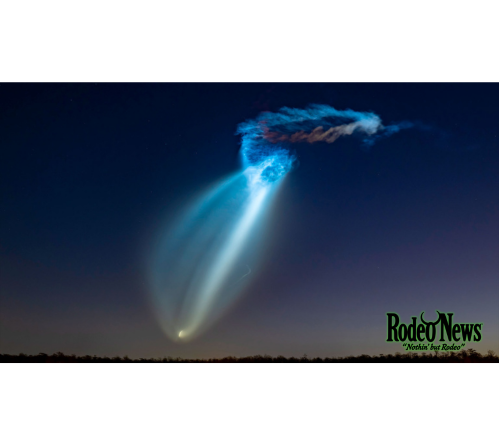
The SpaceX space jellyfish phenomenon captivated skywatchers across Florida and parts of the eastern United States on October 13, 2026, when a predawn rocket launch created a spectacular glowing formation in the sky. The unusual sight resembled a giant jellyfish floating above the horizon, prompting observers to share photographs and videos of the striking display.
The phenomenon occurred after a SpaceX Falcon 9 rocket launched a cargo mission to the International Space Station (ISS) from Florida’s Cape Canaveral Space Force Station. Although the glowing formation looked mysterious, scientists have a straightforward explanation: expanding rocket exhaust, high-altitude atmospheric conditions, and sunlight combine to create the unusual visual effect.
The display demonstrates how an ordinary rocket launch can produce an extraordinary scene when atmospheric physics and the timing of sunrise align.
For many observers, the sight offered a reminder that some of the most remarkable scenes in the sky are not mysterious objects or unusual weather formations. Instead, they are visible consequences of modern spaceflight interacting with Earth’s atmosphere.
What Is the SpaceX Space Jellyfish Phenomenon?
The SpaceX space jellyfish effect is a visual phenomenon that occurs when rocket exhaust expands high above Earth and becomes illuminated by sunlight while the ground remains relatively dark.
The resulting plume can develop a bright, rounded shape near the rocket’s engine, with long trails extending behind it. Depending on the rocket’s altitude, the viewing angle, and atmospheric conditions, the formation may resemble a jellyfish, a glowing flower, or an enormous cloud suspended in the sky.
The effect is particularly noticeable during launches shortly before sunrise or after sunset.
At those times, the Sun may already illuminate the upper atmosphere even though observers on the ground remain in darkness. The rocket’s exhaust catches the sunlight, creating a dramatic contrast against the dark sky.
This contrast makes the plume appear brighter and more colorful than it might during a daytime launch.
The phenomenon is not unique to SpaceX. Other rockets can create similar displays when launch timing, altitude, and lighting conditions are favorable.
However, frequent launches from Florida make SpaceX missions a familiar source of these spectacular sights.
According to NASA’s explanation of the SpaceX rocket jellyfish plume, a rocket launch shortly before sunrise can produce a glowing exhaust cloud when the plume reaches an altitude where it catches the Sun’s rays.
SpaceX Launch on October 13 Creates a Glowing Sky Display
The latest display followed an early-morning SpaceX launch from Florida on Tuesday, October 13.
According to local reporting by ClickOrlando, the Falcon 9 rocket lifted off at approximately 6:33 a.m. Eastern Daylight Time, carrying a resupply mission to the International Space Station.
As the rocket climbed, its exhaust plume expanded into the upper atmosphere.
Observers across parts of Florida and neighboring areas could see the illuminated plume against the predawn sky. Photographs showed a bright, bulb-shaped formation with wispy trails that appeared to extend downward.
The sight quickly attracted attention because of its unusual shape and vivid appearance.
The rocket’s trajectory and the changing angle of sunlight helped create the impression that a glowing object was floating above the horizon.
However, the formation was neither a natural jellyfish nor a mysterious object in space. It was the visible exhaust plume from a rocket traveling toward orbit.
Why the Launch Timing Was Important
Timing is one of the most important factors behind the space jellyfish effect.
During a predawn launch, the Sun may be below the horizon from an observer’s perspective. Nevertheless, the upper atmosphere can already receive direct sunlight.
As the rocket rises, its exhaust reaches regions where sunlight can illuminate the plume.
The surrounding sky remains dark, making the illuminated gases and particles stand out dramatically.
A launch at midday would generally produce a different visual effect because the bright sky would reduce the contrast between the exhaust and its surroundings.
The same principle explains why some rocket launches create brilliant displays shortly after sunset.
The combination of darkness near the ground and sunlight at higher altitudes produces the distinctive appearance that skywatchers often describe as a space jellyfish.
The Science Behind the Space Jellyfish Effect
The space jellyfish effect involves several physical processes, including exhaust expansion, atmospheric pressure changes, the behavior of water vapor, and the geometry of sunlight.
Although the display can appear unusual, its underlying physics is well understood.
1. Rocket Exhaust Expands Rapidly
A Falcon 9 rocket uses powerful engines that expel hot gases at high speed to generate thrust.
When those gases leave the engine nozzle, they enter an environment with a different pressure from the one inside the engine.
As the exhaust encounters the surrounding atmosphere, it expands and changes shape.
The interaction between the exhaust and the surrounding air can create a rounded plume near the engine, followed by spreading trails.
The shape depends on engine conditions, atmospheric pressure, and the rocket’s altitude.
As the vehicle climbs higher, the surrounding atmospheric pressure decreases. This changes how the exhaust expands and how its structure appears from the ground.
The resulting plume can become much broader and more visually dramatic than the narrow trail typically seen behind an aircraft.
2. Water Vapor and Other Exhaust Products Contribute to the Plume
Rocket engines release hot exhaust containing different gases and particles, depending on the engine’s propellants and operating conditions.
The Falcon 9 uses liquid oxygen and rocket-grade kerosene, known as RP-1.
Combustion produces hot gases that include water vapor and carbon dioxide, along with other exhaust products.
As the plume rises into colder atmospheric regions, water vapor may condense or freeze into tiny particles under suitable conditions.
These particles can scatter sunlight, helping make the exhaust plume visible.
However, the glowing appearance is not caused simply by the rocket burning brightly like a flame in the sky. Sunlight illuminating the expanding plume is a central part of the classic space jellyfish effect.
The combination of exhaust chemistry, expansion, condensation, and lighting creates the spectacular display.
3. Sunlight Illuminates the Upper Atmosphere
The third and most important ingredient is sunlight.
When the rocket climbs above the darker lower atmosphere, its exhaust may enter direct sunlight even though the Sun has not yet risen for observers on the ground.
The plume scatters and reflects sunlight toward those observers.
Against a dark background, the illuminated material can appear bright, colorful, and almost artificial.
The viewing angle also matters. Depending on the observer’s location relative to the rocket and the Sun, the plume may look particularly large or vivid.
This is why a single launch can produce dramatically different views for people watching from different locations.
Some observers may see a bright, jellyfish-shaped cloud, while others see only a faint streak or may not notice the plume at all.
Why Does the Rocket Plume Look Like a Jellyfish?
The distinctive shape comes from the way rocket exhaust expands and disperses as the vehicle travels through the atmosphere.
The broad, bright section near the rocket can resemble the rounded body of a jellyfish.
Meanwhile, the thinner exhaust trails extending behind the vehicle can look like tentacles.
Perspective contributes to the effect. From the ground, the rocket’s changing altitude and trajectory can make the plume appear to spread outward or hang in the sky.
The result can look surprisingly organic, even though it is produced by high-speed gases and changing atmospheric conditions.
The effect is especially dramatic when the plume contains illuminated particles and the sky remains dark.
The visual similarity to a jellyfish is simply a useful description of its shape. It does not mean that an actual organism is present or that the phenomenon involves an unknown atmospheric object.
Can the Space Jellyfish Appear in Different Colors?
Yes. Rocket plumes can appear white, blue, yellow, orange, or pink under different viewing conditions.
Several factors influence their appearance.
These include the angle of sunlight, the composition and density of the plume, atmospheric scattering, camera exposure, and the surrounding sky.
Low-angle sunlight can produce warm colors, while other conditions may create cooler or more diffuse tones.
Camera settings can also change how the colors appear in photographs.
For this reason, images of different rocket launches may show noticeably different colors even when the underlying phenomenon is similar.
The colors do not necessarily indicate unusual chemicals or a dangerous event. They often result from the interaction of sunlight, the plume, the atmosphere, and photographic conditions.
What Mission Did the SpaceX Rocket Carry?
The October 13 launch was associated with a resupply mission to the International Space Station.
NASA relies on commercial partners, including SpaceX, to transport supplies, scientific experiments, equipment, and other cargo to the orbiting laboratory.
These missions help astronauts continue their work while supporting research conducted in microgravity.
Cargo missions can deliver equipment for scientific investigations, maintenance materials, food, and other supplies needed by the station’s crew.
The International Space Station serves as a platform for research in areas such as biology, human physiology, materials science, and technology development.
Experiments conducted in orbit can help researchers investigate how living organisms and physical processes behave in a microgravity environment.
SpaceX’s reusable Falcon 9 rocket has become an important part of these operations.
Its first-stage booster is designed to return to Earth for recovery and potential reuse, depending on mission requirements and flight conditions.
Reusability helps SpaceX reduce the need to manufacture an entirely new first stage for every launch.
For observers on the ground, however, the mission’s scientific cargo is only part of the story. The launch itself can create a memorable visual event when the timing and atmospheric conditions align.
Is the Space Jellyfish Dangerous?
The space jellyfish effect itself is not generally a sign of danger to people observing it from the ground.
It is a visual consequence of rocket exhaust interacting with sunlight and the upper atmosphere.
The appearance can be startling, especially for people who have never witnessed a rocket launch.
However, the phenomenon is distinct from severe weather, an atmospheric explosion, or an unidentified flying object.
Rocket launches do involve operational risks, which are managed through established launch procedures and safety restrictions. Those risks should not be confused with the illuminated plume visible from a distance.
The plume’s unusual shape does not, by itself, indicate that a rocket has malfunctioned.
Observers who see a glowing formation after a known launch can often identify its origin by checking official launch information and reputable news reports.
Photographs may also help establish the approximate direction and timing of the event.
Still, not every unusual light in the sky should automatically be attributed to a rocket. Aircraft, satellites, atmospheric phenomena, and other sources can create different visual effects.
The context surrounding an observation remains important.
Why SpaceX Launches Are Frequently Visible Across Florida
Florida is one of the world’s major centers for orbital launches.
Cape Canaveral Space Force Station and nearby Kennedy Space Center support missions involving commercial companies, NASA, and other organizations.
The region’s launch infrastructure allows rockets to carry satellites, cargo spacecraft, and crewed vehicles into orbit.
Because many launches occur near populated areas, residents and visitors can sometimes see rockets climbing into the sky from considerable distances.
Weather and atmospheric conditions determine how clearly the vehicle and its exhaust are visible.
Cloud cover can obscure a launch, while clear skies can provide excellent viewing conditions.
The timing of sunrise and sunset is particularly important for the space jellyfish effect.
A launch can be visible without producing a dramatic plume, and a spectacular plume is not guaranteed every time a rocket lifts off.
Observers who want to see future displays can monitor official launch schedules, weather forecasts, and local viewing guidance.
Nevertheless, launch schedules can change because of weather, technical checks, range availability, or other operational considerations.
How to Watch for Future Space Jellyfish Displays
People interested in seeing a space jellyfish can improve their chances by paying attention to launch timing and local conditions.
Predawn and evening launches may offer favorable lighting conditions because the Sun can illuminate the rocket’s exhaust while the ground remains dark.
However, timing alone is not enough.
The rocket must reach a suitable altitude, the plume must be illuminated from the observer’s perspective, and the sky must be clear enough to reveal the display.
The direction of the launch and the observer’s distance from the launch site also influence visibility.
Before attempting to watch a launch, observers should check current information from official sources rather than relying on old schedules or unverified social media posts.
The SpaceX website provides information about the company’s launches, while NASA publishes updates about its missions and activities.
Tips for Photographing the Effect
Photographing a space jellyfish can be challenging because the plume may appear bright against a dark sky.
A tripod can help reduce camera movement during longer exposures.
Smartphone users can experiment with night mode and exposure controls, although automatic settings may make the plume appear brighter or less colorful than it looked in person.
It is also useful to take several photographs as the rocket climbs because the plume changes shape over time.
Observers should avoid looking directly at the Sun if it rises during the viewing session. They should also choose a safe viewing location and follow any launch-area restrictions.
Photographs can capture a dramatic moment, but the naked-eye appearance may differ from the final image because cameras process light and color differently.
What the Space Jellyfish Reveals About Modern Spaceflight
The space jellyfish effect is more than a striking photograph. It is an example of how rocket technology and natural physical processes interact to produce unexpected visual results.
Rocket engines operate under conditions that differ substantially from those experienced by aircraft near the ground.
As a rocket climbs, atmospheric pressure falls and the exhaust expands. At the same time, the changing relationship between the vehicle, the atmosphere, and the Sun determines how the plume appears to observers.
These processes can create a display that looks unusual but follows established scientific principles.
The phenomenon also illustrates how routine space missions can capture public attention.
A cargo launch may primarily serve a practical purpose, such as delivering equipment and supplies to astronauts. Yet the same launch can create a spectacular sight visible across a wide region.
For people who see it, the glowing plume can encourage curiosity about rockets, atmospheric physics, and space exploration.
It can also serve as a reminder that access to space increasingly involves reusable launch vehicles and regular commercial missions.
As launch activity continues, more people may encounter unusual rocket-related displays in the sky.
However, each event will depend on its own combination of launch trajectory, altitude, atmospheric conditions, and sunlight.
Conclusion: The Science Behind the Stunning SpaceX Space Jellyfish
The SpaceX space jellyfish seen over Florida on October 13, 2026, was a striking example of physics creating a spectacular natural-looking display.
The effect followed a predawn Falcon 9 launch carrying a resupply mission to the International Space Station. As the rocket climbed, its exhaust expanded high above the ground and caught sunlight that had not yet reached observers below.
The illuminated plume created the rounded shape and trailing strands that resembled a giant jellyfish floating in the sky.
Although the sight appeared mysterious, it can be explained through exhaust expansion, atmospheric conditions, and the geometry of sunlight.
The event also highlighted the growing visibility of commercial spaceflight and the important role of rocket launches in supporting scientific research aboard the International Space Station.
For skywatchers, the main lesson is simple: an extraordinary-looking sight does not always require an extraordinary explanation.
Sometimes, the combination of modern technology and ordinary physical laws is enough to transform a predawn sky into an unforgettable spectacle.