Shingles Vaccine Dementia Risk Shows a Surprising Association
New research is drawing attention to the possible connection between shingles vaccine dementia risk and long-term brain health. A large study of more than 500,000 older adults found that people who received the recombinant shingles vaccine, known as Shingrix, had a 24% lower risk of receiving a dementia diagnosis over four years compared with those who were not vaccinated.
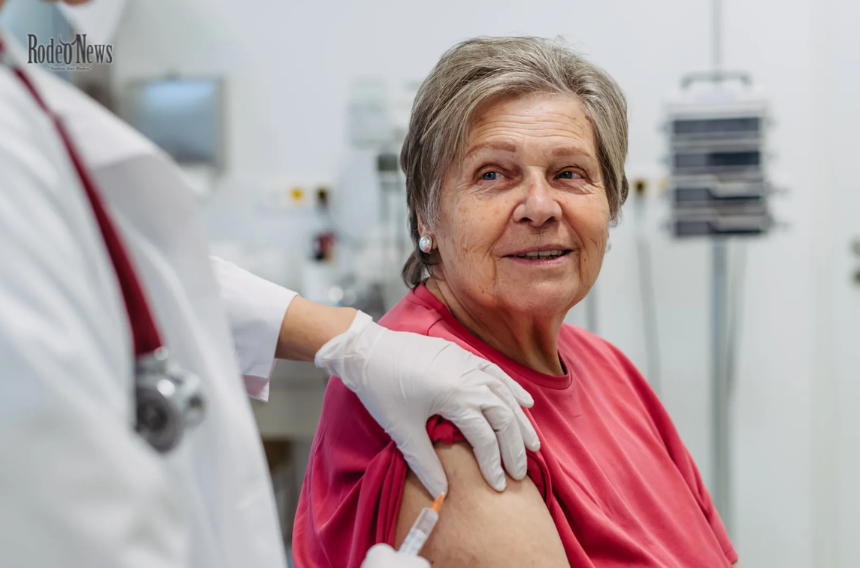
The finding adds to a growing body of research suggesting that vaccines may have benefits that extend beyond preventing the infections they were designed to target. However, researchers emphasize that the study does not prove that Shingrix directly prevents dementia.
Instead, the results show a strong association that warrants further investigation, particularly through clinical trials designed to determine whether vaccination itself can reduce dementia risk.
The study was led by researchers at Brown University and included adults age 66 and older who had been admitted to skilled nursing facilities. Researchers used Medicare claims and electronic health records to compare vaccinated and unvaccinated participants over a four-year period.
Shingles Vaccine Dementia Risk Studied in More Than 500,000 Adults
The scale of the research is one of the most notable aspects of the findings.
Researchers analyzed information from 509,926 adults who had been admitted to more than 5,500 skilled nursing facilities across the United States between 2017 and 2022. Participants were eligible for shingles vaccination and had no previous dementia diagnosis when they entered the study.
Only 8,843 people in the analysis received at least one dose of the recombinant zoster vaccine, while the remainder did not receive the vaccine during the study period.
After four years, dementia was diagnosed in 18.8% of vaccinated participants compared with 24.6% of those who remained unvaccinated. Researchers calculated this difference as approximately a 24% lower risk of dementia among people who received the vaccine.
Brown University researchers said the difference could correspond to roughly one dementia case potentially prevented for every 17 people vaccinated.
That does not mean the vaccine prevents one case for every 17 people in all populations. The figure comes from this particular study population and its statistical analysis.
Still, the size of the study makes the finding particularly interesting.
[Internal link: Latest Health and Medicine Research]
Why Researchers Are Looking at Shingrix and Brain Health
Shingrix was introduced in 2017 and is currently the only shingles vaccine available on the U.S. market, according to the researchers. Unlike some earlier studies that examined an older shingles vaccine, this research focused specifically on the newer recombinant vaccine.
That distinction matters because researchers have previously observed associations between shingles vaccination and lower dementia risk using older vaccines.
Kaley Hayes, an assistant professor at Brown University’s School of Public Health and the study’s lead researcher, said the latest work examines the newest vaccine in an older and medically vulnerable population.
The research therefore adds another piece to an emerging scientific puzzle.
One possible explanation is that preventing shingles could indirectly protect the brain. Shingles is caused by reactivation of the varicella-zoster virus, the same virus responsible for chickenpox. Preventing the reactivation of that virus could potentially reduce certain inflammatory or neurological complications.
However, the current study was not designed to determine the biological mechanism behind the association.
Researchers therefore caution against assuming that the vaccine’s potential cognitive benefits have already been established.
Shingles Vaccine Dementia Risk Does Not Prove Cause and Effect
The most important qualification is that the study was observational rather than a randomized clinical trial.
Researchers used a technique called target trial emulation, which attempts to reproduce some of the conditions of a randomized trial using existing health data. This method can provide valuable evidence when a conventional randomized trial would be difficult or expensive to conduct.
But it cannot completely eliminate the possibility of differences between people who receive a vaccine and those who do not.
In this study, vaccinated participants tended to be somewhat younger and healthier than unvaccinated participants. Those differences could potentially contribute to their lower dementia risk.
The researchers adjusted their analysis to account for these differences. They reported that the adjustments did not fully explain the observed association.
Even so, residual differences may remain.
For that reason, the study should be interpreted as evidence of an association rather than proof that Shingrix directly prevents dementia.
Further research, including randomized clinical trials, will be necessary to determine whether vaccination itself is responsible for the reduction.
What the 24% Finding Really Means
The 24% figure can sound dramatic, but understanding relative risk is important.
In the study, dementia developed in 18.8% of vaccinated participants and 24.6% of unvaccinated participants during the four-year follow-up.
The difference between those groups was 5.8 percentage points.
Researchers used statistical methods to estimate the relative reduction in risk, producing the approximately 24% figure.
This distinction is important because a relative percentage does not mean that 24 out of every 100 vaccinated people were protected from dementia.
Instead, it means the measured risk was approximately one-quarter lower in the vaccinated group than in the comparison group under the conditions of this study.
For readers evaluating health research, this is a useful reminder that headline percentages should always be considered alongside absolute event rates, study design and population characteristics.
Why the Study Population Matters
The participants were not a random sample of all older adults.
They were adults age 66 and older who had been admitted to skilled nursing facilities for either short-term or long-term care. That means the findings may not apply directly to younger adults or to older people living independently in the community.
People entering skilled nursing facilities can have more complex medical needs than the general older population.
That makes the findings especially interesting, but it also creates an important limitation when attempting to generalize the results.
The study’s large sample size helps researchers identify patterns. Yet even a very large observational study cannot automatically establish that the same association will occur in every population.
Future studies involving broader groups of older adults could help determine how consistent the relationship is.
Earlier Research Adds to the Dementia Question
The latest findings are not appearing in isolation.
Researchers noted that several earlier studies involving an older shingles vaccine also reported an association between vaccination and reduced dementia risk.
The repeated observation has encouraged scientists to consider whether vaccination could influence neurological health in ways that are not fully understood.
That possibility is particularly significant because dementia remains a major challenge for aging populations.
Many forms of dementia develop over years or decades, and researchers are actively investigating risk factors that could potentially be modified before cognitive decline becomes apparent.
Vaccination is an especially interesting area because it is already used as a preventive health measure.
If future research confirms a protective relationship, vaccination could potentially become part of a broader approach to preserving health in later life.
For now, however, researchers say the evidence remains preliminary.
Possible Links Between Infection, Inflammation and Dementia
Scientists have increasingly investigated the relationship between infections, immune responses and brain health.
The brain does not operate separately from the rest of the body. Systemic inflammation, vascular health and infectious disease can all interact with neurological function.
That does not establish that preventing shingles will prevent dementia.
It does, however, provide a reason for researchers to investigate whether preventing certain infections might influence long-term cognitive outcomes.
The Brown study contributes important real-world evidence to that discussion.
Researchers specifically described the results as part of a broader puzzle involving the potential neuroprotective effects of vaccines.
Determining whether that protection is real will require carefully designed studies that can separate the effect of vaccination from other health and lifestyle differences.
Shingles Vaccine Dementia Risk Needs More Research
The researchers behind the study say additional research is essential.
A randomized clinical trial would provide stronger evidence because participants could be assigned to vaccination or comparison groups, reducing the influence of differences that naturally occur in observational studies.
Such research could also help answer other important questions.
For example, scientists could investigate whether the possible association varies by age, underlying health, previous infections or other risk factors. Researchers could also examine whether vaccination affects different forms of dementia differently.
Another question is timing.
If the vaccine does have a protective neurological effect, scientists would need to understand whether vaccination earlier in life provides greater benefits or whether vaccination later in adulthood is sufficient.
The current study cannot answer those questions.
The Study Also Had Industry Funding
Transparency about funding is another important part of interpreting the research.
The study authors reported receiving funding from GlaxoSmithKline, the manufacturer of Shingrix. They stated that the company did not control the study design, data analysis or decision to publish the findings.
Industry funding does not automatically invalidate scientific research.
Nevertheless, disclosure allows readers and other researchers to consider potential conflicts of interest when evaluating the evidence.
Independent studies and randomized trials would be particularly valuable in determining whether the association can be replicated without the same funding relationship.
What Older Adults Should Take From the Findings
The study does not establish Shingrix as a dementia treatment or guarantee that vaccination will prevent cognitive decline.
Its main contribution is more specific: it found that older adults who received the recombinant shingles vaccine had a substantially lower rate of dementia diagnosis over four years than comparable unvaccinated participants in the study population.
For people considering vaccination, decisions should still be based on established recommendations, individual health circumstances and discussions with qualified healthcare professionals.
The potential dementia association is an emerging research finding, not currently a substitute for established medical guidance.
It is also important not to interpret the study as evidence that people should receive a vaccine solely as a dementia-prevention strategy.
A Potentially Important New Direction for Dementia Research
The most significant aspect of the findings may ultimately be what they encourage scientists to investigate next.
Dementia prevention research has traditionally focused on factors such as cardiovascular health, physical activity, diet, education and other modifiable risks.
The possibility that vaccination could influence dementia risk opens another avenue for research.
If future studies confirm the relationship, the implications could be considerable because vaccination is already an established public health intervention.
For now, the Brown University study provides a strong reason to keep investigating the connection.
The researchers analyzed more than half a million older adults and found that dementia diagnoses were lower among those who received Shingrix. The observed difference remained after statistical adjustments for several important characteristics, but the study could not establish causation.
That distinction is crucial.
The finding is encouraging, but it is not yet definitive proof of a dementia-prevention effect.
The Bottom Line on Shingles Vaccine Dementia Risk
The latest evidence adds an intriguing chapter to research into shingles vaccine dementia risk.
Among more than 500,000 older adults admitted to skilled nursing facilities, those who received the recombinant shingles vaccine had a 24% lower risk of dementia diagnosis over four years. Dementia occurred in 18.8% of vaccinated participants compared with 24.6% of unvaccinated participants.
Researchers estimate that the difference could translate to roughly one potentially prevented dementia case for every 17 people vaccinated in this study population.
But the findings should be interpreted carefully.
The study was based on health records rather than a randomized clinical trial. Vaccinated participants were somewhat younger and healthier, and researchers cannot completely rule out other factors that may have influenced the results. The team therefore says additional research is needed to determine whether Shingrix itself directly reduces dementia risk.
The study nonetheless strengthens a growing research question: could preventing certain infections also help protect cognitive health?
That question remains unanswered, but the new evidence gives scientists another important reason to pursue it.
Sources: Brown University research report · ScienceDaily source article · Annals of Internal Medicine study DOI