Russian Hybrid Attacks: Macron Reveals 3 Steps
French President Emmanuel Macron has warned that Russian hybrid attacks against France and other European countries have intensified in recent weeks, prompting Paris to strengthen protections around critical infrastructure and sensitive defence sites.
Speaking after a meeting with French political party leaders at the Élysée Palace, Macron said France needed to increase vigilance as European governments face what they describe as a growing range of activities below the threshold of conventional warfare. His comments came as European countries continue to support Ukraine while monitoring possible Russian efforts to disrupt or intimidate them.
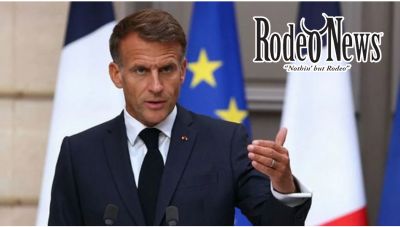
Macron said he had instructed the French government to prepare a plan aimed at protecting critical infrastructure and particularly sensitive parts of the country’s defence industrial and technological base from potential drone and cyberattacks.
The French president also said Russia’s actions would not cause France to reduce its support for Ukraine.
Russian Hybrid Attacks Become a Growing European Concern
The term “hybrid warfare” covers a broad range of activities that can be used alongside or instead of conventional military operations.
These activities can include cyberattacks, sabotage, disinformation, interference with democratic processes, drone operations and other forms of pressure. European governments have increasingly warned that such actions can create disruption without immediately crossing the threshold into an openly declared military conflict.
Macron said the Russian hybrid attacks threat facing Europe and France had intensified. He linked the issue directly to the wider security environment created by Russia’s war in Ukraine.
Reuters reported that Macron cited an attempted drone attack at Leipzig airport in Germany in August as an example of the changing security environment. German authorities have attributed that incident to Moscow, although Russia rejects European accusations that it is responsible for hybrid attacks.
The BBC also reported that Macron referred to the Leipzig incident and comments from Polish Prime Minister Donald Tusk concerning potential Russian drone and missile attacks against countries supporting Ukraine.
The allegations remain part of a broader dispute between European governments and Moscow. Russia has repeatedly rejected accusations that it is conducting a campaign of hybrid attacks against European countries.
France Plans Stronger Protection for Critical Infrastructure
One of the clearest consequences of Macron’s warning is a new focus on protecting infrastructure that could be targeted without a conventional military assault.
Macron ordered the government to prepare measures for critical infrastructure as well as highly sensitive sites connected to France’s defence and technology sectors.
The proposed measures are expected to address both drone threats and cyberattacks.
That approach reflects the changing nature of security risks facing European countries. A traditional military attack can often be identified through troop movements, missile launches or other visible signs. Hybrid operations can be considerably harder to detect and may involve multiple forms of disruption at the same time.
France’s interior minister had already brought together regional prefects to increase vigilance in response to the perceived threat, Macron said.
The government is therefore looking at the issue not only as a military challenge but also as a matter of domestic security and infrastructure protection.
Why Drone Attacks Matter
Drones have become an important part of modern warfare, particularly since Russia’s full-scale invasion of Ukraine.
Their relatively low cost, flexibility and ability to operate at different ranges have made them useful for surveillance and attacks. Outside active battlefields, drones can also create security problems around airports, military installations, energy facilities and other sensitive locations.
For European governments, the challenge is complicated by the difficulty of immediately determining who is responsible for a particular incident.
A drone entering restricted airspace does not automatically prove that a state is behind the operation. Investigators may need to establish where the drone originated, who controlled it and whether the incident was deliberate.
Nevertheless, European officials have become increasingly concerned about the possibility that drones could be used as part of wider campaigns designed to test security systems or create public anxiety.
The Leipzig airport incident was among the events Macron highlighted when describing the changing threat environment.
Cyberattacks Add Another Layer of Risk
The French response also places significant emphasis on cyberattacks.
Unlike a conventional strike, a cyber operation can potentially disrupt an organization without causing immediate physical damage. It can target government networks, businesses, transportation systems, energy infrastructure or communications.
A successful cyberattack against a critical service can have consequences well beyond the original target.
That is why Macron’s proposed protection plan combines physical security measures with cybersecurity preparations. France is also working on legislation concerning foreign interference and cyber issues, according to reporting following the president’s remarks.
The broader European debate has increasingly focused on how governments can respond to hostile cyber activity while distinguishing between criminal attacks, espionage and operations attributed to foreign states.
Macron Says France Will Continue Supporting Ukraine
Macron’s warning comes against the backdrop of France’s continuing support for Ukraine.
Since Russia launched its full-scale invasion of Ukraine in February 2022, France has supported Kyiv through diplomatic, military and other forms of assistance. Macron said the latest security threats would not change that position.
He argued that attempts to intimidate European governments or weaken their support for Ukraine would not achieve that objective.
Macron said France was not intimidated and connected European security directly to the outcome of the war in Ukraine.
This position reflects a broader argument among European governments that Russia’s war against Ukraine has implications beyond Ukraine’s borders.
At the same time, European countries have different domestic political positions on the scale and form of assistance that should be provided to Kyiv. Macron’s latest remarks were made after a meeting involving political party leaders and figures expected to play important roles in France’s political debate ahead of the 2027 presidential election.
Poland Raises Concerns About Possible Escalation
Macron’s warning was accompanied by comments from Polish Prime Minister Donald Tusk about the possibility of further Russian activity against NATO countries.
According to BBC reporting, Tusk told Polish lawmakers that Russia could potentially use drone and missile attacks against countries supporting Ukraine and then describe those incidents as accidental. He warned that such actions could be intended to create divisions within NATO.
These claims have not been presented as proof that a conventional Russian attack on NATO is imminent.
Instead, they form part of a wider European discussion about deterrence and the possibility of limited incidents that could test the alliance’s response.
NATO members have repeatedly emphasized that an attack against one member can have consequences for the wider alliance. At the same time, governments must assess individual incidents carefully before determining responsibility and an appropriate response.
Russia Rejects European Accusations
Moscow has rejected allegations that Russia is responsible for hybrid attacks across Europe.
Russian officials have described such accusations as unfounded and part of what they characterize as anti-Russian sentiment in Europe.
That disagreement is important when evaluating individual incidents.
Claims about responsibility for cyberattacks, sabotage or drone activity can depend on intelligence assessments that are not always made public. Governments may disclose selected information while withholding sensitive evidence for security reasons.
As a result, some allegations can remain disputed even after political leaders publicly identify Russia as the suspected actor.
The distinction between confirmed incidents, intelligence assessments and political accusations remains important as European governments strengthen their security policies.
France Also Faces Pressure From Rising Energy Costs
Macron’s comments on security came during a wider discussion about France’s economic and geopolitical challenges.
The president also addressed rising fuel and energy costs, which have created additional pressure on European governments and households.
Macron linked the energy situation to conflicts in the Middle East and Ukraine, as well as disruption involving the Strait of Hormuz. France is working to secure supplies of strategically important energy products, including gas and jet fuel.
Macron also said France would seek greater coordination among G7 countries on energy issues.
The government has been attempting to balance energy security, support for Ukraine and domestic economic pressures. Those issues increasingly overlap because geopolitical disruptions can affect transportation costs, fuel supplies and inflation.
A Wider European Security Challenge
The debate over Russian hybrid attacks extends well beyond France.
European governments have reported or investigated a variety of incidents involving cyber operations, suspected sabotage, disinformation and unauthorized drone activity. The incidents vary significantly in nature and attribution, but officials increasingly view them as part of a broader security environment.
The European Union has also discussed measures designed to improve protection against foreign interference and other forms of hostile activity.
The central challenge is determining how to respond without allowing individual incidents to trigger unnecessary escalation.
For France, the immediate response announced by Macron is focused on preparedness.
That means improving protection around critical infrastructure, strengthening the security of defence-related facilities and preparing for possible cyber and drone threats.
What Macron’s Announcement Means
Macron’s announcement does not amount to a declaration of military confrontation with Russia.
Instead, it signals a stronger emphasis on resilience and protection inside France.
The three main areas are clear: greater vigilance, stronger protection of critical infrastructure and enhanced safeguards for defence and technology facilities against drones and cyberattacks.
France also intends to continue working with European and G7 partners on broader security and energy challenges.
The approach reflects the reality that modern security threats do not always arrive through conventional military channels. A cyber intrusion, drone incident or coordinated disinformation campaign can create disruption while leaving governments with difficult questions about attribution and response.
For European governments, that makes preparedness increasingly important.
What Comes Next
France is expected to develop the protection plan ordered by Macron in the coming weeks.
The details will determine how the government intends to protect vulnerable infrastructure and defence-related facilities, as well as how responsibilities will be divided among national security agencies, local authorities and private operators.
Macron also indicated that France would continue efforts to strengthen its defenses against foreign interference and cyberattacks.
Meanwhile, European governments will continue monitoring developments around Ukraine and potential incidents affecting NATO members.
For now, Macron’s message is that France intends to strengthen its defenses without allowing the threat of hybrid activity to alter its broader policy toward Ukraine.
The coming months will show whether the new measures remain focused primarily on prevention and resilience or become part of a broader European response to what officials describe as an increasingly complex security environment.
For France and its European partners, the challenge will be to protect critical systems, establish responsibility for individual incidents and coordinate responses while avoiding unnecessary escalation.
That balance is likely to remain at the center of Europe’s security debate as the war in Ukraine continues and governments confront a wider range of threats below the traditional threshold of armed conflict.