Apple Watch Ultra 4 Review: 5 Key Upgrades
The Apple Watch Ultra 4 arrives with a familiar formula rather than a dramatic redesign. Apple has kept the rugged titanium body, large 49mm case and outdoor-focused features that have defined the Ultra family since its debut. This time, however, the company has concentrated on health tracking, recovery data and battery life.
Priced at $799, the Apple Watch Ultra 4 sits firmly in Apple’s premium smartwatch range. Its appeal is strongest among runners, hikers, divers and people who regularly spend time away from cellular coverage. For everyday smartwatch users, however, the growing overlap with the less expensive Apple Watch Series 12 makes the decision more complicated.
Apple Watch Ultra 4 Gets More Detailed Health Tracking
One of the biggest changes inside the Apple Watch Ultra 4 is its updated Health Sensing System.
The watch uses a faster S11 chip alongside improved optical and electrical heart sensors. Heart-rate measurements can now be taken every five seconds throughout the day, while heart-rate variability can be measured much more frequently than on the previous generation.
That extra information gives Apple more data to work with when assessing daily activity and recovery.
The Ultra 4 also separates Recovery HRV from overall HRV. Overnight Vitals can compare recovery information with a user’s personal baseline, while daytime measurements provide another view of how the body is responding during normal activities.
For people who use an Apple Watch primarily as a fitness tracker, these changes may be more meaningful than the relatively subtle exterior updates.
Readiness Score Turns Health Data Into a Daily Guide
Another major addition is the new Readiness feature.
The Readiness score combines sleep information, recent activity and health measurements to produce a number from 0 to 10. The system then provides one of four general recommendations: Recover, Pace Yourself, Ready or Go For It.
The score can change during the day as new information arrives. That means a workout or a change in health measurements can potentially alter the recommendation.
However, the feature is designed as a wellness tool rather than a medical assessment. Apple needs several nights of sleep data before establishing an initial baseline, and the score should not be treated as a definitive answer about whether someone is safe to exercise.
For athletes, its biggest value may come from watching patterns over time rather than following a single daily number.
Battery Life Is the Ultra 4’s Biggest Advantage
Battery performance is where the Apple Watch Ultra 4 clearly separates itself from the standard Apple Watch lineup.
Apple has increased normal battery life to as much as 50 hours, compared with 42 hours on the previous Ultra generation. Low Power Mode can extend usage to 84 hours.
Workout tracking also benefits. Depending on the selected power mode, the watch can support extended periods of exercise tracking, making it better suited to multi-day outdoor activities.
Charging has become faster as well. Apple says a 15-minute charge can provide up to 18 hours of battery life.
For someone heading out on a long hike or camping trip, those improvements matter more than a cosmetic redesign.
The Familiar Ultra Design Remains
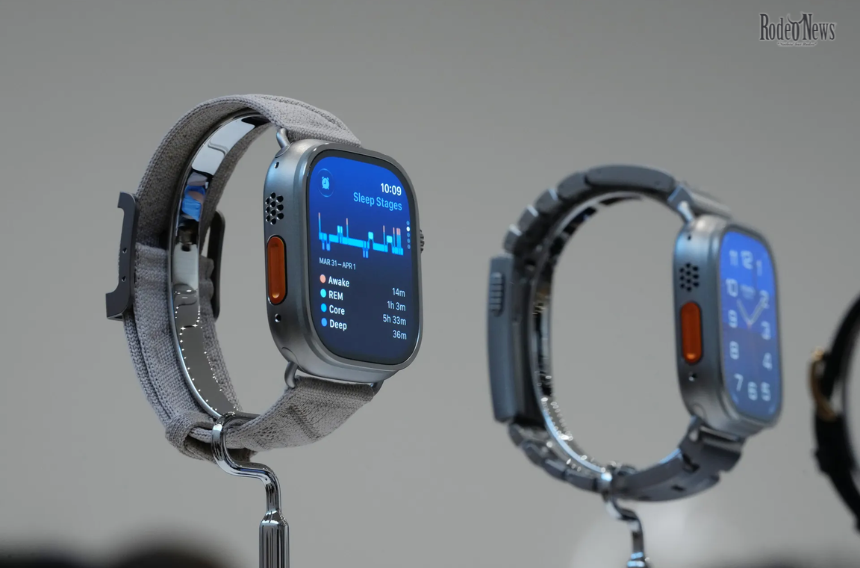
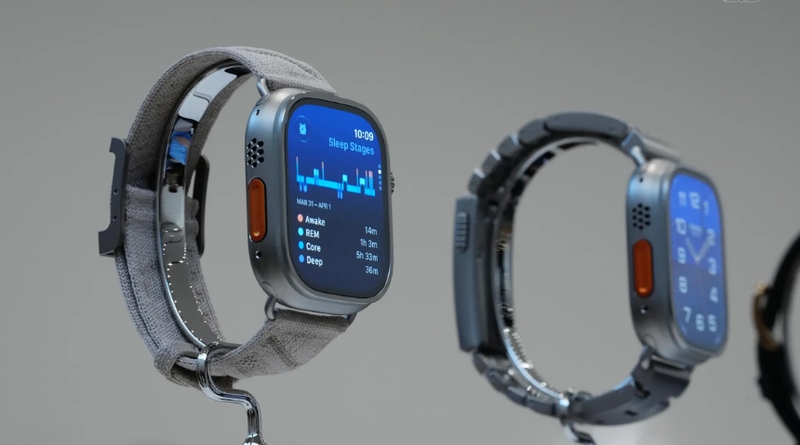
Apple has not changed the basic Ultra design for this generation. The watch continues to use a large 49mm titanium case and retains the physical Action button.
The size remains one of the biggest considerations. A 49mm smartwatch can feel substantial on smaller wrists, and there is still no smaller Ultra case option.
The Action button remains particularly useful during exercise. Physical controls can be easier to use than a touchscreen when running or working out, although many functions still require swiping and tapping.
That can become frustrating when the display is wet or when the wearer is moving quickly. It is a limitation that becomes especially noticeable on a watch designed for outdoor activity.
Apple Watch Ultra 4 Adds More Siri Features
The Ultra 4 also gains new software capabilities through watchOS 27 and Apple’s broader push into AI-powered features.
Some of the most interesting additions involve audio intelligence. Features such as Siri Recap and Live Rewind are designed to process surrounding conversations and provide information through the watch. Apple says these tools are opt-in and has emphasized privacy protections around audio processing.
However, some of these features are arriving after launch, meaning buyers will not necessarily have access to every advertised capability immediately.
Is the Apple Watch Ultra 4 Worth It?
The Apple Watch Ultra 4 is an evolution rather than a revolution.
Its strongest improvements are practical. Longer battery life, more frequent health measurements and the new Readiness score make the watch more useful for fitness and outdoor activities. Satellite messaging and the rugged construction also remain important advantages for people who spend time away from reliable cellular service.
The bigger question is whether those features justify the $799 price.
The Apple Watch Series 12 now shares many of the Ultra 4’s health and software capabilities while starting at a considerably lower price. That makes the Ultra 4 a more specialized product than before.
For someone buying a first Apple Watch and planning to use it for hiking, endurance sports or other demanding outdoor activities, the Ultra 4 offers a compelling package. For existing Ultra owners, however, the improvements are relatively incremental.
Ultimately, the Apple Watch Ultra 4 is less about changing what an Apple Watch can do and more about making the rugged version last longer and collect more useful information along the way.