Roman Telescope Launch: 7 Stunning Facts Revealed
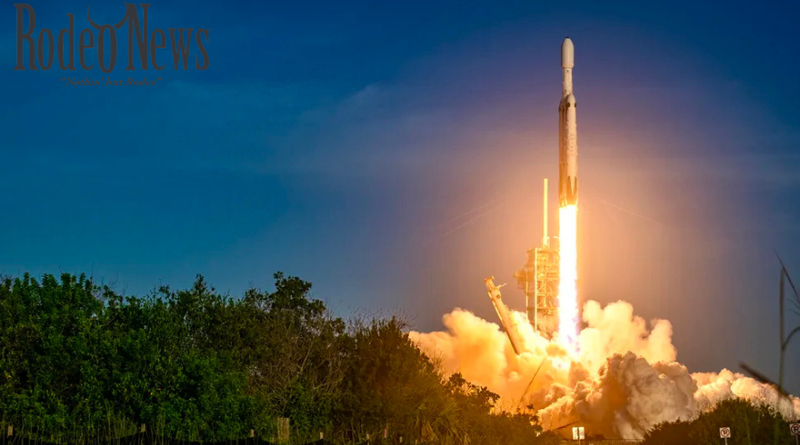
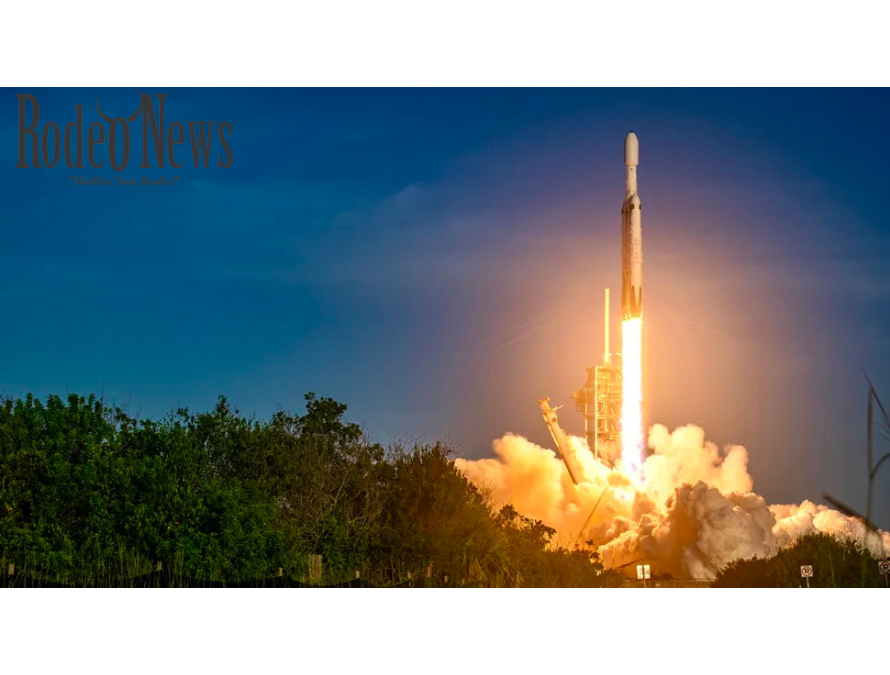
The Roman Telescope launch has successfully opened a new chapter in NASA’s exploration of the universe. The Nancy Grace Roman Space Telescope lifted off aboard a SpaceX Falcon Heavy rocket at 7:26 a.m. EDT on Aug. 30, 2026, from Launch Complex 39A at NASA’s Kennedy Space Center in Florida. NNASA Science+1
The successful launch follows years of development and preparation for an observatory designed to investigate some of astronomy’s biggest unanswered questions. Roman will study dark energy, dark matter, distant galaxies and exoplanets while providing a remarkably wide view of the cosmos.
NASA says the telescope is now beginning its journey toward its final observing location, roughly one million miles from Earth. NNASA Science
The mission is expected to complement the work of the Hubble Space Telescope and James Webb Space Telescope rather than simply replace either observatory.
Here are seven important things to know about the historic mission.
1. Roman Telescope launch was successful
The most immediate milestone is simple: Roman is now in space.
NASA confirmed that the telescope successfully lifted off at 7:26 a.m. EDT aboard SpaceX’s Falcon Heavy. The observatory subsequently separated from the rocket’s second stage, marking the beginning of its journey toward its operational destination. NNASA Science+1
The launch had been closely watched because weather was one of the major remaining concerns. Earlier forecasts had put the probability of favorable conditions at 50%, but conditions improved on launch morning and the weather forecast reached 70% favorable. NNASA Science
With the rocket safely away from the launch pad, attention now shifts from launch operations to spacecraft deployment, testing and commissioning.
2. Roman will investigate dark energy
One of the mission’s most important goals is understanding dark energy, the mysterious phenomenon associated with the accelerating expansion of the universe.
Scientists know that the universe is expanding. Observations also show that this expansion is accelerating. What causes that acceleration remains one of modern cosmology’s biggest questions.
Roman is designed to collect enormous quantities of astronomical data that could help researchers determine how the expansion of the universe has changed over cosmic history.
NASA expects the observatory to conduct large surveys that will provide information about galaxies, supernovae and gravitational lensing.
Those observations could help scientists test competing explanations for dark energy and improve measurements of the universe’s structure and evolution. NNASA Science+1
3. The telescope will search for thousands of exoplanets
The Roman mission is not only about cosmology.
Another major objective is the search for planets beyond our solar system.
Roman will use techniques including gravitational microlensing to identify distant worlds. This method is particularly useful for detecting planets that are difficult to find using conventional approaches.
When the gravity of a foreground star and its planets bends and magnifies light from a more distant star, astronomers can detect subtle changes in brightness. Those changes can reveal the presence of planets.
Researchers expect Roman to discover thousands of exoplanets and dramatically expand the known planetary population. RReuters+1
The mission could therefore help answer a fundamental question: how common are planetary systems similar to our own?
4. Roman has a huge field of view
Perhaps the most important difference between Roman and other famous space telescopes is its ability to survey enormous areas of sky.
Roman’s Wide Field Instrument is designed to capture large sections of the universe in a single observation. Its field of view is dramatically wider than Hubble’s.
That makes Roman particularly valuable for astronomical surveys.
Hubble has produced spectacular deep images by focusing on relatively small regions of the sky. Webb is capable of extremely detailed observations across infrared wavelengths.
Roman adds another capability: rapid, wide-area surveys.
Reuters reported that Roman can survey the Milky Way roughly 100 times faster than Hubble, while other reporting has highlighted its ability to cover an enormous area of sky in individual observations. RReuters
The result could be a massive astronomical database containing billions of observations.
5. Roman is heading toward a special location
Roman will not remain in low Earth orbit.
The spacecraft is traveling toward the Sun-Earth L2 Lagrange point, located roughly one million miles from Earth.
At this location, Roman can operate in an environment particularly suited to long-duration astronomical observations.
NASA says the telescope is now beginning a roughly three-month journey toward its final orbit and will undergo an extended commissioning period before scientific observations begin. NNASA Science
This means the public should not expect Roman’s major scientific discoveries immediately after launch.
The spacecraft first has to complete its journey, deploy and check its systems, and undergo extensive testing.
6. Roman will complement Webb and Hubble
The arrival of Roman does not mean the end of Hubble or the James Webb Space Telescope.
Instead, NASA’s observatories have different strengths.
Hubble has spent decades producing high-resolution observations across visible and ultraviolet wavelengths. Webb specializes in infrared astronomy and can examine extremely distant and faint objects.
Roman is designed around a different priority: surveying enormous areas of the sky efficiently.
That combination could be extremely powerful.
Roman can identify interesting objects and large-scale patterns across huge areas. Researchers can then use Webb, Hubble and other observatories for detailed follow-up observations.
In this sense, Roman could act as a cosmic survey machine, helping astronomers determine where they should look more closely.
7. Roman could transform our view of the universe
The biggest potential impact of the Roman Telescope launch may be discoveries that scientists cannot yet predict.
The mission is designed to study dark energy, dark matter, galaxies and exoplanets. But large astronomical surveys frequently produce unexpected discoveries.
Roman will observe huge numbers of stars and galaxies while repeatedly returning to some areas of the sky.
That makes it capable of finding transient events and objects that change over time.
Researchers could uncover previously unknown types of stars, unusual stellar systems, black holes, distant explosions or other phenomena.
The telescope’s combination of a wide field of view, infrared capabilities and rapid surveying could therefore change astronomy well beyond its original scientific objectives.
What happens after the Roman Telescope launch?
The launch is only the beginning.
Roman now has to travel toward L2, deploy its systems and complete a lengthy commissioning process. NASA will test the spacecraft’s instruments and ensure that its systems are functioning as intended before regular scientific operations begin. NNASA Science
Scientists will then begin using the observatory for its planned surveys.
The resulting data could be particularly valuable because Roman’s observations will cover enormous areas of the sky.
Instead of looking at only a handful of carefully selected targets, astronomers will be able to build much broader statistical pictures of the universe.
That is essential for questions involving dark energy and cosmic evolution, where researchers need large samples rather than isolated observations.
Why the Roman Telescope launch matters
The successful launch represents a major milestone for NASA astrophysics.
Roman combines several capabilities that have never previously been available in quite the same way. It can survey huge regions of the universe while searching for distant planets and investigating the large-scale structure of the cosmos.
The mission is also notable because its scientific objectives extend across two very different fields.
One concerns the largest possible scales — the evolution and expansion of the universe.
The other concerns individual planets and planetary systems.
That combination makes Roman unusually broad in scope.
As NASA begins commissioning the observatory, astronomers around the world will be waiting for the first scientific results.
The most exciting discoveries, however, may be the ones nobody has predicted.
The bottom line
The Roman Telescope launch successfully placed NASA’s newest major space observatory on its journey into deep space. The telescope will travel to the Sun-Earth L2 region before beginning a mission focused on some of astronomy’s biggest mysteries.
Its surveys could improve our understanding of dark energy and dark matter, reveal thousands of previously unknown exoplanets and create an unprecedented wide-angle view of the universe.
Hubble changed the way humanity sees space. Webb pushed infrared astronomy to extraordinary new levels.
Now Roman is preparing to do something different: look wider, survey faster and map the cosmos on an enormous scale.
The first major discoveries are still ahead.
And if the mission performs as planned, astronomers may soon have an entirely new map of the universe to explore.