Venezuela Oil Deal Puts Energy at the Center of a Major New Partnership
The Venezuela oil deal is emerging as one of the most consequential energy agreements between Caracas and Washington, with Venezuela’s acting president, Delcy Rodríguez, insisting that the country will retain sovereignty over its natural resources despite granting the United States significant access to its enormous oil reserves. The agreement is designed to revive Venezuela’s struggling petroleum industry, attract foreign investment and increase crude production over the coming years.
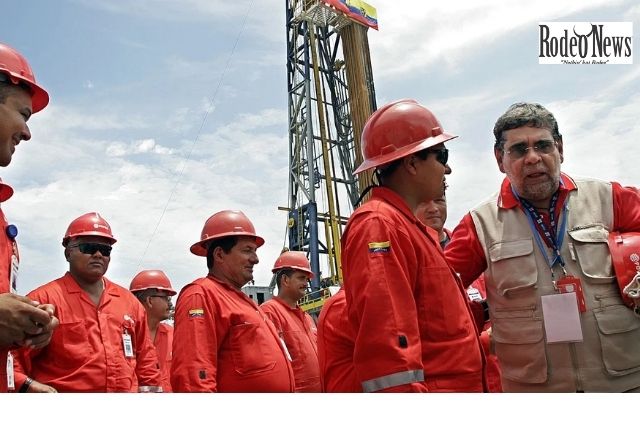
The agreement is expected to last 25 years and initially focuses on the development of 17 strategic oil fields. Venezuelan officials say the plan targets production of more than 1.5 million barrels of oil per day, with additional expansion possible through eight new greenfield blocks.
The scale of the agreement has attracted global attention because Venezuela possesses the world’s largest proven oil reserves. At the same time, its oil industry has suffered from years of underinvestment, declining infrastructure, operational problems and international sanctions.
Venezuela Oil Deal: What Caracas Says It Is Keeping
At the heart of the controversy is the question of sovereignty.
Rodríguez has repeatedly emphasized that Venezuela is not surrendering ownership of its natural resources. Instead, she argues that the agreement allows foreign capital, technology and expertise to help turn underground resources into economic benefits for the Venezuelan population.
That distinction is important.
A country can retain formal ownership of its natural resources while allowing foreign companies to finance, operate or participate in projects that extract and market those resources. Therefore, the debate surrounding the Venezuela oil deal is not simply about who legally owns the oil underground.
It is also about who controls production, investment decisions, marketing and revenues.
The Venezuelan government says the new arrangement preserves national sovereignty while opening the door to the investment needed to rebuild an industry that has lost much of its previous production capacity.
Venezuela Oil Deal Targets 1.5 Million Barrels a Day
One of the most important targets announced by Rodríguez is production of more than 1.5 million barrels per day from the initial group of strategic fields.
The target is significant because Venezuela’s enormous reserves have not translated into comparable production levels in recent years.
The country once ranked among the world’s most important oil exporters. However, production has fallen dramatically from historical highs as the industry struggled with deteriorating infrastructure, limited investment, technical difficulties and sanctions.
The new agreement seeks to reverse that trend.
According to Reuters, the initial program covers 17 strategic fields, while the broader framework could later expand to eight additional greenfield oil blocks.
Reaching 1.5 million barrels per day will not necessarily happen immediately. Oil production depends on drilling, equipment, pipelines, electricity, processing capacity, export infrastructure and sustained investment.
For that reason, the production target should be viewed as a long-term objective rather than an immediate increase.
Why Venezuela Needs Foreign Investment
Venezuela has an extraordinary resource base but has struggled to turn those reserves into stable production.
Oil fields require continuous capital expenditure. Wells decline naturally, equipment needs maintenance and heavy crude often requires specialized infrastructure and processing.
Years of economic turmoil have made those challenges more difficult.
The new agreement attempts to address the investment gap by bringing in U.S. capital and technology. Supporters argue that foreign participation could accelerate repairs, expand drilling and create a more commercially viable oil sector.
The U.S. administration has said the agreement could attract approximately $100 billion in private investment. However, some details concerning financing, infrastructure spending and the precise structure of future investments remain unclear.
Venezuela Oil Deal Could Generate Billions for Caracas
Another major feature of the agreement is its projected financial benefit for Venezuela.
Rodríguez said the initial project could generate approximately $209 billion in revenue, based on an oil price benchmark of $65 per barrel. She also said roughly $19 from each barrel would go directly to Venezuela.
The figures are projections rather than guaranteed future income.
Actual revenues will depend on several factors, including international oil prices, production levels, operating costs, taxes, investment requirements and the terms of individual contracts.
Still, the potential revenue is enormous for a country seeking to rebuild its economy.
For Caracas, higher oil output could mean increased government revenue, greater foreign-exchange earnings and additional resources for infrastructure and social programs.
For Washington, meanwhile, greater access to Venezuelan crude could strengthen the U.S. position in the Western Hemisphere’s energy market.
The 65 Billion-Barrel Question
The most striking claim surrounding the agreement came from U.S. President Donald Trump.
Trump said the United States would obtain majority control over more than 65 billion barrels of Venezuela’s proven oil reserves through partnerships with American companies.
That statement has fueled debate over whether Venezuela is truly retaining control of its petroleum resources.
The distinction between ownership and operational control is central to understanding the agreement.
Venezuela can maintain legal sovereignty over its natural resources while foreign companies receive extensive commercial rights to develop particular fields.
This is why descriptions of the agreement vary considerably.
Venezuelan officials emphasize sovereignty and national ownership. U.S. officials emphasize access, investment and control through commercial partnerships.
Both descriptions can refer to different aspects of the same arrangement.
Why the Deal Matters to the United States
The agreement also has major strategic implications for Washington.
Venezuela is located close to the United States and holds enormous petroleum resources. Increasing production there could potentially create another source of crude for international markets and strengthen U.S. influence over energy flows in the Western Hemisphere.
The deal could also provide U.S. companies with access to one of the world’s largest undeveloped or underdeveloped oil resource bases.
According to reporting by The Associated Press, the agreement involves a newly created company in which the United States would hold a 55% stake, although important details about the structure and implementation remain subject to further clarification.
For Washington, the potential benefits therefore go beyond the immediate purchase of Venezuelan crude.
The agreement could reshape the commercial relationship between the two countries while giving American companies a significant role in rebuilding Venezuela’s energy sector.
Chevron and Other Oil Companies Could Play a Role
Major international oil companies are also expected to be important to the new framework.
Reuters reported that future agreements are expected to provide new exploration and production rights to companies, including Chevron, as Venezuela reorganizes its energy sector.
The participation of established oil companies could be critical.
Developing Venezuela’s reserves requires expertise in drilling, heavy-oil production, refining, transportation and project financing. International companies already experienced in those areas could potentially accelerate the recovery of production.
However, companies will also face political and commercial risks.
Oil projects can take years to become profitable. Investors must consider contract stability, regulatory changes, sanctions policy, infrastructure conditions and future political developments.
Protests Show the Political Risk
The Venezuela oil deal has already generated controversy inside the country.
Some Venezuelans view expanded U.S. involvement as a threat to national sovereignty. Others argue that foreign investment is necessary to revive an industry that has been unable to reach its potential.
Reuters reported that the agreement has triggered protests, highlighting the political sensitivity of greater American involvement in Venezuela’s oil sector.
That divide could become increasingly important as implementation moves forward.
If oil production rises and government revenues increase, the agreement could become a powerful argument for deeper economic cooperation.
If promised investment or production increases fail to materialize, critics could use the outcome as evidence that Venezuela conceded too much for uncertain benefits.
What Happens Next?
The next stage will be implementation.
Signing a broad energy agreement is only the beginning of a much longer process. Specific contracts must be finalized, investment commitments must be arranged and oil fields must be developed.
Infrastructure will be particularly important.
Venezuela’s oil industry needs substantial investment in wells, pipelines, processing facilities, transportation systems and other infrastructure. Increasing production to 1.5 million barrels per day would require sustained work rather than a quick policy change.
The eight additional greenfield blocks mentioned by Rodríguez could eventually expand production further, but their development would require even more capital and technical expertise.
International oil prices will also influence the economics of the agreement.
If prices remain high, investment in Venezuelan production could become more attractive. If prices fall sharply, companies could become more cautious about committing large amounts of capital to projects that require years of development.
Venezuela’s Oil Reserves Make the Deal Globally Important
The significance of the Venezuela oil deal ultimately comes down to the extraordinary size of the country’s petroleum resources.
Venezuela has more than 300 billion barrels of proven oil reserves according to U.S. government estimates cited in recent reporting. That gives the country a resource base capable of influencing global energy markets if production can be sustainably increased.
Yet reserves alone do not guarantee production.
A country can possess enormous quantities of oil while producing relatively little if infrastructure, capital, technology or political stability are lacking.
The new agreement is an attempt to bridge that gap.
For Venezuela, the opportunity is to transform dormant reserves into production and revenue.
For the United States, the opportunity is to gain greater access to a huge nearby resource base while strengthening commercial and geopolitical influence.
For global oil markets, the key question is whether Venezuela can actually add substantial new supply.
A Deal With Potentially Historic Consequences
The Venezuela oil deal represents a dramatic shift in the energy relationship between Caracas and Washington.
The 25-year framework, the planned development of 17 strategic fields and the target of more than 1.5 million barrels per day give the agreement an unusually large scope.
At the same time, the dispute over sovereignty demonstrates why the deal will remain politically sensitive.
Venezuela says its natural resources remain under national sovereignty. The United States, meanwhile, has highlighted the significant commercial control and access that American interests could obtain.
The difference between those two positions will likely remain at the center of the debate.
Ultimately, the success of the agreement will not be measured by its headline figures alone. It will depend on whether investment actually arrives, whether production increases, whether Venezuela receives the projected revenues and whether the country’s oil industry can achieve long-term stability.
For now, the agreement has opened a new chapter in Venezuela’s energy sector.
The country has the reserves.
The challenge is turning those reserves into sustainable production without sacrificing the sovereignty and economic benefits that Caracas says the deal is designed to protect.
External Sources
- Euronews — Original report on Venezuela’s oil sovereignty claim
- Reuters — Details of the 25-year U.S.-Venezuela energy agreement
- Associated Press — Details on the U.S.-Venezuela oil agreement
Internal Link Suggestions
Add links to relevant articles on your own website using anchor text such as:
- Venezuela oil reserves
- Global oil prices
- U.S. energy policy
- Venezuela economy
- Oil production and OPEC
- U.S.-Venezuela relations
Image ALT Text
Venezuela oil deal and US access to Venezuelan oil reserves