Philippines and U.S. Bolster Alliance to Prevent Conflict in West Philippine Sea
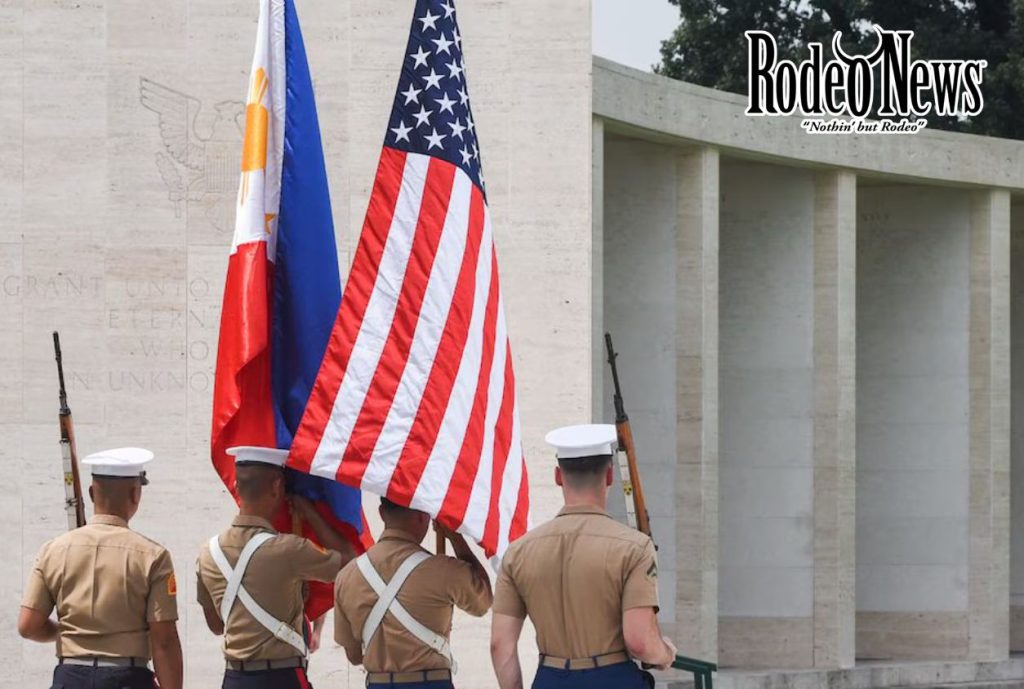
MANILA — The Philippines and the United States on Tuesday reaffirmed and strengthened their long-standing defense partnership with a renewed focus on preventing conflict in the contested West Philippine Sea, Manila’s Department of Foreign Affairs said.
The strategic dialogue, held in the Philippine capital, brought senior officials from both governments together to map out enhanced cooperation aimed at deterring threats to maritime peace and preserving freedom of navigation in the busy waters. The West Philippine Sea, part of the larger South China Sea, has been a focal point of regional tension in recent years, with overlapping territorial claims and frequent confrontations involving Chinese vessels and Philippine forces.
Officials from both sides underscored that the alliance remains central to the Philippines’ security posture and regional stability. “Our partnership with the United States is not just historical — it is a living, evolving commitment to peace and a rules-based order in these critical waters,” said a senior Philippine government representative.
Deepening Defense Ties Amid Heightened Tensions
Although both governments avoided directly naming China in their official statements, the backdrop to the talks was unmistakable: continuing reports of assertive maritime actions by Beijing in parts of the South China Sea claimed by Manila. The diplomatic push comes as other regional and global powers watch closely for signs of escalation that could destabilize Southeast Asia’s maritime commons.
Under the strengthened alliance, Manila and Washington agreed to expand joint military activities, enhance surveillance capabilities and accelerate interoperability between their armed forces. This includes plans for increased maritime patrols, larger joint drills, and broader defense cooperation frameworks beyond existing agreements such as the 1951 Mutual Defense Treaty.
“This partnership is about deterrence, readiness, and ensuring free and safe passage for all nations under international law,” a U.S. defense official said, emphasizing the mutual interest in upholding the principles of the United Nations Convention on the Law of the Sea (UNCLOS).
Multilateral Engagement and Regional Support
In addition to bilateral measures, the Philippines and the U.S. reiterated support for multilateral cooperation with like-minded partners, including Australia and Japan. Recent joint maritime exercises have featured coordinated patrols and interoperability drills in the West Philippine Sea, designed to demonstrate a united commitment to regional peace and collective security.
Those drills — involving vessels and aircraft from the Philippines, the U.S., and allied nations — send a clear message of deterrence to any actor contemplating coercion in an area critical to global trade and energy routes. Historically, expert analysts say, such multilateral activities help de-escalate friction by normalizing presence and cooperation in disputed seas.
Public and Diplomatic Context
Public sentiment in the Philippines has largely favored close cooperation with the United States on maritime defense. A nationwide survey last year found a majority of Filipinos view the U.S. as the country’s strongest partner in addressing security challenges posed by assertive actions in the West Philippine Sea.
Diplomatically, Manila continues to balance its security partnership with Washington while maintaining avenues for dialogue with Beijing. Philippine officials have repeatedly called for restraint and professional conduct in public exchanges, urging all parties to avoid rhetoric that could inflame tensions further.
Looking Ahead
As strategic competition intensifies in the Indo-Pacific, the Philippines and the United States are expected to keep strengthening their alliance, both bilaterally and through broader regional mechanisms. Analysts say this approach could serve as a stabilizing force, provided diplomatic channels remain open and all parties continue to respect international law.
For now, the reinforced commitment signals Manila and Washington’s intention to pursue peace through strength and cooperation, navigating a complex geopolitical environment where peace in the West Philippine Sea remains paramount.