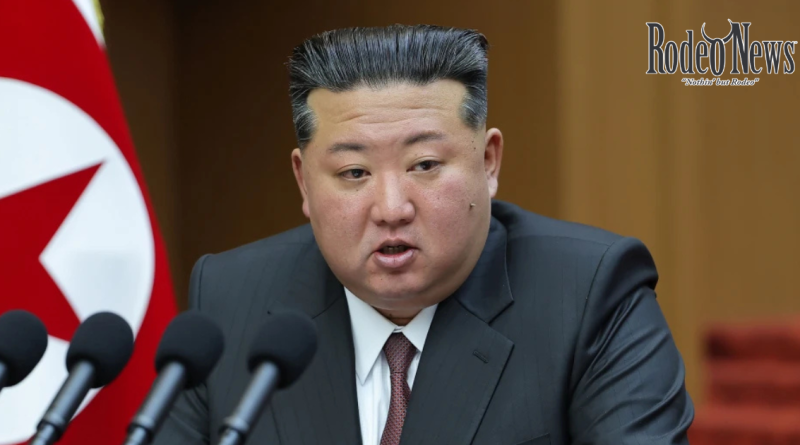
North Korea Nuclear Status Declared “Irreversible”
North Korea nuclear status has entered a new and alarming phase after leader Kim Jong Un declared it “irreversible” during a major parliamentary session in Pyongyang. The announcement signals a decisive shift in the country’s long-standing position on nuclear weapons and raises fresh concerns about regional stability in East Asia.
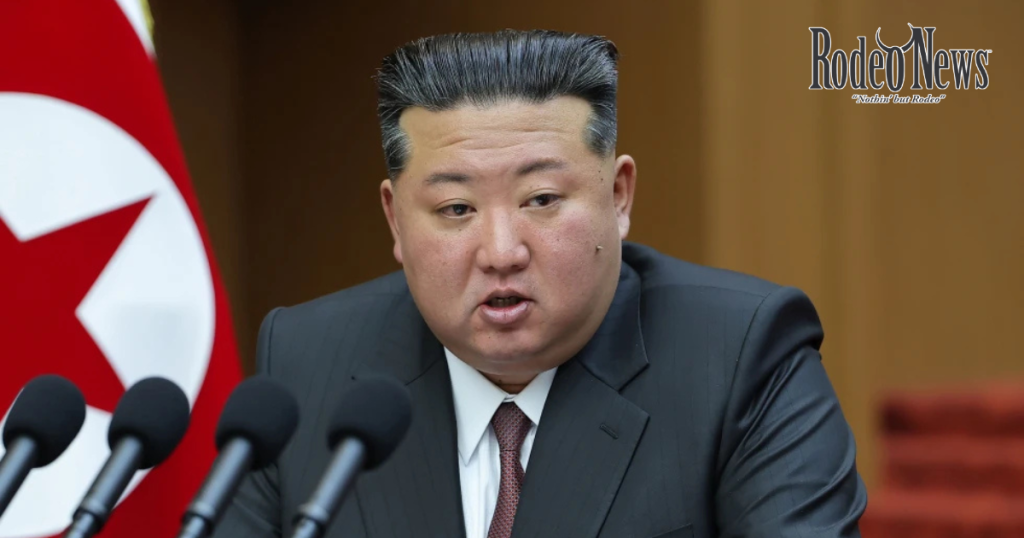
Speaking at the Supreme People’s Assembly, Kim emphasized that nuclear weapons are now central to North Korea’s national identity and security doctrine. His remarks confirm what analysts have long suspected: Pyongyang no longer sees its nuclear arsenal as a bargaining chip, but as a permanent pillar of state power.
This declaration effectively shuts the door on future denuclearization talks under traditional frameworks. Instead, North Korea appears to be doubling down on its military strength while reshaping its diplomatic strategy.
A Strategic Shift in Policy and Identity
Kim’s statement reflects more than just military ambition—it represents a broader transformation in how North Korea defines itself on the global stage.
During the session, lawmakers reportedly approved constitutional revisions, though the exact details remain unclear. Experts believe these changes are designed to formally enshrine North Korea nuclear status into law, making it a permanent feature of the state.
At the same time, Kim labeled South Korea as the “most hostile state,” marking a dramatic departure from decades of rhetoric that at least nominally supported reunification.
This shift signals the end of any realistic expectation of near-term reconciliation between the two Koreas. Instead, Pyongyang is adopting a hardline “two-state” doctrine, treating Seoul not as a partner, but as a direct adversary.
Rising Tensions with South Korea
The declaration has intensified already fragile relations between North Korea and South Korea.
In recent years, tensions have steadily escalated due to missile tests, military drills, and competing alliances. Kim’s latest remarks further deepen the divide, reinforcing a confrontational stance that could lead to increased military activity along the Korean Peninsula.
South Korea responded by calling the statements “undesirable for peaceful coexistence” and urged renewed dialogue.
However, the chances of meaningful engagement appear slim. Since 2019, talks between the two countries have largely stalled, and trust has eroded significantly.
Moreover, North Korea’s evolving nuclear doctrine—reportedly allowing for preemptive strikes under certain conditions—adds another layer of risk. Analysts warn that such policies lower the threshold for potential conflict, making miscalculations more dangerous than ever.
The Role of the United States
The United States remains a central factor in North Korea’s strategic calculations.
Kim criticized Washington’s global actions, accusing it of destabilizing the region and maintaining a hostile stance toward Pyongyang.
Despite the sharp rhetoric, he did not completely rule out diplomacy. Instead, he suggested that future talks could occur—but only if the United States accepts North Korea as a nuclear state.
This represents a major sticking point. For decades, U.S. policy has focused on denuclearization as a prerequisite for engagement. Kim’s position directly challenges that framework, creating a fundamental impasse.
Former U.S. President Donald Trump, who previously engaged in high-profile summits with Kim, has hinted at renewed dialogue. However, any future negotiations would likely face significant hurdles given the current stance of both sides.
Strengthening Military and Economic Plans
Kim’s speech was not limited to foreign policy. He also outlined a new five-year economic plan aimed at strengthening key sectors such as:
- Industrial modernization
- Energy production
- Food security
- Housing development
At the same time, North Korea is significantly increasing defense spending. Reports indicate that a substantial portion of the national budget—around 15.8%—is being allocated to military capabilities, including nuclear weapons development.
This dual focus on economic growth and military expansion reflects a strategy of self-reliance, often referred to as “juche.” By investing in both areas, North Korea aims to bolster its resilience against international sanctions while maintaining a strong deterrent.
Growing Ties with Russia and Global Implications
Another key element of North Korea’s evolving strategy is its deepening relationship with Russia.
Kim has prioritized closer ties with Moscow, including reported support for Russia’s war efforts in Ukraine. In return, North Korea may be receiving military or economic assistance, further strengthening its capabilities.
This alignment has significant global implications. It suggests the emergence of a new geopolitical axis that could challenge Western influence and reshape international power dynamics.
Additionally, the strengthening of these ties reduces North Korea’s reliance on traditional diplomacy with the United States and its allies. With alternative partnerships in place, Pyongyang may feel less pressure to compromise.
The End of Denuclearization Talks?
Perhaps the most significant takeaway from Kim’s declaration is the apparent end of denuclearization as a viable goal.
For years, international negotiations have centered on the idea that North Korea could be persuaded to give up its nuclear weapons in exchange for economic incentives and security guarantees.
However, Kim’s latest remarks make it clear that such a scenario is no longer on the table.
He explicitly rejected the notion of trading away nuclear capabilities, describing them as essential to the country’s survival and prosperity.
This shift forces policymakers around the world to reconsider their approach. Instead of pursuing denuclearization, future strategies may need to focus on containment, deterrence, and risk management.
Regional and Global Security Concerns
The implications of North Korea nuclear status being “irreversible” extend far beyond the Korean Peninsula.
Neighboring countries, including Japan and China, are closely monitoring the situation. Any escalation could trigger a broader regional conflict, especially given the presence of U.S. military forces in the area.
Furthermore, the normalization of North Korea as a nuclear state could set a precedent for other countries, potentially undermining global nonproliferation efforts.
Experts warn that this development could lead to:
- Increased arms races in Asia
- Greater instability in international relations
- Higher risk of accidental or intentional conflict
A New Era for North Korea
Kim Jong Un’s declaration marks the beginning of a new era for North Korea.
By cementing its nuclear status, the country is redefining its role in global politics and signaling a willingness to confront its adversaries more directly.
At the same time, the door to diplomacy remains slightly open—though under very different terms than in the past.
The coming months will be critical in determining how the international community responds to this shift. Whether through renewed negotiations, increased sanctions, or strategic adjustments, the world must adapt to a reality in which North Korea’s nuclear ambitions are no longer negotiable.
Conclusion
North Korea nuclear status being declared irreversible is a turning point with far-reaching consequences.
It reflects a hardened stance, a redefined national identity, and a strategic pivot toward military strength and new alliances. While the possibility of dialogue has not entirely disappeared, the framework for engagement has fundamentally changed.
As tensions rise and geopolitical dynamics shift, the world faces a complex challenge: how to maintain stability in the face of a nuclear-armed North Korea that shows no intention of backing down.