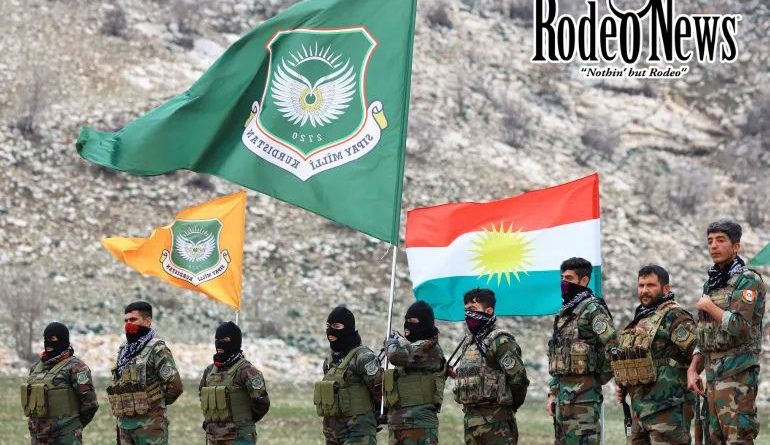
Iranian Kurdish Leader in Iraq Says Ground Operation Into Iran ‘Highly Likely’
A senior Kurdish opposition figure based in northern Iraq says a cross-border ground operation into Iran is increasingly likely as the regional war involving the United States, Israel, and Tehran continues to intensify.
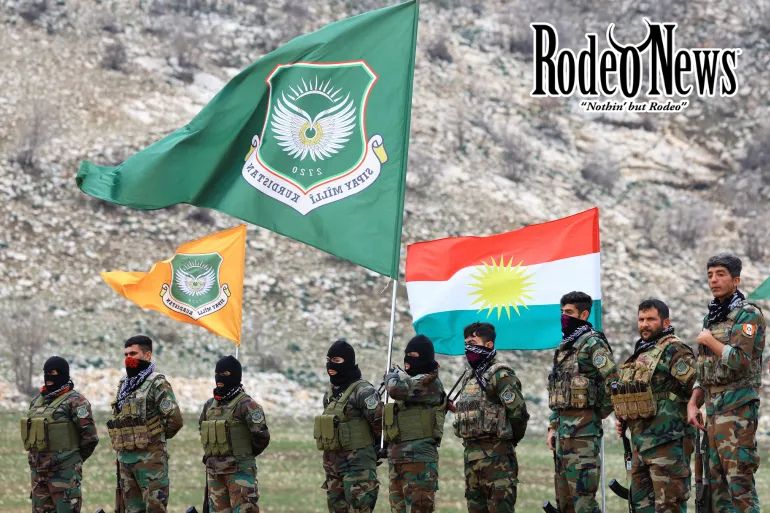
Babasheikh Hosseini, secretary-general of the Iranian Kurdish group Khabat, told reporters that Kurdish fighters could soon launch operations inside Iran if conditions on the battlefield continue to evolve in their favor. He said there is a “strong probability of action,” suggesting Kurdish forces are preparing for a possible new front in the conflict.
The remarks highlight growing uncertainty along Iran’s western border, where Kurdish opposition groups have long operated from bases in Iraq’s semi-autonomous Kurdistan region.
Kurdish Fighters Positioned Near the Border
Several Iranian Kurdish opposition groups have thousands of fighters stationed near the Iran-Iraq frontier. These groups oppose the Iranian government and have historically called for Kurdish autonomy or broader political change inside Iran.
Recent reports indicate these groups are monitoring the escalating war and assessing whether the conflict could create an opportunity to challenge Tehran’s control in Kurdish-majority areas of western Iran.
According to Kurdish leaders, any military operation would depend heavily on the broader trajectory of the war and the level of international support available.
Experts say Kurdish forces alone are unlikely to overthrow the Iranian government, but their involvement could complicate the conflict by opening a new ground front inside the country.
Iran Warns Separatist Groups
Iranian officials have responded with stern warnings to Kurdish groups operating near its borders.
Senior Iranian military figures have warned that Tehran would target not only Kurdish fighters but also facilities supporting them if cross-border attacks occur.
In recent days, Iran’s Islamic Revolutionary Guard Corps (IRGC) launched missile and drone strikes against suspected Kurdish militant bases in Iraq’s Kurdistan region, which Tehran accused of harboring separatist forces.
Iran has long viewed Kurdish opposition groups as a security threat, particularly those advocating independence or regional autonomy.
Kurdish Groups Deny Immediate Attack Plans
Despite the rising tensions, some Kurdish leaders insist that no immediate ground operation has begun.
Several Kurdish Iranian dissident groups based in Iraq have publicly denied launching attacks from Iraqi territory, saying they respect the Kurdistan Regional Government’s policy of avoiding escalation with Iran.
However, they also say they would consider joining a broader offensive if a major international campaign against Tehran develops.
Analysts say the statements reflect a delicate political balancing act: Kurdish groups are signaling readiness to fight while avoiding direct confrontation that could draw Iraq’s Kurdish authorities into the war.
A Potential New Front in the War
If Kurdish forces do enter Iran, it would represent a major escalation in the already expanding conflict.
The war began with large-scale air and missile strikes by the United States and Israel targeting Iranian military and nuclear facilities. Iran has retaliated with missile and drone attacks on U.S. bases and Israeli targets across the Middle East.
A Kurdish ground incursion would introduce a new dynamic to the conflict by shifting part of the fighting onto Iranian territory in the mountainous Kurdish regions along the Iraq border.
Those areas have historically been difficult for Iranian forces to control due to rugged terrain and longstanding Kurdish insurgencies.
Longstanding Kurdish Opposition to Tehran
Iran’s Kurdish population—estimated at roughly 10 percent of the country—has a long history of political tensions with the central government.
Several Kurdish parties have fought intermittent insurgencies over the decades, demanding greater autonomy, cultural rights, or federal political arrangements.
Some of these groups operate primarily from bases in Iraq’s Kurdistan region, where they maintain training camps and political headquarters.
Following the outbreak of the current war, Kurdish opposition factions have reportedly begun coordinating political and military strategies in anticipation of potential upheaval inside Iran.
Regional Risks Grow
The possibility of Kurdish forces entering the war underscores the widening regional stakes of the conflict.
Military analysts warn that new fronts could quickly destabilize already fragile border regions and draw additional actors into the fighting.
Iran has previously accused the United States and Israel of encouraging Kurdish opposition groups to weaken Tehran’s control in border regions—claims that Washington and its allies have not confirmed.
For now, Kurdish leaders say they are watching events closely.
But with missile strikes continuing across the Middle East and the broader war showing little sign of slowing, the prospect of Kurdish fighters crossing into Iran may no longer be a distant possibility.