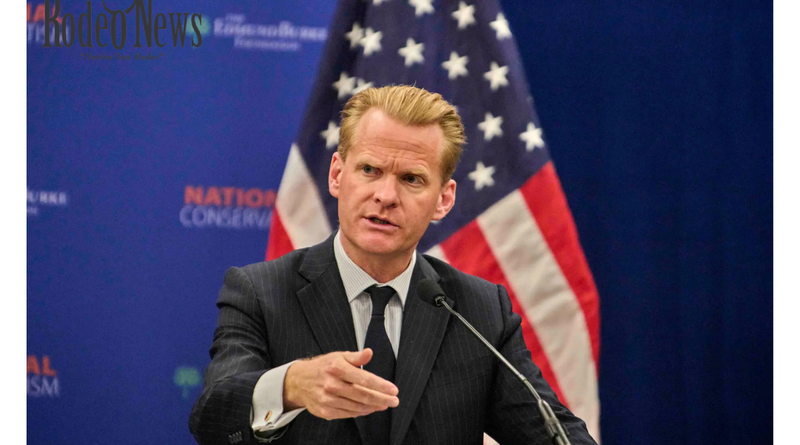
James Orr: 5 Shocking Facts Behind Reform UK Scandal
The James Orr controversy has placed Reform UK under renewed pressure after the party’s head of policy stepped down following an undercover investigation into alleged attempts to circumvent Britain’s rules governing political donations.
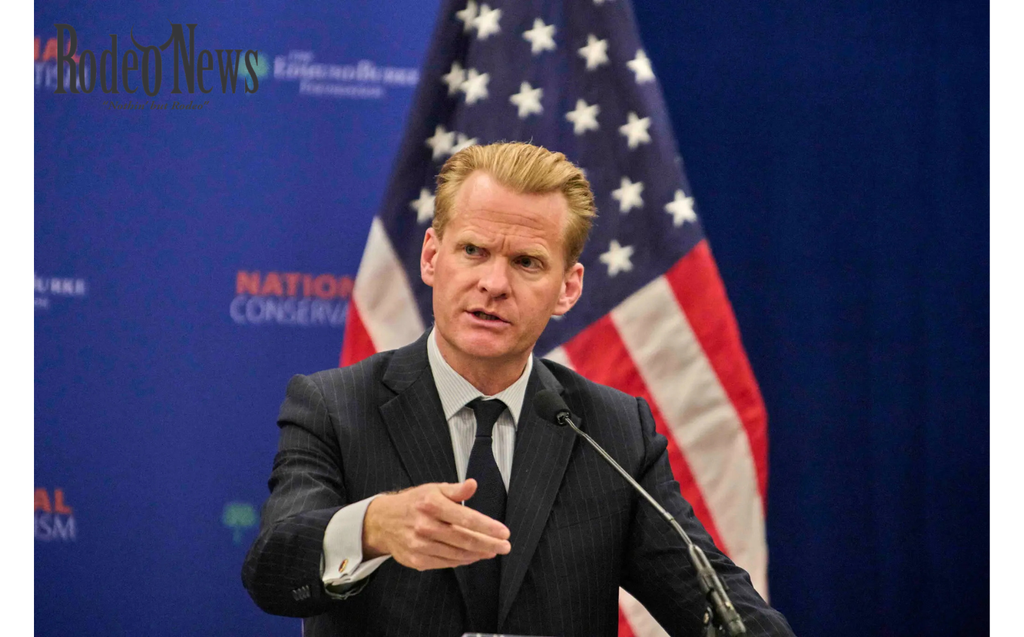
Orr, a Cambridge academic who became a senior figure in Reform UK, was one of two prominent party officials caught up in the controversy. Dan Jukes, a senior aide to Reform leader Nigel Farage, also stepped down after footage broadcast by Channel 4 raised questions about foreign funding and political polling.
Reform UK has denied wrongdoing and described the investigation as a politically motivated hoax. Farage has also rejected suggestions that his party knowingly accepted illegal foreign donations.
However, the controversy has already created serious political consequences.
The allegations emerged just as Reform UK was holding its annual conference in Birmingham, turning what was supposed to be an opportunity for the party to showcase its political agenda into a major test of its leadership.
Who Is James Orr?
James Orr is a British academic and philosopher who became increasingly involved in conservative politics before joining Reform UK.
He is an associate professor at the University of Cambridge and has been active in debates surrounding religion, philosophy and political ideas. His academic background made him an unusual figure within British party politics.
Orr became a senior adviser to Nigel Farage and was appointed Reform UK’s head of policy in February 2026.
His role was important because Reform was seeking to transform itself from a protest-oriented political movement into a party capable of governing.
That meant developing policies on issues including the economy, immigration, government reform, education and Britain’s relationship with the wider world.
Orr was therefore not simply a peripheral campaigner.
He was part of the group attempting to shape the intellectual and policy direction of Farage’s party.
That makes his involvement in the latest controversy particularly significant.
1. James Orr Was Caught in an Undercover Investigation
The immediate crisis surrounding James Orr began with an undercover investigation broadcast by Channel 4 News.
Journalists working with the investigative group Verbatim posed as potential political supporters and donors.
According to reporting by Reuters and AP, the investigation included discussions involving Reform officials about political polling and potential funding from a supposed wealthy American donor. The person presented as the donor was reportedly an undercover actor.
The investigation was designed to examine whether Reform officials would consider arrangements that could potentially circumvent Britain’s restrictions on foreign political donations.
British electoral law places restrictions on political donations from people or organizations that are not permissible UK-based donors.
The allegations therefore immediately raised questions beyond ordinary political fundraising.
The issue was whether foreign money could potentially be used to support political activity in Britain through indirect arrangements.
Reform has strongly rejected the suggestion that it knowingly broke the law.
2. The Polling Allegations Became a Major Problem
One of the most important elements of the investigation involved political opinion polling.
According to reports, undercover journalists discussed arrangements under which polling that benefited Reform could be funded by money associated with a foreign donor.
The allegations reportedly involved tens of thousands of pounds in polling expenditure.
Reuters reported that the investigation alleged Reform officials had arranged for a foreign donor to pay for political polling. The party denied wrongdoing and said it had been targeted by a hoax.
This distinction is important.
The controversy does not simply concern whether Reform received a large foreign donation directly.
It concerns whether political activity benefiting the party could have been financed through arrangements designed to obscure the true source of the money.
Under British election law, the source and eligibility of political donations can be critical.
That is why the allegations have attracted attention from politicians, regulators and potentially law-enforcement authorities.
3. Dan Jukes Also Stepped Down
The James Orr story is closely connected to the resignation of Dan Jukes.
Jukes has been described as a longtime member of Farage’s political inner circle and has worked closely with the Reform leader for years.
The undercover footage reportedly showed Jukes discussing political donations and polling arrangements.
Both men subsequently stepped down from their Reform UK roles.
The resignations were announced as the controversy intensified and as the party conference began.
Reuters reported that Reform said the two officials had stepped down after the undercover investigation, while the party continued to deny wrongdoing.
The departures were politically damaging because both men had been associated with the party’s leadership operation.
Their exits also created questions about how much Farage knew about the discussions shown in the investigation.
Farage has attempted to distance himself from the two officials, characterizing them as contractors and arguing that inappropriate comments made during conversations did not amount to an illegal donation being accepted by Reform.
4. Nigel Farage Has Tried to Contain the Damage
The controversy has put Reform leader Nigel Farage in a difficult position.
Farage has denied that Reform UK accepted an illegal donation.
He has also portrayed the investigation as an attempt to damage the party politically.
According to reports from the Reform conference, Farage described the discussions captured by the investigation as essentially informal conversations and argued that no illegal money had been accepted.
The party has also accused the people behind the investigation of attempting to entrap its officials.
That response has become an important part of the political battle.
Reform argues that being presented with a fictional donor and hypothetical financial arrangements is not the same as actually accepting an illegal donation.
Critics, however, argue that the conversations themselves raise questions about the judgment and intentions of senior party figures.
That disagreement is likely to continue as authorities assess the evidence.
5. British Authorities Are Facing Pressure to Investigate
The allegations have already prompted calls for scrutiny from political opponents.
Labour and the Liberal Democrats have called for the allegations to be investigated, while Britain’s electoral authorities are also facing pressure to examine what happened.
The controversy is particularly sensitive because UK political parties are subject to detailed rules governing permissible donations and reporting requirements.
The purpose of those rules is to prevent foreign governments, individuals or organizations from secretly influencing British politics through financial contributions.
If investigators establish that electoral law was deliberately circumvented, the consequences could be serious.
But allegations are not proof of criminal wrongdoing.
The relevant authorities would need to establish what money changed hands, who provided it, who knew about its origin and whether any legal rules were breached.
That process could take time.
Why the James Orr Case Matters
The controversy surrounding James Orr matters for a reason that extends beyond one individual.
Reform UK has been attempting to present itself as a credible alternative to Britain’s established political parties.
Farage’s party has made significant gains in recent elections and has sought to position itself as a potential governing force.
That creates a higher standard for party organization and financial transparency.
A party that wants to govern Britain must convince voters that it can manage public institutions responsibly.
Funding controversies can therefore be particularly damaging.
The allegations have arrived at a moment when Reform wants to demonstrate that it is prepared for government.
Instead, its annual conference has been dominated by questions about internal discipline, political donations and the behavior of senior officials.
James Orr’s Cambridge Role Adds Another Layer
The controversy has also attracted attention because of Orr’s position at Cambridge University.
Cambridge has confirmed that it is examining the situation involving the academic following the allegations.
The university’s review is separate from Reform UK’s internal investigation and from any potential criminal or electoral inquiry.
That distinction matters.
Orr’s political work and academic career are separate areas of responsibility, and any institutional review would have to determine whether his conduct raises issues under university rules.
The Guardian reported that Cambridge was examining the conduct of Orr after the Channel 4 investigation.
The situation illustrates how political involvement can create complications for academics who hold senior positions at universities while participating directly in party politics.
Reform UK Says the Investigation Was a Hoax
Reform’s response has centered on the circumstances of the undercover operation.
The party argues that its officials were deliberately placed in conversations with people who were pretending to be potential donors.
Reform has described the investigation as a hoax and has suggested that the operation was politically motivated.
That argument does not automatically resolve the underlying questions.
Undercover journalism often involves fictional scenarios designed to test what people will say or do when presented with a particular situation.
The key issue is whether the resulting footage provides credible evidence of misconduct.
That will ultimately depend on the full context of the conversations and any additional evidence available to investigators.
The Foreign Donation Rules Are Central
Britain’s political finance system is designed to limit the influence of foreign money.
Political parties cannot simply accept donations from any wealthy individual anywhere in the world.
There are rules governing who qualifies as a permissible donor, as well as requirements concerning reporting and transparency.
The alleged proposal involving a US-based donor therefore became particularly sensitive.
The investigation reportedly explored whether money could be routed through another person or organization.
If a foreign source were deliberately concealed to make a donation appear permissible, that could raise significant legal questions.
But again, the distinction between discussing a hypothetical arrangement and actually carrying it out is crucial.
Investigators will need to determine whether any prohibited transaction actually occurred.
The £500,000 Question
Another particularly striking element of the controversy is the reported discussion of a potential £500,000 donation.
According to AP, undercover footage showed discussions involving a supposed American financier and a possible £500,000 contribution. The alleged donor was actually part of the undercover operation.
The size of the proposed contribution explains why the story has attracted such significant attention.
Half a million pounds would represent a substantial amount of money in British party politics.
However, reports indicate that the proposed donation was not ultimately made.
That is an important distinction.
The political controversy concerns what officials allegedly discussed and whether those discussions demonstrate an intention to circumvent the law, rather than evidence that Reform actually received that specific £500,000.
Reform’s Earlier Funding Controversies
The latest scandal comes after Reform UK had already faced questions about political funding.
The party has previously faced scrutiny over large donations and the circumstances surrounding financial support from wealthy individuals.
The latest allegations therefore arrive against an existing background of debate over how Reform finances its political operation.
That history makes the current controversy more politically damaging.
Opposition parties can argue that the new allegations are part of a broader pattern requiring greater transparency.
Reform, meanwhile, insists that its opponents are attempting to undermine its growing popularity.
Could This Hurt Nigel Farage?
The biggest political question may be whether the James Orr controversy damages Farage personally.
Farage remains the central public figure within Reform UK.
The party’s identity is closely associated with him, meaning controversies involving senior advisers can quickly become questions about his leadership.
So far, Farage has sought to portray the controversy as an attack on Reform rather than a crisis within his own leadership.
He has emphasized that the party itself did not accept illegal money.
But voters may still ask whether Farage exercised sufficient oversight over people working closely with him.
That question could become increasingly important if further evidence emerges.
Reform’s Conference Has Been Overshadowed
The timing of the scandal has been especially unfortunate for Reform.
The party’s annual conference in Birmingham was supposed to provide an opportunity for Farage and his colleagues to present policies and demonstrate organizational strength.
Instead, the funding allegations dominated coverage.
The Financial Times reported that the conference was overshadowed by the controversy, with the resignations of Orr and Jukes adding to the sense of internal turmoil.
That creates a major communications challenge for Reform.
Political parties often use conferences to control their message.
Reform has instead been forced to respond to questions about its internal management and financial practices.
What Happens to James Orr Now?
For Orr, the immediate consequence is the loss of his senior Reform UK position.
His political future will depend partly on the outcome of the party’s internal review and any investigation by relevant authorities.
His academic position at Cambridge is also under scrutiny.
The situation could therefore affect both parts of his professional life.
However, it is important not to treat the allegations as established facts.
Orr has denied wrongdoing and has criticized the investigation.
Any final judgment should depend on evidence gathered by the appropriate authorities.
What Happens to Reform UK Next?
The party now faces several major challenges.
First, it must reassure supporters that its fundraising procedures are legal and transparent.
Second, it must manage the internal fallout from the departure of two senior figures.
Third, it must prevent the scandal from overwhelming its political agenda.
And fourth, it must deal with potential scrutiny from regulators and law enforcement.
That will not be easy.
Reform has built much of its political momentum around the argument that it offers something fundamentally different from Britain’s established political system.
That message becomes harder to sell if voters believe the party is struggling with the same kinds of political-finance controversies that have damaged other parties.
A Bigger Test for Reform UK’s Political Ambitions
The James Orr controversy is ultimately a test of whether Reform UK can make the transition from insurgent political movement to professional governing organization.
Political success brings greater scrutiny.
As Reform’s support has increased, journalists, regulators and political opponents have naturally paid closer attention to its finances, candidates and internal structures.
That scrutiny is unlikely to disappear.
If Reform wants to become a major governing party, it will need strong systems for financial compliance, candidate oversight and internal accountability.
The departure of senior officials gives the party an opportunity to demonstrate that discipline.
But if more allegations emerge, the pressure on Farage could become considerably more difficult to manage.
James Orr Controversy Leaves Reform UK at a Critical Moment
The James Orr scandal has created one of the most serious challenges yet for Reform UK as it attempts to establish itself as a major force in British politics.
Orr and Dan Jukes have stepped down following an undercover investigation that raised allegations about foreign funding and political polling.
Reform denies wrongdoing and says it was the target of a politically motivated sting.
The central legal questions remain unresolved.
What matters next is what investigators determine about the conversations, the money discussed and whether any electoral rules were actually broken.
For Reform UK, however, the political consequences are already clear.
The party’s annual conference has been overshadowed by the controversy, while questions about leadership, financial controls and accountability have returned to the center of the political debate.
For Nigel Farage, the challenge is now to demonstrate that his party can withstand intense scrutiny while maintaining its momentum.
For James Orr, meanwhile, the controversy has placed both his political career and his position in academia under renewed attention.
The coming weeks could determine whether the episode becomes a temporary political storm or a much larger crisis for Reform UK.