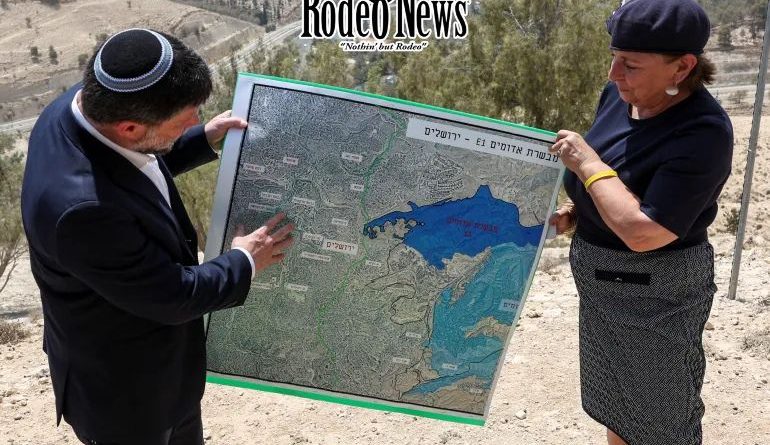
Israel’s Security Cabinet Approves Expanded Control Measures in the West Bank
Jerusalem — Israel’s security cabinet on Sunday approved a suite of new measures aimed at deepening Israeli authority and administrative control over the occupied West Bank, marking a significant shift in policy that could accelerate settlement expansion and weaken Palestinian governance.

The announcement, backed by key figures in Prime Minister Benjamin Netanyahu’s coalition, has triggered sharp condemnation from Palestinian leaders, neighbouring states, and international observers, who view the move as a potential step toward de facto annexation and a major blow to prospects for a negotiated two‑state solution.
Key Components of the New Measures
The decisions, championed by far‑right Finance Minister Bezalel Smotrich and Defence Minister Israel Katz, include substantive changes to land, planning and enforcement frameworks in the West Bank:
- Repeal of long‑standing land sale bans that previously barred Jewish Israelis from purchasing land in the territory, allowing wider civilian acquisition.
- Public opening of land registry records, enabling land transparency and facilitating transactions that were previously restricted.
- Expanded Israeli enforcement powers covering environmental, archaeological, and infrastructure oversight even in areas nominally under Palestinian Authority (PA) civil administration.
- Transfer of planning authority in sensitive areas, including parts of Hebron and religious sites, to Israeli control.
- Reactivation of a state land acquisition committee, dormant for nearly two decades, to enable proactive land purchases.
Supporters in the government have portrayed the changes as correcting “discriminatory” legal barriers and normalising civilian life for Israeli residents and settlers in the West Bank.
Political and Regional Reactions
The Palestinian leadership condemned the decision as a “dangerous, illegal attempt to legalise settlement expansion” and deepen occupation, urging international intervention by the United States and the United Nations Security Council. Palestinian officials warn the measures undermine longstanding agreements and marginalise any meaningful role for the PA in self‑rule.
Jordan’s foreign ministry described the move as an attempt to impose unauthorized Israeli sovereignty over territory that Palestinians view as central to a future state.
The militant group Hamas called for intensified confrontation against occupation forces and settlers, framing the policy shift as an existential threat to Palestinian presence in the area.
Israeli settler organisations welcomed the measures as a long‑sought reinforcement of civilian and legal certainty for Jewish residents, while peace advocacy groups cautioned the policies institutionalise discrimination and could further destabilise an already volatile region.
International Implications
The decision comes just days before a scheduled meeting between Prime Minister Netanyahu and U.S. President Donald Trump, where broader regional security and diplomatic issues are expected to feature prominently. Although the United States has historically opposed formal annexation of the West Bank, critics note that Washington has not taken significant action against ongoing settlement expansion.
International law experts and rights organisations widely regard settlement expansion in occupied territories as illegal under international law and a core obstacle to peace efforts. Most of the global community considers Israeli occupation and settlements in the West Bank and East Jerusalem a violation of the Fourth Geneva Convention.
What This Means for the Two‑State Solution
The new measures significantly shift the administrative landscape in the West Bank, potentially entrenching Israeli control over territory Palestinians claim for a future state. By lowering legal barriers for settlement expansion and reinforcing enforcement reach into Palestinian‑administered areas, the policy risks entrenching long‑term demographic and territorial changes that many analysts say will complicate any renewed peace negotiations.
Both Palestinian leaders and international mediators have reiterated calls for restraint and a return to negotiated frameworks, but the latest policy shift underscores deep divisions over the future of the West Bank and the viability of a two‑state solution.