
US Supreme Court Rejects Ghislaine Maxwell’s Final Appeal in Epstein Sex-Trafficking Case
Washington, D.C. – The U.S. Supreme Court has rejected an appeal by Ghislaine Maxwell, the former British socialite convicted of sex trafficking minors for disgraced financier Jeffrey Epstein, effectively ending her legal path to overturn her 20-year prison sentence.
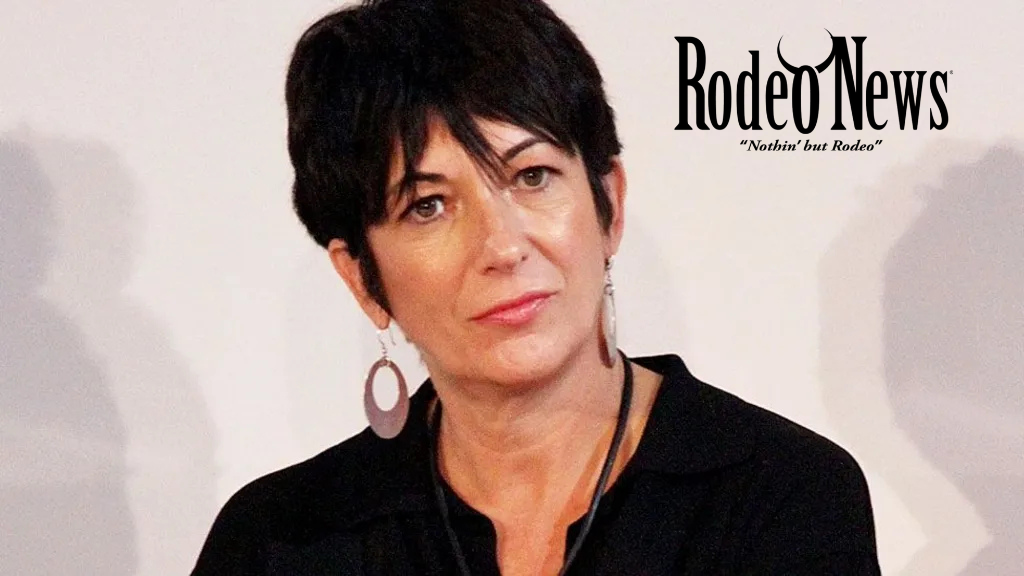
The justices offered no comment or explanation as they declined to hear the case, a standard practice in most appeals. The decision affirms the lower court’s ruling and cements Maxwell’s 2021 conviction for her role in a scheme that exploited underage girls over a decade, from 1994 to 2004.
Legal Team ‘Deeply Disappointed’
Maxwell’s attorney, David Oscar Markus, expressed dismay over the Supreme Court’s decision, telling the BBC that the defense team remains “deeply disappointed” but is continuing to explore “every possible legal avenue to ensure that justice is done.”
The Supreme Court’s refusal to review the case means Maxwell’s only remaining hope of relief rests on an unlikely presidential pardon—an option that has already sparked political debate.
Epstein Victim’s Family Speaks Out
Family members of Virginia Giuffre, one of Epstein’s most prominent accusers, welcomed the high court’s move. In a joint statement provided to the BBC, Sky and Amanda Roberts and Danny and Lanette Wilson said they were “grateful” Maxwell’s appeal had been denied.
“She needs to serve every day of that sentence,” they said. “We remain hopeful that the Department of Justice will realize that she belongs in a maximum-security prison, not the country club one she is currently in.”
Maxwell’s Role in Epstein’s Network
Maxwell, now 61, was found guilty in December 2021 on multiple charges including sex trafficking of a minor, transporting a minor with the intent to engage in criminal sexual activity, and three counts of conspiracy. Prosecutors argued that she was instrumental in recruiting, grooming, and trafficking girls as young as 14, who were then abused by Epstein.
Her conviction followed a high-profile trial that included testimony from four women who said Maxwell played a direct role in their abuse. Some described how Maxwell befriended them, normalized sexual behavior, and later facilitated their encounters with Epstein.
Ongoing DOJ Inquiry and Political Tensions
In July, Maxwell was interviewed by federal agents in the U.S. as part of a continuing Justice Department inquiry into Epstein’s broader network. The department is reportedly seeking to determine whether others were involved in the sex-trafficking scheme.
During those interviews, Maxwell is said to have denied witnessing any inappropriate behavior by former President Donald Trump during his interactions with Epstein—a subject of long-standing speculation.
Though some conservative figures have floated the idea of a potential pardon from Trump, the White House has publicly distanced itself from the matter. On Monday, Press Secretary Karoline Leavitt stated, “It’s not something I’ve heard discussed,” and reiterated that the administration does not comment on clemency requests.
Prison Conditions Under Scrutiny
Following her DOJ interview, Maxwell was transferred to FPC Bryan, a minimum-security prison in Texas, about 100 miles from Austin. The facility has come under criticism from victim advocacy groups and the families of survivors, who argue that the nature of Maxwell’s crimes merits stricter confinement.
“She’s not just any inmate,” said Amanda Roberts, speaking on behalf of Giuffre’s family. “She enabled one of the most prolific abusers of our time. That shouldn’t come with soft consequences.”
Epstein Files Still Under Seal
The Maxwell case continues to spark political and legal controversy, especially regarding the sealed files and grand jury testimony from the Epstein investigation. Advocates and journalists alike are pushing for greater transparency, warning that without the full release of documents, accountability for others involved may remain elusive.
Jeffrey Epstein died in a Manhattan jail cell in 2019 under circumstances officially ruled a suicide. His death fueled widespread conspiracy theories and reignited demands for justice for his many alleged victims.
For now, the Supreme Court’s decision brings a measure of closure to one of the most high-profile cases in recent U.S. judicial history—though questions surrounding the broader Epstein network remain far from resolved.