China-Egypt Ties: 5 Key Moves by Xi in Cairo
Chinese President Xi Jinping’s visit to Cairo has placed China-Egypt ties under a new international spotlight, as Beijing and Cairo seek to deepen economic, political and security cooperation while the Middle East undergoes another major geopolitical shift.
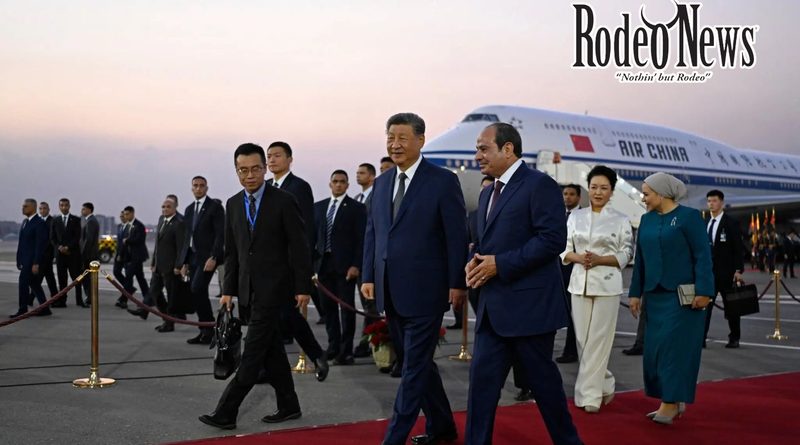
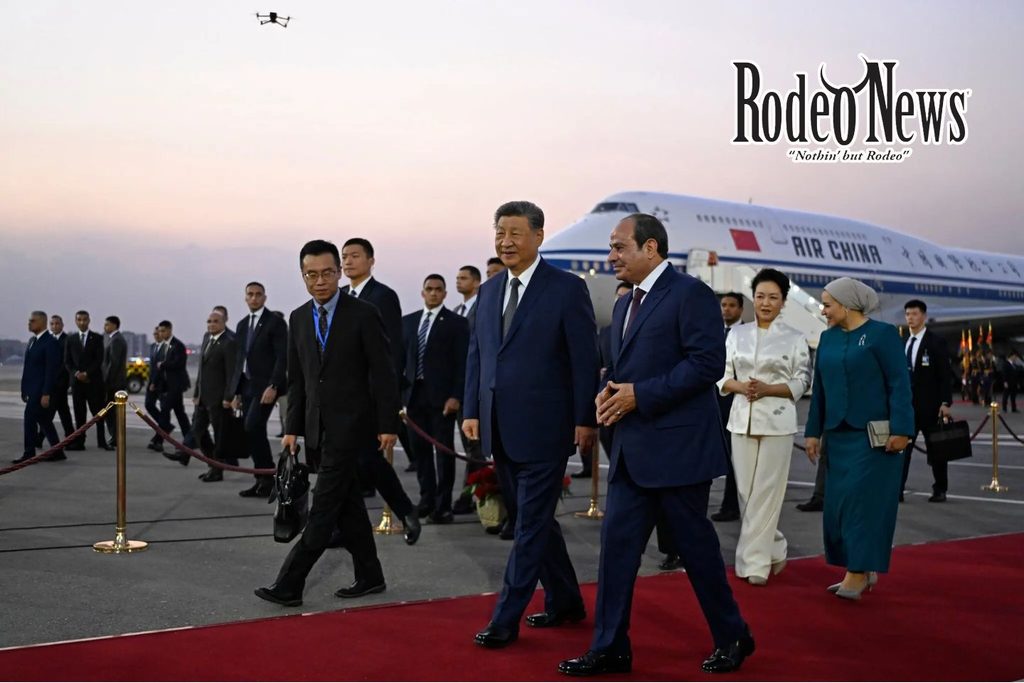
Xi arrived in Egypt for his first visit to the country in a decade and was welcomed by Egyptian President Abdel Fattah el-Sisi at a formal ceremony in Cairo. The visit comes as Egypt marks 70 years of diplomatic relations with China and as governments across the region reassess their relationships with major global powers.
The timing is significant. Egypt remains a major U.S. security partner and receives substantial American military assistance, yet Cairo has increasingly sought to diversify its international relationships. China, meanwhile, has expanded its economic and diplomatic presence across the Middle East.
Xi’s visit therefore carries meaning beyond the bilateral relationship. It reflects China’s broader effort to establish itself as an influential power in a region where Washington has traditionally played a dominant role.
China-Egypt Ties Enter a New Phase
China and Egypt established diplomatic relations in 1956, making Egypt the first Arab and African country to establish formal diplomatic ties with the People’s Republic of China. Seventy years later, the relationship has developed into a comprehensive strategic partnership.
The two countries upgraded their relationship to a comprehensive strategic partnership in 2014. Since then, Chinese companies have become increasingly involved in Egyptian infrastructure, manufacturing, energy and technology projects.
Egypt’s geographical position makes it particularly valuable to Beijing.
The country controls the Suez Canal, one of the world’s most important maritime trade routes. It also sits at the intersection of Africa, the Middle East and the Mediterranean.
For China, closer relations with Cairo can therefore support commercial interests while providing an important diplomatic connection across several regions.
For Egypt, stronger ties with Beijing provide another source of investment and technology at a time when Cairo is attempting to expand its economic partnerships beyond traditional Western allies.
1. Xi Jinping’s First Egypt Visit in a Decade
One of the most important developments is simply the timing and rarity of Xi’s trip.
Xi’s last visit to Egypt was in 2016. His return comes amid a period of intense geopolitical uncertainty, making the trip particularly significant for both governments.
Egyptian officials have presented the visit as an opportunity to strengthen political, economic and development cooperation. Talks between Xi and el-Sisi are also expected to address regional and international developments.
The formal reception at Al-Ittihadiya Palace underlined the importance Cairo places on the relationship. Egyptian officials described the visit as part of efforts to implement the comprehensive strategic partnership established more than a decade ago.
The diplomatic symbolism is equally important.
By visiting Egypt during the 70th anniversary year of diplomatic relations, Xi is reinforcing a relationship that Beijing views as a long-term partnership rather than a short-term economic arrangement.
2. Trade and Investment Are Driving the Relationship
Economic cooperation remains at the heart of China-Egypt ties.
Chinese investment has expanded across Egyptian infrastructure, energy and manufacturing. Beijing has also supported major development projects connected to Egypt’s ambitious plans to modernize its economy.
According to current reporting, Chinese investment in Egypt has exceeded $10 billion, while bilateral trade has grown to roughly $20 billion.
Infrastructure is particularly important.
Chinese companies have participated in projects linked to Egypt’s new administrative capital, a massive development project east of Cairo. The project is intended to reduce pressure on the existing capital while creating a new center for government and business activity.
The relationship also fits into China’s wider Belt and Road Initiative, which seeks to connect Chinese trade and investment with markets across Asia, Africa, Europe and beyond.
For Egypt, Chinese financing and construction expertise can help support major infrastructure projects.
For Beijing, Egypt offers access to a large domestic market as well as a strategically important gateway to international shipping routes.
3. The Suez Canal Makes Egypt Strategically Important
Economic calculations alone do not explain Beijing’s interest in Cairo.
The Suez Canal gives Egypt extraordinary importance to international commerce.
A substantial share of global maritime trade passes through the canal, connecting the Mediterranean with the Red Sea and shortening the shipping route between Europe and Asia.
China is one of the world’s largest trading nations, making stable access to international shipping routes a major strategic priority.
Closer relations with Egypt can therefore support China’s commercial interests while strengthening Beijing’s diplomatic position in a strategically critical part of the world.
Egypt also benefits from the relationship because Chinese investment can contribute to industrial development around the canal and other economic zones.
The partnership is consequently about more than individual infrastructure projects. It connects trade, logistics, manufacturing and long-term development strategy.
4. Security Cooperation Is Becoming More Visible
Another important development in China-Egypt ties is the growing security relationship.
China and Egypt recently conducted joint military exercises involving advanced fighter aircraft, signaling a level of defense cooperation that would have been less visible in previous decades.
The development is notable because Egypt has traditionally maintained a close defense relationship with the United States.
Cairo receives approximately $1.3 billion a year in U.S. military assistance, making Washington an important part of Egypt’s security architecture.
Egypt’s growing military cooperation with China does not necessarily mean Cairo is abandoning the United States.
Instead, it demonstrates Egypt’s broader strategy of maintaining relationships with multiple major powers.
This approach gives Cairo greater flexibility when negotiating economic, military and diplomatic issues.
For China, defense cooperation with Egypt also provides an opportunity to strengthen its presence in a region where American military power remains dominant.
5. China’s Middle East Influence Is Expanding
Xi’s Egypt visit should also be viewed through the wider evolution of Chinese diplomacy in the Middle East.
Beijing has increasingly presented itself as an alternative diplomatic and economic partner for countries that want stronger relations with a major power outside the traditional Western alliance system.
China has strengthened relationships with countries including Saudi Arabia, Iran and Egypt. In 2023, Beijing also played a role in facilitating the restoration of diplomatic relations between Saudi Arabia and Iran.
That history gives Xi’s visit to Cairo a broader geopolitical dimension.
China is not attempting to replace the United States in every area. Instead, Beijing has increasingly emphasized trade, infrastructure, diplomacy and multilateral cooperation.
Xi has repeatedly promoted a vision of international relations that places greater emphasis on sovereignty, noninterference and a more multipolar global system.
His visit to Egypt fits comfortably within that approach.
Egypt Wants More Strategic Options
For el-Sisi’s government, stronger China-Egypt ties provide an opportunity to diversify international partnerships.
Egypt faces substantial economic challenges, including pressure on foreign currency reserves, debt obligations and the need to attract investment.
Chinese companies can provide capital, construction expertise and technology in areas that Cairo considers essential for long-term economic development.
At the same time, maintaining close ties with Washington remains important.
That creates a delicate balancing act.
Egypt does not need to choose exclusively between China and the United States. Instead, Cairo can seek economic benefits from Beijing while preserving its security relationship with Washington.
The strategy reflects a broader trend across the Middle East, where governments increasingly seek relationships with multiple major powers rather than depending on a single strategic partner.
A Relationship Built on Political Alignment
Economic interests are only part of the story.
China and Egypt have also developed political positions that frequently overlap.
Beijing has emphasized respect for national sovereignty and opposition to what it describes as unilateral interference in the affairs of other countries.
Egypt, meanwhile, has historically supported a foreign policy centered on maintaining its sovereignty and preserving room for maneuver among competing international powers.
The two governments have also developed close coordination through international organizations and broader China-Arab and China-Africa forums.
The relationship has therefore evolved into a combination of economic cooperation, political coordination and strategic engagement.
Taiwan Is Another Area of Chinese Interest
China’s relationship with Egypt also has implications for Beijing’s wider diplomatic priorities.
Egypt has reaffirmed support for China’s sovereignty position regarding Taiwan, an issue that remains one of Beijing’s most important foreign-policy concerns.
For China, support from major Arab and African countries can strengthen its diplomatic position in international institutions.
For Egypt, maintaining a supportive relationship with Beijing can reinforce political cooperation without necessarily conflicting with its broader strategic relationships.
This is one reason Beijing places considerable value on long-term partnerships with countries that have regional influence.
Why Xi’s Cairo Visit Matters Beyond Egypt
Xi’s visit arrives during a period when the Middle East is undergoing major geopolitical changes.
The conflict involving the United States and Iran has increased uncertainty across the region, while governments are reassessing their security arrangements and economic relationships.
Against that backdrop, China has an opportunity to present itself as a stable economic and diplomatic partner.
The visit also comes as Xi prepares for further high-level diplomacy, including an expected meeting with U.S. President Donald Trump later this month.
That makes the Egypt trip part of a broader diplomatic push.
Xi’s schedule reflects China’s effort to maintain relationships across competing political camps while simultaneously strengthening its influence in emerging international institutions.
The Limits of China’s Growing Influence
Despite the momentum behind China-Egypt ties, Beijing still faces limitations.
China’s economic relationship with Egypt does not automatically translate into political dominance.
Egypt remains deeply connected to Western institutions and relies heavily on American military assistance. European countries also remain important trade and investment partners.
Furthermore, economic cooperation can create disagreements over financing, trade imbalances and the terms of major projects.
China’s growing exports have also generated concerns among trading partners about industrial overcapacity and market competition.
As a result, Beijing’s expanding role in Egypt should not be interpreted as the complete displacement of Western influence.
Instead, Egypt appears to be pursuing a more diversified foreign policy.
What Comes Next for China-Egypt Ties?
The immediate focus will be on the agreements and memoranda expected to emerge from Xi’s visit.
Officials are looking at additional cooperation in areas including infrastructure, manufacturing, energy, technology and development.
The two governments are also expected to continue coordinating on regional and international issues.
If new investment projects materialize, China could become even more deeply integrated into Egypt’s economic development plans.
That would reinforce the strategic importance of the relationship for both sides.
For Cairo, the benefits include investment, technology and another powerful diplomatic partner.
For Beijing, Egypt offers a gateway to the Middle East and Africa, access to one of the world’s most important maritime routes and a politically influential Arab partner.
Conclusion
The latest developments show that China-Egypt ties are becoming an increasingly important component of the changing geopolitical landscape.
Xi Jinping’s return to Egypt after a decade is more than a ceremonial state visit. It reflects the deepening of economic, diplomatic and security cooperation between two countries that see significant strategic value in one another.
Egypt wants to diversify its international partnerships while continuing its longstanding relationship with the United States. China wants to expand its economic and diplomatic influence across the Middle East while promoting a more multipolar international system.
The result is a relationship built on overlapping interests rather than exclusive alliances.
As the Middle East navigates a period of instability and major powers compete for influence, Cairo’s partnership with Beijing is likely to become increasingly important.
Xi’s visit demonstrates that China is no longer approaching the Middle East solely as an energy market or trading destination. Beijing increasingly sees the region as a central arena for diplomacy, infrastructure, technology and global influence.
For Egypt, meanwhile, stronger relations with China offer another avenue for economic development and strategic flexibility.
The next stage of China-Egypt ties will depend on whether the political commitments made during Xi’s visit translate into concrete investment, expanded trade and deeper cooperation.
For now, the message from Cairo is clear: Beijing and Cairo see their relationship as a long-term strategic partnership, and both governments appear determined to take it to a higher level.