Boeing’s Washington Workforce Shrinks in 2025 Even as Total Headcount Rises
SEATTLE — Boeing, the U.S. aerospace giant long synonymous with Washington state’s industrial economy, saw its local employment fall nearly 4% in 2025 as job cuts continued following earlier workforce reductions — even as the company posted overall headcount growth driven by acquisitions.
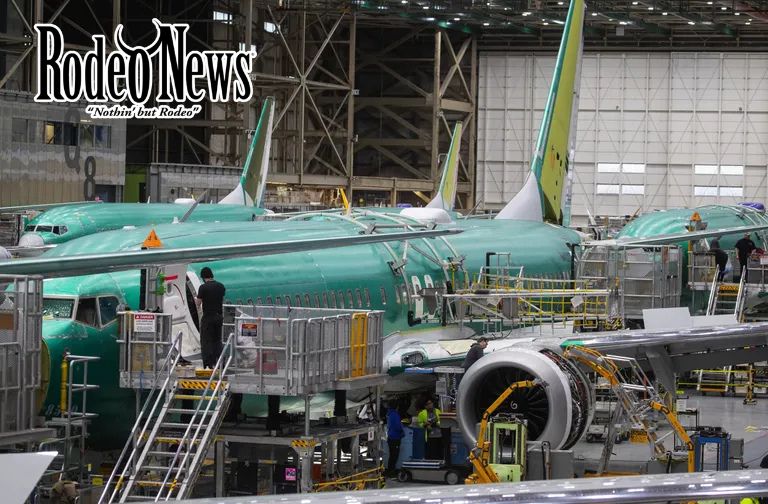
According to recent reporting, Boeing’s employment footprint in Washington state declined last year primarily because of layoffs announced in 2024, reflecting ongoing structural adjustments in the company’s commercial and engineering operations.
State Workforce Falls, Global Headcount Climbs
Local data indicate that Boeing’s Washington workforce shrank in 2025, a drop of nearly 4% from the prior year, as previously announced layoffs continued to take effect. These reductions were part of broader efforts to align labor costs with production realities after years of financial strain and operational disruptions.
Despite this decline in its Washington headcount, Boeing’s total global headcount actually increased in 2025 — a result largely attributed to the company’s acquisition of Spirit AeroSystems, a major supplier previously spun off in 2005 and brought back into Boeing’s corporate structure in late 2025.
The Spirit deal added roughly 15,000 employees into Boeing’s payroll, helping offset workforce reductions in the Pacific Northwest and other legacy sites. That expansion in total employment stands in contrast to the contraction seen in Washington state, where Boeing has historically been a cornerstone employer.
Continued Workforce Adjustments in Washington
The job cuts in Washington followed a series of workforce reductions that began in late 2024. In October of that year, Boeing announced plans to reduce its global workforce by about 10%, a move expected to affect roughly 17,000 employees worldwide. Notices filed with the Washington Employment Security Department showed that more than 2,100 Boeing workers in the state received layoff notices during that period, with impacts concentrated in engineering and professional roles rather than assembly line positions.
These cuts took place against a backdrop of operational challenges for Boeing, including production restrictions on its bestselling 737 Max, lingering quality control issues, and a prolonged machinists’ strike that disrupted assembly lines in 2024 and into 2025.
Although the layoffs have reduced employment locally, Boeing has continued to hire selectively in other parts of its business and through strategic acquisitions — a factor that contributed to the modest net growth in its global employee numbers.
Economic Implications for the Region
Boeing’s employment moves have broader economic consequences for Washington state, where aerospace manufacturing constitutes a vital part of the industrial base. The company’s facilities in Everett, Renton and other Puget Sound locations collectively support tens of thousands of jobs not only at Boeing but across a wide supply chain.
Industry analysts have noted that the reduction in aerospace jobs in Washington mirrors larger trends in manufacturing employment but is especially visible due to Boeing’s scale and historical role in the region. Government data show that aerospace employment in the state experienced contraction even as other sectors showed resilience.
Labor Relations and Future Prospects
Boeing’s workforce changes also intersected with labor relations developments. The company has recently concluded new labor agreements with former Spirit AeroSystems white-collar employees, reaching a contract that includes wage increases, bonuses and enhanced benefits for those workers now integrated into Boeing’s operations.
Negotiations with larger bargaining units, particularly among engineers and technical staff in Washington and other states, are expected to continue in 2026, with unions and Boeing management preparing for upcoming discussions on contracts and workforce needs.
Balancing Employment and Strategic Shifts
For Boeing, the divergent trends — shrinking employment in Washington and broader headcount expansion — reflect a company in transition. Operational realignments aimed at restoring profitability and addressing production backlogs have necessitated workforce reductions. At the same time, strategic moves like the Spirit AeroSystems acquisition indicate a focus on strengthening the company’s supply chain and long-term industrial footprint.
Investors and industry watchers are closely monitoring Boeing’s capacity to balance employment levels with production targets, particularly as global demand for commercial air travel recovers and the company works to increase shipments of its key aircraft models.
As Washington state policymakers and business leaders assess the implications of these labor trends, Boeing’s role in the regional economy remains significant even amid ongoing workforce restructuring.