Apple’s iPhone 17 Pro Max Hits $2,000 With 2TB Storage Option
October 14, 2025 — Cupertino, California
Apple has officially launched its latest flagship smartphone, the iPhone 17 Pro Max, and it’s making headlines — not just for its new features, but for its eye-popping price tag. For the first time ever, an iPhone now costs $2,000 — if customers opt for the version with two terabytes (2TB) of internal storage.
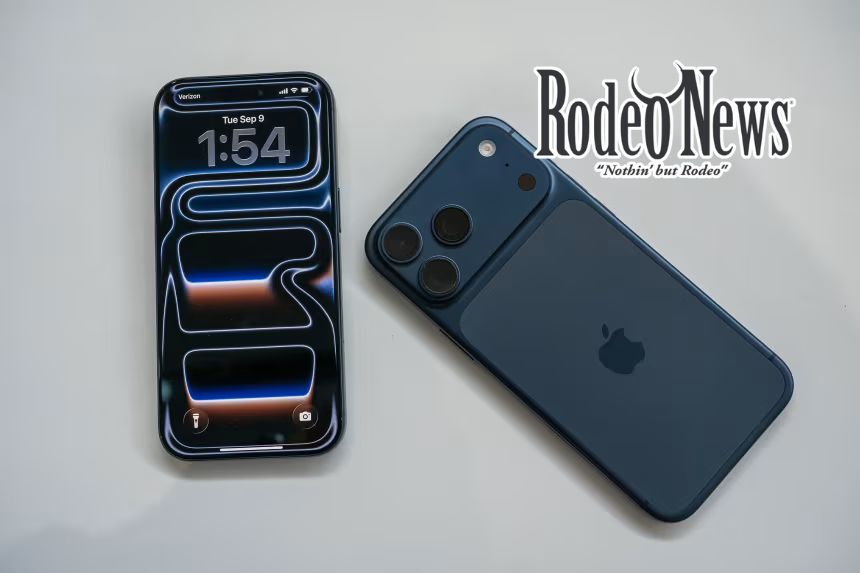
The move positions Apple’s top-tier device as one of the most expensive mainstream smartphones on the market, marking a bold bet that some users are still willing to pay a premium — even amid economic uncertainty.
The Price of Premium
The $2,000 price tag is tied to the new 2TB storage variant, a configuration Apple has never offered before. While storage upgrades have always come at a cost, this marks a new ceiling for Apple — and for the broader smartphone industry.
Apple’s iPhone 17 lineup, revealed during its September keynote at its Cupertino headquarters, includes the base iPhone 17, the 17 Pro, the redesigned iPhone Air, and the headline-grabbing 17 Pro Max.
The Pro Max, with its extended battery life, redesigned camera system, and enhanced chip performance, now also caters to content creators and professionals who require massive local storage.
“This is the first phone on the market offering 2TB of internal storage,” said Angelo Zino, senior VP at CFRA Research. “It’s a clear signal that Apple wants to further differentiate its Pro models and appeal to high-end users like video editors and creatives.”
Shift in Strategy Amid Slowing Market
With smartphone sales plateauing in many markets, Apple’s new pricing strategy reflects an effort to boost average selling prices (ASP) rather than chase sheer unit sales.
“The $2,000 iPhone won’t be a volume product,” Zino explained. “But it will lift the ASP, which investors watch closely.”
Analysts suggest Apple is leveraging its loyal Pro user base to drive revenue growth in an otherwise challenging market. Inflation, rising tariffs, and consumer belt-tightening have all put pressure on mid- and low-end phone sales.
“Economic uncertainty tends to compress demand at the lower end of the market, where price sensitivity is highest,” wrote Nabila Popal, senior analyst at IDC, in a recent report.
Apple vs Competitors: Who’s Really the Most Expensive?
While Apple’s $2,000 iPhone may seem extreme, it’s actually not the most expensive device available. Competitor brands like Samsung and Google are already in the ultra-premium tier, especially in the foldable category.
- Samsung’s Galaxy Z Fold 7 (1TB): $2,419.99
- Google Pixel 10 Pro Fold (1TB): $2,149
Still, Apple’s offering is unique: it’s a non-foldable smartphone with 2TB of internal memory — more than many consumer laptops.
“It’s an absurd amount of storage for most people,” said Josh Lowitz, an analyst with Consumer Intelligence Research Partners. “Only users with extraordinary video needs or creators working in 4K+ environments will benefit from that capacity.”
Who Will Actually Pay $2,000?
Despite the sticker shock, many customers may not pay that amount upfront. U.S. carriers often soften the financial blow through trade-in deals and installment plans.
In fact, data shows that over 50% of U.S. phone buyers finance their devices through monthly payment plans. Apple’s pricing model, though ambitious, could thrive under such terms.
Additionally, the more affordable iPhone Air — priced at $100 more than last year’s iPhone 16 Plus — is expected to drive more unit sales than the Pro Max.
“Most of the ASP lift might actually come from the iPhone Air,” Zino noted. “But the 2TB option gives Apple bragging rights in the premium space.”
Designed for Creators
The iPhone 17 Pro Max isn’t just about space — it’s about performance and power.
With Apple’s new thermal design, the latest chip, and advanced video tools, the phone is being pitched as a legitimate tool for professionals. Apple even revealed that its entire September event was shot using an iPhone 17 Pro, underscoring the device’s camera capabilities.
For those working in video production, graphic design, or multimedia — where file sizes can balloon into hundreds of gigabytes — 2TB might be less luxury and more necessity.
What Comes Next?
Dan Ives, a longtime Apple watcher at Wedbush Securities, believes that the pricing strategy won’t deter demand. In fact, he predicts a 5–10% increase in iPhone preorders this year, pointing to Apple’s massive upgrade cycle.
According to his firm’s estimates, 20% of global iPhone users haven’t upgraded in over four years — a figure Apple is clearly targeting with its 2025 lineup.
Final Thoughts
At $2,000, the iPhone 17 Pro Max is Apple’s most expensive phone yet — but in today’s creator-driven, pro-focused tech market, the company seems confident there’s demand for extreme specs.
The question remains: will the average user need — or even notice — two terabytes of storage?