Knicks Collapse Shocking: 3 Key Blunders Revealed
The Knicks collapse in Game 2 of their playoff series against the Atlanta Hawks was not just painful—it was avoidable. After building a comfortable lead late in the game, the New York Knicks suffered a dramatic 107–106 defeat that stunned fans and analysts alike.
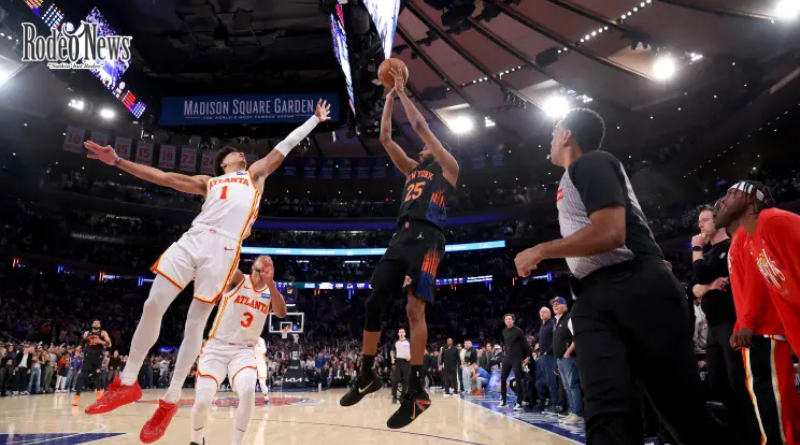
While many initially pointed fingers at Mikal Bridges for missing the potential game-winning shot at the buzzer, deeper analysis shows the loss was the result of multiple breakdowns long before that final possession. In reality, three key figures played a far bigger role in the Knicks collapse—head coach Mike Brown, star guard Jalen Brunson, and forward OG Anunoby.
This wasn’t about one missed shot. It was about a systemic failure in execution, decision-making, and composure during the most critical stretch of the game.
A Game That Slipped Away
For much of Game 2, the Knicks appeared in control. They built a solid lead heading into the fourth quarter and had historically been nearly unbeatable in that situation. However, the final period told a completely different story.
The Hawks surged late, outplaying New York on both ends of the floor. The Knicks’ offense stalled, their defense weakened, and their confidence visibly eroded. Atlanta capitalized with efficiency, shooting at a high percentage and executing in clutch moments.
By the time the final seconds arrived, the Knicks had already lost control. The missed shot by Bridges was simply the last moment in a chain reaction of mistakes.
Why Mikal Bridges Is Not the Problem
It’s easy to blame the player who misses the final shot. But that narrative doesn’t hold up under scrutiny.
Bridges had a relatively quiet offensive night and was not heavily involved in late-game playmaking. Asking him to suddenly deliver the game-winning basket in isolation was questionable in itself.
More importantly, the game should never have come down to that shot.
Basketball is a 48-minute contest, and the Knicks collapse occurred well before the buzzer. Blaming Bridges ignores the deeper structural issues that led to that moment.
1. Mike Brown’s Costly Coaching Decisions
The first major contributor to the Knicks collapse was head coach Mike Brown.
Late-game management is where elite coaches separate themselves, and in this instance, Brown fell short. One of the most glaring issues was his use of timeouts. He burned a critical timeout too early, leaving the team without the ability to properly organize a final play when it mattered most.
That decision had a ripple effect. Without a timeout, the Knicks were forced into a rushed, improvised final possession—hardly ideal in a one-point game.
Additionally, lineup decisions raised questions. Key players were either misused or not placed in optimal positions during the Hawks’ late surge. This allowed Atlanta to build momentum and exploit mismatches.
In high-stakes playoff basketball, small coaching errors can have massive consequences. In this case, they were a major factor in the Knicks collapse.
2. Jalen Brunson’s Defensive Struggles
Offensively, Brunson delivered as expected. However, his defensive performance became a liability in crunch time.
The Hawks repeatedly targeted Brunson, exploiting mismatches and attacking him in isolation. CJ McCollum, in particular, took advantage, scoring crucial late baskets that shifted the momentum of the game.
Defense often determines playoff outcomes, and the Knicks were unable to contain Atlanta’s late-game offense. Brunson’s struggles on that end of the floor allowed the Hawks to close the gap and eventually take the lead.
This highlights a broader issue: even elite offensive players must hold their ground defensively in the playoffs. When they don’t, opposing teams will relentlessly exploit the weakness.
3. OG Anunoby’s Late-Game Mistakes
The third key factor in the Knicks collapse was OG Anunoby’s performance in the final minutes.
Anunoby made several costly errors, including a critical turnover and missed free throws at a pivotal point in the game.
Free throws, often considered the simplest aspect of basketball, become magnified in close playoff games. Missing them in crunch time can be the difference between winning and losing—and in this case, it was.
Turnovers are equally damaging. Giving away possessions late in the game not only wastes scoring opportunities but also hands momentum directly to the opponent.
Anunoby’s mistakes didn’t just hurt the Knicks statistically—they shifted the psychological balance of the game in favor of Atlanta.
The Fourth Quarter Breakdown
The Knicks collapse was most evident in the fourth quarter.
After building a comfortable lead, New York’s offense stagnated. Shot selection became questionable, ball movement slowed, and players appeared hesitant. Meanwhile, the Hawks executed with confidence and precision.
Atlanta outscored New York significantly in the final period, capitalizing on defensive lapses and converting high-percentage shots.
This kind of turnaround doesn’t happen by accident. It reflects a combination of poor execution, strategic missteps, and a failure to adjust under pressure.
Momentum Shift and Psychological Impact
Momentum is a powerful force in basketball, especially in the playoffs.
As the Hawks began their comeback, the Knicks struggled to respond. Each missed shot, turnover, and defensive lapse added to the pressure. Confidence quickly turned into uncertainty.
On the other side, Atlanta grew stronger with each successful possession. Their energy increased, their execution sharpened, and their belief intensified.
By the final minutes, the psychological advantage clearly belonged to the Hawks.
A Missed Opportunity
This loss represents more than just one game—it’s a missed opportunity.
The Knicks had a chance to take a commanding lead in the series. Instead, the Hawks evened it at 1–1, shifting momentum and putting pressure back on New York.
Playoff series often hinge on moments like this. A single collapse can change the trajectory of an entire matchup.
What the Knicks Must Fix
If the Knicks want to recover, they need to address several key areas:
1. Better Game Management
Coaching decisions must improve, especially in late-game situations. Timeouts, rotations, and play-calling need to be sharper.
2. Defensive Adjustments
Opponents will continue targeting weak defenders. The Knicks must adapt and provide better help defense.
3. Clutch Execution
Free throws, ball security, and shot selection must improve in critical moments.
4. Mental Toughness
Perhaps most importantly, the team must maintain composure under pressure. Playoff basketball demands resilience.
Looking Ahead
The Knicks collapse in Game 2 is a wake-up call.
There is still plenty of basketball left in the series, but adjustments are necessary. The team has the talent to compete at a high level, but talent alone is not enough.
Execution, discipline, and decision-making will determine whether the Knicks can bounce back—or if this collapse becomes a defining moment in their playoff run.
Conclusion
The narrative that Mikal Bridges is to blame for the Knicks collapse is overly simplistic.
The reality is far more complex.
This was a collective failure driven by coaching decisions, defensive breakdowns, and costly mistakes in crucial moments. By the time the final shot was taken, the damage had already been done.
If the Knicks hope to advance, they must learn from this loss quickly. Because in the playoffs, every mistake is magnified—and every collapse can be season-defining.