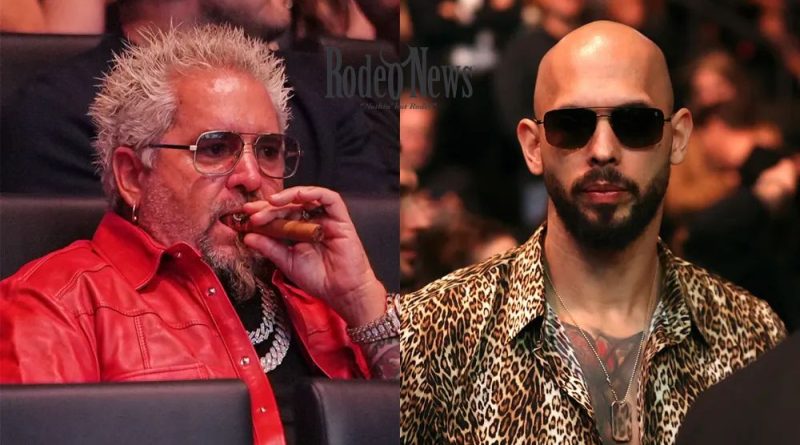
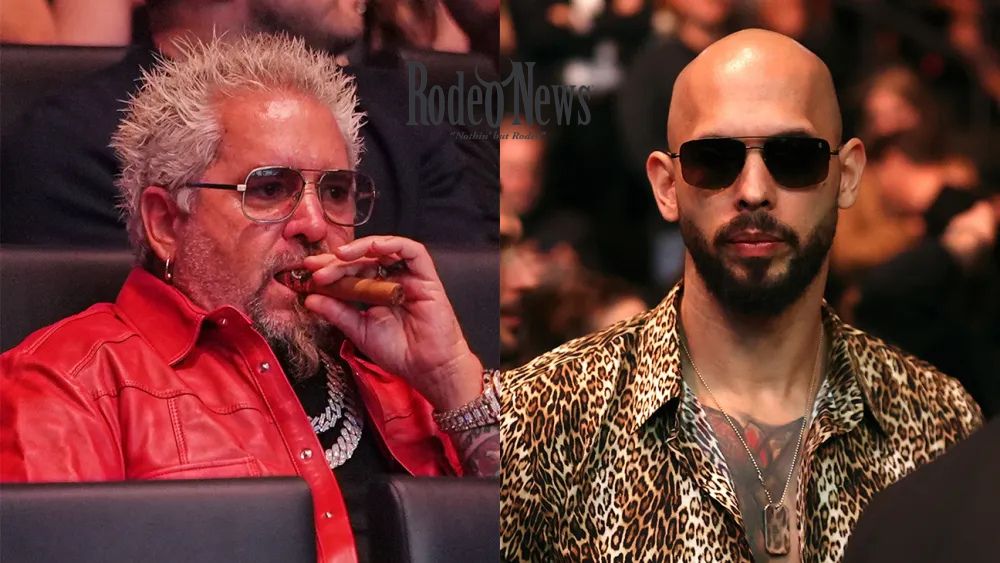
The intensity of the Guy Fieri backlash is largely tied to the public reputation of the Tate brothers. Andrew and Tristan Tate have faced serious legal allegations, including charges related to human trafficking and sexual assault in multiple countries. While they have denied all accusations, their public image remains highly polarizing.
As a result, even a brief and seemingly harmless interaction with them was enough to spark outrage among fans and critics alike. Many questioned why a mainstream figure like Fieri would associate—intentionally or not—with individuals facing such serious allegations.
Critics argued that public figures carry a responsibility to be aware of who they interact with, especially in high-profile settings. Others, however, took a more lenient stance, suggesting that not every encounter implies endorsement.
Guy Fieri Responds: “I Do Not Know Them”
In response to the growing criticism, Guy Fieri issued a public statement clarifying the situation. He emphasized that the interaction was brief and unplanned, and that he was unaware of who the Tate brothers were at the time.
“I do not know the Tate brothers nor do I support them,” Fieri said, making his position clear amid the controversy.
He further expressed regret over the incident, acknowledging the backlash and the concerns raised by fans. According to reports, Fieri described himself as “devastated” by the reaction and stressed that he would never intentionally associate with individuals whose values conflict with his own.
This response, while direct, did little to fully quell the debate.
The Power of Viral Moments in Celebrity Culture
The Guy Fieri backlash highlights how quickly a single moment can escalate in today’s digital landscape. In the age of smartphones and social media, even a few seconds of footage can be captured, shared, and analyzed by millions within hours.
This phenomenon is not new, but it continues to intensify. Public figures are now under constant scrutiny, and their actions—intentional or not—are often interpreted through a broader social and political lens.
In Fieri’s case, the interaction lasted only seconds. Yet the viral nature of the clip transformed it into a major controversy, illustrating how context can sometimes be lost in the rapid spread of online content.
Professional Consequences Begin to Surface
The backlash has already had tangible consequences for Fieri’s professional commitments. Reports indicate that at least one scheduled appearance tied to a brand partnership was canceled shortly after the controversy gained traction.
This development underscores the real-world impact of online outrage. For brands, associations matter deeply, and even indirect controversies can influence business decisions.
It also reflects a broader trend in which companies act quickly to distance themselves from potential reputational risks, often before the full context of a situation is widely understood.
Divided Public Opinion
Public reaction to the Guy Fieri backlash has been sharply divided.
On one side, critics argue that ignorance is not an excuse—especially for someone in Fieri’s position. They believe that celebrities should exercise greater awareness and caution in public settings.
On the other side, supporters have defended Fieri, pointing out that large events like UFC fights involve countless interactions, many of which are spontaneous. They argue that it is unrealistic to expect individuals to recognize everyone they encounter.
Some fans also emphasized Fieri’s long-standing reputation as a positive and charitable figure, suggesting that the incident does not align with his overall character.
The Tate Brothers: A Controversial Presence
Part of what makes the situation so volatile is the continued presence of the Tate brothers in public spaces despite ongoing legal scrutiny. Their appearances at major events often draw attention and, in some cases, controversy.
The brothers have built a massive online following, particularly among younger audiences, while also facing significant criticism for their views and alleged actions.
This duality—popularity combined with controversy—means that any interaction involving them is likely to be closely examined.
Celebrity Accountability in the Spotlight
The Guy Fieri backlash also feeds into a larger conversation about celebrity accountability. In recent years, audiences have increasingly expected public figures to take clear stances on social and ethical issues.
This shift has created a more complex environment for celebrities, who must navigate not only their own actions but also how those actions are perceived by a global audience.
In many cases, even unintended associations can lead to reputational challenges.
Lessons from the Controversy
Several key takeaways emerge from this situation:
1. Awareness matters more than ever
Public figures are expected to be informed, even in fast-moving environments.
2. Context can be lost quickly
Short clips and images rarely capture the full story, yet they often shape public perception.
3. Reputational risks are immediate
Brands and partnerships can be affected within hours of a controversy emerging.
4. Public opinion is rarely unified
Reactions are often split, reflecting broader societal divisions.
What Happens Next for Guy Fieri?
As the situation continues to unfold, it remains unclear whether the Guy Fieri backlash will have lasting effects on his career. Historically, Fieri has maintained a strong public image, built on years of successful television programming and philanthropic efforts.
While this incident represents a significant moment of scrutiny, it may ultimately fade as new stories dominate the news cycle.
However, it also serves as a reminder of how quickly public perception can shift—and how even the most well-established figures are not immune to controversy.
Conclusion
The Guy Fieri backlash over his brief interaction with the Tate brothers is a powerful example of how modern celebrity culture operates. A single moment, captured and shared online, can spark widespread debate and real-world consequences.
Fieri’s response has clarified his position, but the incident continues to raise important questions about accountability, perception, and the challenges of navigating public life in a hyper-connected world.
As audiences become more engaged and critical, the expectations placed on public figures are likely to keep evolving—making situations like this increasingly common in the years ahead.