Doug Moe, Architect of High-Scoring Nuggets Era, Dies at 87
Doug Moe, the rumpled, sharp-tongued basketball lifer who helped define one of the most electrifying eras in Denver Nuggets history, has died at 87.
Moe passed away Tuesday following a long battle with cancer, according to family members. His son, David Moe, informed close friends of his father’s death. Longtime Denver television personality Ron Zappolo confirmed the news to The Associated Press.
In a statement posted to social media, the Nuggets described Moe as “a one-of-a-kind leader and person who spearheaded one of the most successful and exciting decades in Nuggets history.”
An ABA Original
Moe’s basketball journey stretched back to the American Basketball Association, where he first built his reputation as an inventive mind and a fierce competitor. But it was in the NBA — and particularly in Denver — where he became a fixture.
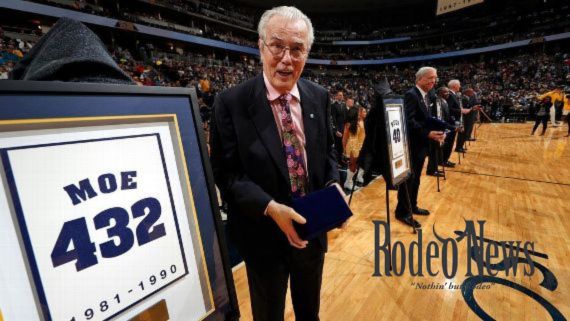
Across 15 seasons as a head coach, including stints with the San Antonio Spurs and Philadelphia 76ers, Moe compiled a 628–529 record. His most enduring chapter, however, came with the Nuggets during the 1980s, when his teams turned regular-season games into track meets and playoff series into spectacles.
Though he never captured an NBA championship, Moe guided Denver to the Western Conference finals in 1985, where the Nuggets fell to the Los Angeles Lakers at the height of their Showtime dominance. Three years later, he was named NBA Coach of the Year in 1988 — a nod to both his tactical daring and his ability to maximize offensive talent.
Motion, Mayhem and Points in Bunches
Moe’s teams were defined by pace and freedom. His motion offense emphasized constant movement, spacing and instinct over rigid structure. He rarely called set plays, preferring instead to let his players read and react.
The results were staggering. Denver led the league in scoring for five consecutive seasons in the early 1980s, routinely pushing games into the 120s and beyond. For fans at McNichols Sports Arena, Nuggets games were less about half-court precision and more about controlled chaos.
Moe patrolled the sidelines in his trademark rumpled suits, barking instructions, waving arms and occasionally delivering commentary that was as colorful as his offensive schemes. He referred to players he liked as “stiffs” — a term of endearment in his vocabulary — and was known for language that could veer into R-rated territory.
Among the players most associated with his tenure were high-scoring forward Kiki VanDeWeghe, center Danny Schayes and guard Bill Hanzlik — competitors who thrived in Moe’s up-tempo system and absorbed his blunt coaching style.
More Than Wins and Losses
For all the statistics — the victories, the scoring titles, the playoff runs — Moe’s legacy in Denver rests equally on identity. He gave the franchise personality at a time when the NBA was expanding westward and television audiences were growing.
He embraced irreverence, valued toughness and demanded pace. In doing so, he turned the Nuggets into one of the league’s most watchable teams and helped cement basketball’s foothold in the Rocky Mountain region.
Moe’s career record may not include a championship banner, but in Denver, his influence lingers in the franchise’s DNA — in the belief that offense can be art, that entertainment matters and that a coach’s personality can shape an era.
He is survived by his family, friends and generations of players who learned under his unconventional, unforgettable watch.
In a league often defined by rings, Doug Moe will be remembered for something different: a style, a swagger and a decade when the Nuggets ran — and the scoreboard struggled to keep up.