Artemis II Countdown Begins: 80% Go for Historic Launch
The Artemis II countdown has officially begun, marking a pivotal moment in modern space exploration as NASA prepares to send astronauts around the Moon for the first time in more than half a century.
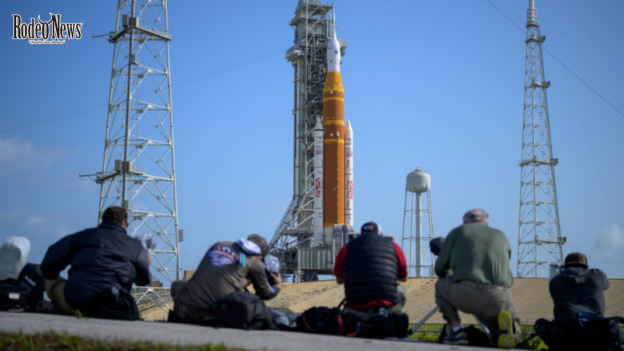
With launch operations underway at Kennedy Space Center, officials have confirmed an encouraging 80% chance of favorable weather conditions—raising optimism that liftoff could proceed as scheduled.
This mission is not just another launch. It represents a historic return to deep space and a critical step toward establishing a long-term human presence beyond Earth.
Launch Timeline and Current Status
NASA is targeting a launch window opening at approximately 6:24 p.m. ET on April 1, 2026. The two-hour window provides flexibility, but all systems must align perfectly for a successful liftoff.
The Space Launch System (SLS) rocket and Orion spacecraft are already positioned at Launch Pad 39B, having completed rollout and final integration procedures. Engineers are currently powering systems, checking communications, and preparing cryogenic fueling operations.
As part of the Artemis II countdown, the mission has entered its final 36-hour phase—often considered the most critical period before launch.
Why the 80% “Go” Weather Forecast Matters
Weather conditions play a decisive role in every space launch. Even minor atmospheric instability can delay or cancel a mission worth billions of dollars.
For Artemis II, meteorologists—working closely with the U.S. Space Force—have predicted an 80% probability of acceptable launch conditions.
However, that remaining 20% risk is significant.
Key concerns include:
- Thick cloud cover (triggering the “Thick Cloud Rule”)
- High-altitude winds
- Lightning risks
NASA teams are continuously monitoring these variables in real time to ensure astronaut safety.
Meet the Artemis II Crew
The Artemis II countdown is centered around four astronauts who will embark on a historic journey:
- Reid Wiseman – Commander
- Victor Glover – Pilot
- Christina Koch – Mission Specialist
- Jeremy Hansen – Mission Specialist
This diverse crew represents several historic milestones, including the first woman, first person of color, and first non-American astronaut to travel beyond low Earth orbit on a lunar mission.
They are currently in quarantine and undergoing final health stabilization procedures ahead of launch.
A Mission Over 50 Years in the Making
Artemis II will be the first crewed mission to travel beyond low Earth orbit since the Apollo era, specifically since 1972.
The mission is expected to last approximately 10 days, during which the crew will:
- Travel around the Moon in a free-return trajectory
- Test Orion’s life-support systems
- Evaluate deep-space navigation and communication
Unlike future Artemis missions, Artemis II will not land on the Moon. Instead, it serves as a critical test flight to validate systems for upcoming lunar landings.
The Technology Behind Artemis II
At the heart of the mission is NASA’s most powerful rocket ever built—the Space Launch System (SLS).
Paired with the Orion spacecraft, the system is designed to carry humans deeper into space than ever before.
Key features include:
- Advanced propulsion systems
- Deep-space life support
- High-speed reentry capabilities
The Orion capsule is expected to reach speeds of up to 25,000 mph during its return to Earth, pushing engineering limits further than previous missions.
What Happens During the Final Countdown
The Artemis II countdown involves a highly choreographed sequence of events.
In the final hours before launch, teams will:
- Load cryogenic fuel into the rocket
- Conduct system-wide diagnostics
- Verify communication links
- Perform final “Go/No-Go” checks
Even a minor anomaly can trigger a delay. As experts often note, space launches are among the most complex operations humans attempt.
Why Artemis II Is So Important
The significance of Artemis II extends far beyond a single mission.
It is a key milestone in NASA’s broader Artemis program, which aims to:
- Return humans to the Moon permanently
- Establish a sustainable lunar base
- Prepare for future missions to Mars
In many ways, this mission is laying the foundation for humanity’s next era of exploration.
Global Attention and Competition
The Artemis II countdown is drawing global attention, not only from scientists but also from governments and private space companies.
Countries like China are accelerating their own lunar ambitions, while commercial players such as SpaceX and Blue Origin are contributing technology and infrastructure to the Artemis program.
This renewed space race is shaping the future of exploration—and Artemis II is at the center of it.
What Could Delay the Launch
Despite the optimistic 80% forecast, several factors could still delay liftoff:
- Sudden weather deterioration
- Technical issues during fueling
- Safety concerns for the crew
NASA has a launch window extending several days, allowing flexibility if conditions are not ideal on the first attempt.
What Happens After Launch
If successful, Artemis II will send the crew on a journey around the Moon and back to Earth.
The mission will conclude with a splashdown in the Pacific Ocean, where recovery teams will retrieve the astronauts and spacecraft.
The data collected during this mission will directly inform Artemis III—the mission planned to land humans on the Moon.
A New Era of Space Exploration
The Artemis II countdown symbolizes more than just a launch—it represents humanity’s return to deep space.
After decades of focusing on low Earth orbit, this mission marks a bold step toward exploring the Moon, Mars, and beyond.
As the countdown continues and the world watches closely, one thing is clear:
This is not just NASA’s mission—it is a milestone for all of humanity.
Conclusion
With an 80% chance of favorable weather and final preparations underway, the Artemis II countdown is entering its most critical phase.
If successful, this mission will redefine what is possible in human spaceflight and pave the way for future exploration beyond Earth.
The world now waits for liftoff—one that could mark the beginning of a new space age.