American Cheetah DNA Changes the Story
American cheetah DNA has delivered a major surprise about one of North America’s most unusual extinct predators. The animal commonly called the American cheetah was not actually a close relative of today’s cheetahs. Instead, new genetic evidence places Miracinonyx trumani much closer to modern pumas.
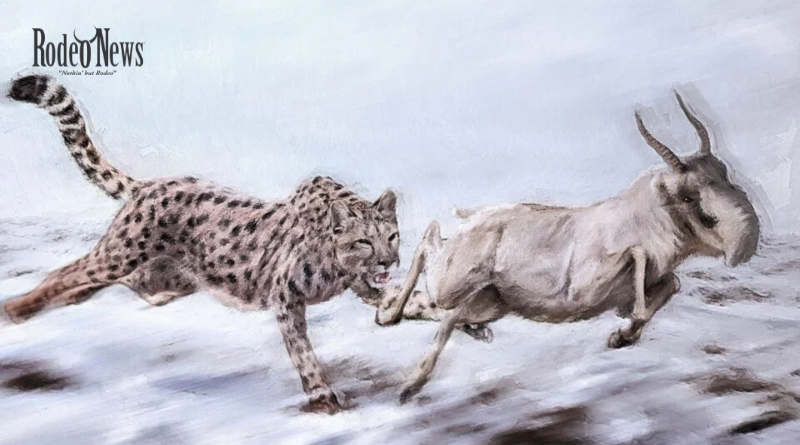
The discovery is more than a correction to an old scientific label. Researchers also found evidence that the extinct cat lived much farther north than previously known and that populations in the ancient Arctic may have relied heavily on fish.
The findings, published September 4, 2026, in Current Biology, offer a dramatically different picture of an animal once imagined mainly as a high-speed hunter racing across the grasslands of Ice Age North America.
Instead, Miracinonyx trumani appears to have been an adaptable predator capable of changing its lifestyle depending on its environment.
That flexibility may be one of the most important lessons from the new research.
American Cheetah DNA Reveals a Puma Relative
The name “American cheetah” has always been based largely on appearance.
Miracinonyx trumani had a slender body, elongated limbs and other anatomical features that made it look remarkably similar to the modern cheetah. Those characteristics suggested an animal designed for speed and pursuit.
When the species was formally described in 1979, scientists proposed that these similarities reflected a close evolutionary relationship with true cheetahs.
But appearance can be deceptive.
Modern cheetahs belong to the genus Acinonyx and are part of an Old World lineage. Pumas, meanwhile, are part of a New World lineage associated with the Americas.
Genetic evidence began challenging the original interpretation years ago. A mitochondrial DNA analysis published in 2005 already suggested that Miracinonyx was more closely connected to pumas than to true cheetahs.
The latest research goes considerably further.
Using nuclear paleogenomes from ancient fossils, researchers were able to place M. trumani more confidently on the evolutionary tree. The study identifies it as a sister species of the modern puma, with the two lineages diverging approximately 2.6 million years ago.
That distinction matters because it changes how scientists should interpret almost everything about the animal.
The extinct cat was not simply an American version of the African or Asian cheetah. Its cheetah-like body evolved independently.
Why Did the American Cheetah Look Like a Cheetah?
The answer is convergent evolution.
Convergent evolution occurs when unrelated organisms independently develop similar characteristics because they face comparable environmental pressures.
A classic example is the streamlined shape shared by dolphins and fish. They are not close relatives, but both evolved bodies suited to moving efficiently through water.
A similar process appears to have happened with Miracinonyx and modern cheetahs.
Both animals developed body shapes associated with fast movement. Their long limbs and slender builds could have helped them pursue quick prey across open landscapes.
However, that physical similarity does not mean they inherited those traits from a recent common ancestor.
Instead, they arrived at similar solutions independently.
The new American cheetah DNA evidence strengthens this interpretation and demonstrates why paleontologists must be cautious when reconstructing extinct animals from skeletons alone.
A fossil can reveal what an animal looked like. DNA can reveal where it belongs.
Together, those forms of evidence can produce a much more complete picture.
American Cheetah DNA Expands Its Ancient Range
The genetic discovery came with another major surprise.
Researchers examined fossils from the Yukon in northwestern Canada. The specimens were approximately 23,000 to 31,000 years old, placing them near the height of the last Ice Age.
Scientists initially thought the fossils might belong to pumas.
That would not have been particularly unusual. But genetic testing produced an unexpected identification.
They were Miracinonyx trumani.
The discovery extends the known range of the species more than 20 degrees of latitude farther north than previously recognized.
That means the animal was not restricted to the warmer grasslands of what is now the continental United States.
It also lived in ancient Beringia, the enormous region that once connected northeastern Asia and North America when sea levels were lower during the Ice Age.
For a predator traditionally imagined as a grassland speedster, finding it in such a northern environment is extraordinary.
The discovery also raises an important question: What was an apparently cheetah-like predator doing in the Arctic?
The answer may be even more surprising than its family tree.
The Arctic American Cheetah May Have Eaten Fish
Researchers used stable isotope analysis to investigate the diets of the ancient cats.
The results suggest that the Yukon population occupied a different ecological niche from populations farther south.
Rather than relying primarily on terrestrial prey, the northern cats appear to have specialized in aquatic food sources, including anadromous fish such as salmon.
Anadromous fish are species that spend part of their lives in the ocean but return to freshwater to reproduce.
That would have provided an important seasonal food resource in the ancient Arctic landscape.
The finding fundamentally challenges the traditional image of the American cheetah as an animal whose survival depended entirely on chasing fast-running prey.
Instead, northern Miracinonyx appear to have exploited whatever resources their environment offered.
That behavior has an interesting modern parallel.
Pumas are famously flexible predators. They can hunt deer and other large animals, but they can also consume much smaller prey when circumstances require it.
The new research suggests that Miracinonyx may have possessed a similarly adaptable ecological strategy.
A Predator That Could Change With Its Environment
The contrast between northern and southern populations is particularly revealing.
Researchers found that M. trumani populations in areas such as Wyoming and Florida appear to have behaved more like generalist terrestrial predators.
In the Yukon, however, the animals occupied a higher trophic position consistent with a diet strongly influenced by fish.
In other words, the same species could apparently live very different lives depending on where it lived.
That is a powerful reminder that species names can hide enormous ecological diversity.
An animal does not necessarily have one fixed lifestyle across its entire geographical range.
Climate, prey availability, vegetation and competition can all change the way predators interact with their surroundings.
The researchers believe the Arctic cats may even have possessed genetic adaptations associated with extreme northern light cycles. The study identified loss-of-function mutations in genes involved in regulating circadian rhythms, potentially reflecting adaptation to the dramatic seasonal differences in daylight at high latitudes.
That makes the Yukon population even more intriguing.
These were not simply southern animals temporarily wandering north.
The evidence suggests they were capable of living in an environment very different from the one associated with the species’ traditional image.
American Cheetah DNA Also Reveals a Genetic Warning
The new study does not only rewrite the animal’s family tree.
It also provides clues about why Miracinonyx trumani eventually disappeared.
Researchers found that the species had relatively low genetic diversity.
At first glance, that might suggest a classic extinction scenario in which a shrinking population became severely inbred before collapsing.
But the evidence does not appear to support a sudden genetic catastrophe.
Instead, researchers found signs of a slow, long-term decline in genetic diversity extending across much of the species’ evolutionary history.
That distinction is important.
The population did not necessarily experience a sudden genetic crash immediately before extinction.
Rather, its genetic diversity appears to have gradually declined over a very long period.
This may have left the species increasingly vulnerable when environmental conditions eventually changed.
The end of the Pleistocene brought major climatic shifts and widespread changes to ecosystems. Many large animals disappeared during this transition.
For Miracinonyx, a species already carrying a long history of reduced genetic diversity, rapid environmental change may have created an especially difficult challenge.
The “American Cheetah” Name May Be Misleading
The research also highlights a broader problem in paleontology.
Scientists often have to describe animals that disappeared thousands or millions of years ago using incomplete evidence.
When a fossil looks like something alive today, comparisons are natural.
That is how Miracinonyx became associated with the word “cheetah.”
But the nickname can create assumptions that go beyond the evidence.
Calling it an American cheetah suggests both a close genetic relationship and a particular hunting strategy.
The latest American cheetah DNA evidence undermines both assumptions.
The animal was related to pumas, not modern cheetahs. And at least some populations were apparently capable of relying heavily on fish rather than specializing exclusively in high-speed pursuit.
Scientists have therefore increasingly emphasized that Miracinonyx was an unusual cat in its own right.
Its story is not simply about a prehistoric cheetah that disappeared.
It is about an independent evolutionary experiment.
What Happened to Miracinonyx?
Miracinonyx trumani lived during the Pleistocene, a period marked by repeated climatic changes and dramatic shifts in North American ecosystems.
Its fossil record indicates that the species survived for a very long time.
Yet eventually it disappeared.
The new genetic findings suggest that its extinction cannot be explained simply by saying that the species suddenly became genetically unhealthy.
Instead, its gradual loss of genetic diversity may have reduced its ability to respond to major environmental changes over time.
That possibility adds another dimension to the extinction story.
Adaptability can help a species survive changing conditions, but adaptability has limits.
Even a flexible predator can struggle when climate, prey populations and habitats shift faster than its evolutionary capacity can respond.
A New Chapter in the Story of an Extinct Cat
The discovery of Miracinonyx trumani in the Yukon is more than a new fossil-location record.
It changes the way scientists understand an entire species.
Ancient DNA shows that the so-called American cheetah was actually a close relative of the puma. Its cheetah-like appearance was the result of convergent evolution rather than close ancestry.
Stable isotope evidence then reveals a remarkable ecological split. Southern populations appear to have hunted terrestrial prey, while northern animals may have specialized in fish.
Finally, genomic evidence suggests the species experienced a long decline in genetic diversity before eventually disappearing.
Taken together, the discoveries portray Miracinonyx trumani as something far more interesting than a prehistoric imitation of a modern cheetah.
It was an adaptable North American cat that evolved independently, spread into unexpectedly harsh environments and changed its diet according to local opportunities.
The research also demonstrates the extraordinary power of ancient DNA.
Fossils can tell scientists what an extinct animal looked like. Genetic material can reveal its evolutionary relationships. Chemical signatures can provide clues about what it ate.
When those lines of evidence are combined, long-dead animals can become much less mysterious.
And in the case of the American cheetah, the result is a striking scientific reversal: the animal that looked like a cheetah was actually a puma relative that may have caught salmon in the Arctic.
That may be one of the most surprising prehistoric predator stories revealed by DNA in years.