Xi Jinping’s Historic Military Purge: 5 Things to Know
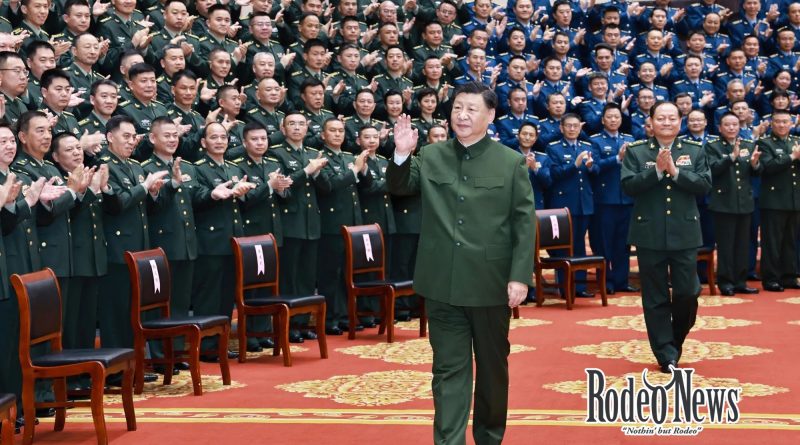
Beijing — When Chinese leader Xi Jinping began reshaping the People’s Liberation Army more than a decade ago, the goal was clear: build a modern fighting force loyal to the Communist Party and capable of projecting power far beyond China’s shores.
Now, a sweeping purge of senior officers suggests that mission is far from complete.
In recent months, some of the highest-ranking figures in China’s military establishment have been removed, investigated, or quietly replaced. The shake-up has reached deep into the upper echelons of the armed forces, including strategic units tasked with overseeing China’s most sensitive weapons systems.
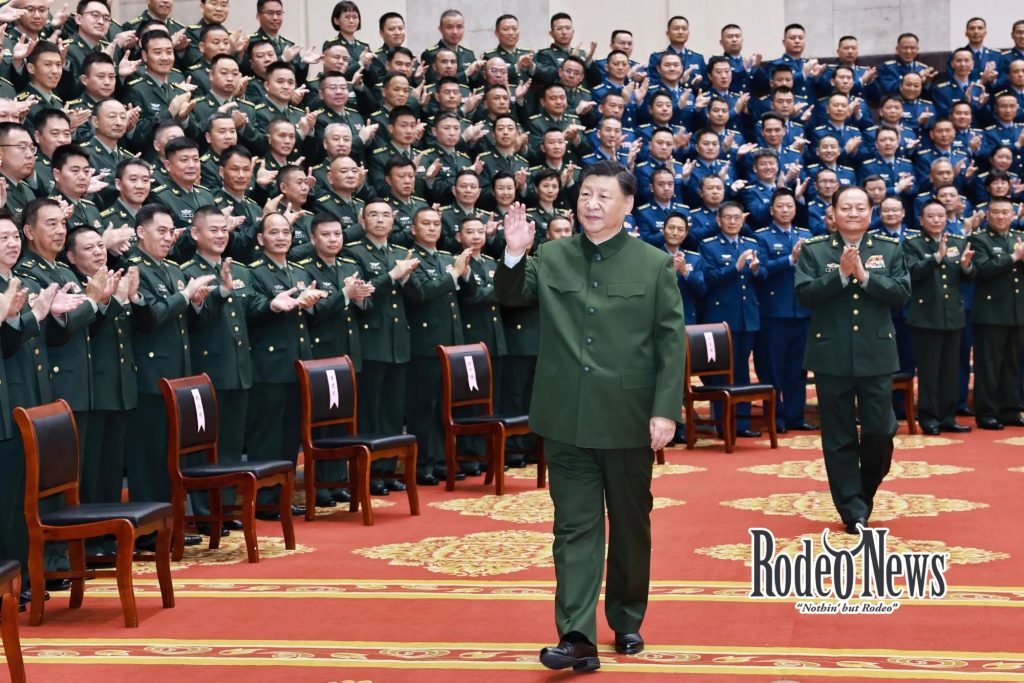
While the immediate effect may be a temporary slowdown in Beijing’s ability to launch major operations — including any move against Taiwan — analysts warn the long-term consequences could be more destabilizing.
Here are five things to know.
1. The Purge Reaches the Very Top
The campaign has not targeted minor figures. It has swept through the upper ranks of the People’s Liberation Army (PLA), including officers linked to China’s powerful Rocket Force — the branch responsible for managing conventional and nuclear missile arsenals.
The dismissals and investigations have extended to individuals serving on or closely tied to the Central Military Commission, the Communist Party organ that commands the armed forces. The CMC answers directly to Xi, who serves as its chairman.
Such high-level removals are rare in modern China and signal deep concerns within the leadership about loyalty, discipline, and corruption.
2. Corruption Is the Official Target — But Loyalty Is Central
Beijing has framed the campaign as part of an ongoing anti-corruption drive. Since coming to power in 2012, Xi has used similar campaigns to discipline rivals and consolidate authority across the party, government, and military.
Within the armed forces, corruption can have direct operational consequences. Inflated procurement contracts, substandard equipment, and falsified readiness reports undermine combat effectiveness. In a force as vast as the PLA, even small distortions can have strategic implications.
But beyond corruption, loyalty remains paramount. The PLA is not a national army in the Western sense; it is the armed wing of the Communist Party. Absolute political loyalty to Xi — described in official rhetoric as the “core” of the party — is non-negotiable.
The purge reinforces a message: political reliability matters as much as battlefield capability.
3. Short-Term Risk to Taiwan May Be Lower
The timing of the shake-up has drawn attention because of persistent tensions over Taiwan.
Beijing views the self-governed island as part of its territory and has not ruled out the use of force to achieve unification. Military drills around Taiwan have intensified in recent years, particularly after high-profile diplomatic visits by Western officials.
However, removing senior commanders — especially those overseeing missile forces and strategic planning — can create temporary disruptions. New appointees need time to consolidate authority, assess units, and rebuild chains of command.
That could reduce the likelihood of a near-term, large-scale operation against Taiwan. Military campaigns require cohesion, trust, and clarity at the top — conditions that may be harder to guarantee amid an internal crackdown.
4. Long-Term Dangers Could Increase
If the purge ultimately produces a more disciplined and politically unified military, the longer-term implications could be more serious.
Xi has repeatedly instructed the PLA to accelerate modernization and improve its ability to “fight and win wars.” The 2027 centenary of the PLA has been cited as a milestone for achieving major capability upgrades.
A leadership reshuffle that weeds out corruption and reinforces loyalty could, over time, strengthen China’s warfighting capacity. A more centralized and tightly controlled command structure may also reduce internal hesitation in a crisis.
In that sense, the current turbulence may represent a painful but calculated restructuring — one that could leave China’s military leaner, more cohesive, and potentially more willing to act decisively in future confrontations.
5. The Move Reflects Xi’s Broader Power Strategy
The military purge fits a broader pattern in Xi’s governance: assert control first, manage fallout later.
Over the past decade, he has dismantled rival power networks within the Communist Party, restructured state institutions, and tightened ideological discipline. Few centers of influence operate beyond his reach.
By extending this approach deep into the PLA’s senior ranks, Xi is signaling that even the most powerful officers are not immune.
The message is twofold. Internally, it reinforces that the gun must always obey the party. Externally, it underscores that Xi is prepared to take significant political risks to ensure the military answers directly to him.
What It Means for the Region
For Taiwan and its partners, the implications are complex.
In the short run, instability at the top of China’s military could reduce the risk of sudden escalation. But if the purge succeeds in tightening control and eliminating inefficiencies, Beijing may emerge with a more reliable instrument of power.
The uncertainty itself may shape strategic calculations in Washington, Tokyo, and Taipei. Military planning often hinges not just on capabilities, but on confidence in leadership cohesion — and on signals sent from political capitals.
For now, one thing is clear: Xi’s historic purge marks one of the most consequential restructurings of China’s armed forces in decades. Whether it delays confrontation or sets the stage for a more disciplined challenge to the regional order remains an open question — one that will be closely watched across the Taiwan Strait and beyond.