Syrian Leader Sharaa Arrives in Washington for Historic Talks with Trump After Sanctions Lifted
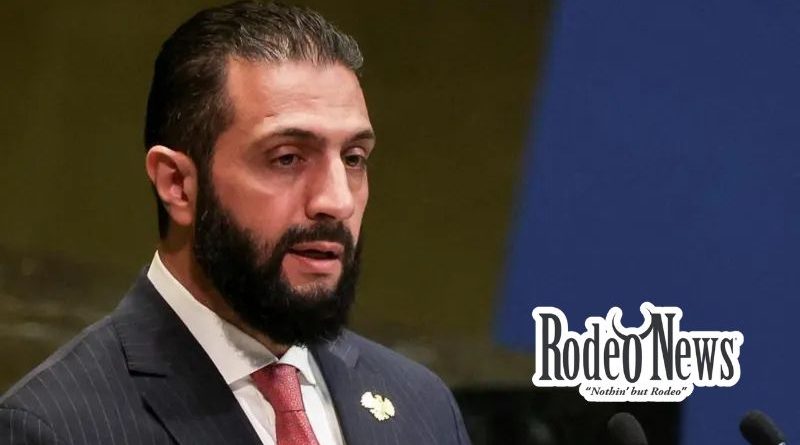
In a significant diplomatic move, Syrian President Ahmed Sharaa has arrived in Washington for high-level talks with US President Donald Trump. The meeting, set to take place on Monday, marks a pivotal moment in the evolving relationship between the two nations. Just two days earlier, the US officially revoked Sharaa’s designation as a Specially Designated Global Terrorist (SDGT), a decision that signals a thaw in the long-frozen ties between Syria and the West.
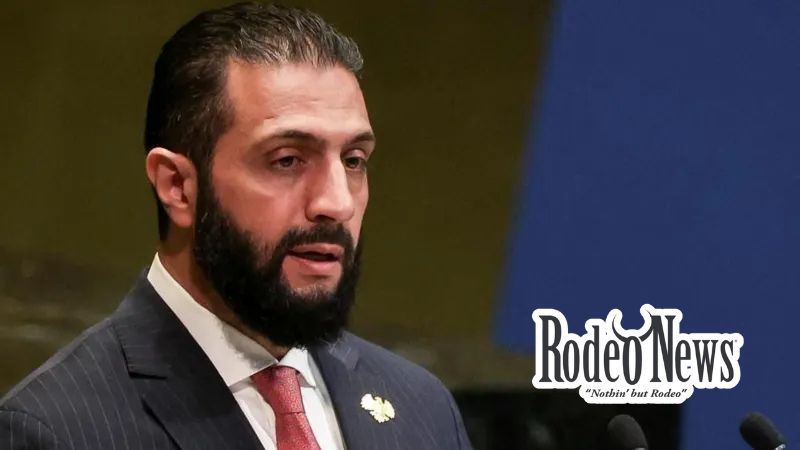
Sharaa, once an Islamist militant with deep ties to extremist factions, has been on a steady rise in the political landscape of Syria since his rebel alliance successfully ousted President Bashar al-Assad’s regime almost a year ago. His appearance in Washington underscores his efforts to reshape Syria’s image on the world stage, particularly after more than a decade of civil war and international isolation.
A New Era for US-Syria Relations
Sharaa’s visit comes amid a broader shift in US foreign policy toward Syria, with the recent lifting of sanctions highlighting a possible end to the country’s prolonged economic isolation. In a recent statement, the UN Security Council voiced its support for a US-backed resolution to ease sanctions on Syria, coinciding with a gradual but deliberate process of reopening diplomatic channels.
On Friday, the US Treasury Department removed Sharaa and his Interior Minister, Anas Hasan Khattab, from a list of individuals suspected of supporting or financing extremist groups. The decision followed the Trump administration’s recognition of the progress made by Sharaa’s leadership in stabilizing the country and reestablishing order in areas once controlled by terrorist organizations.
For Sharaa, the lifting of sanctions represents a significant victory. Once known under the alias Muhammad al-Jawlani as the leader of Hayat Tahrir al-Sham (HTS)—an al-Qaeda-affiliated group—Sharaa has since distanced himself from extremism. His leadership role has evolved into one focused on rebuilding Syria and ensuring a government that is both moderate and inclusive of the country’s diverse ethnic and religious groups.
Tackling the Remnants of ISIS
The talks with President Trump will center around continued efforts to dismantle the remnants of the Islamic State (ISIS), which still holds pockets of territory in Syria. In a sign of renewed cooperation between the US and Syria, Syrian security forces detained 71 suspected ISIS members just hours before Sharaa’s arrival in Washington. Along with the arrests, Syrian authorities seized a significant cache of weapons and explosives, signaling ongoing efforts to root out terrorism from the war-torn nation.
Syria’s success in curbing ISIS operations will likely play a key role in shaping the future of US-Syria relations. Both nations, despite their history of conflict, have found common ground in combating extremist elements that continue to destabilize the region.
Sharaa’s Leadership and Domestic Challenges
Since taking power, Sharaa has vowed to restore Syria’s standing in the international community. In a recent speech at the United Nations General Assembly, he declared that Syria was “reclaiming its rightful place among the nations of the world,” emphasizing the need for the international community to lift sanctions and assist in Syria’s reconstruction.
Despite the political strides Sharaa has made, his government still faces significant challenges on the domestic front. Violence continues to erupt between rival factions, including deadly clashes between Sunni Bedouin fighters and Druze militias. Moreover, concerns remain about the loyalty and actions of Syria’s security forces, particularly after allegations of abuses against Syria’s Alawite minority.
Earlier this year, Sharaa pledged to tackle corruption within his own ranks, announcing efforts to root out those responsible for executing members of Syria’s Alawite community. The goal, according to sources close to Sharaa, is to create a more inclusive and moderate government, one capable of winning support from Syria’s myriad ethnic and religious groups.
A Fragile Peace
The situation in Syria remains precarious, with the country still recovering from years of violent conflict. While Sharaa has made progress in stabilizing certain regions, the road to full recovery is long. The recent uptick in violence between Sunni and Druze factions raises questions about whether the country’s fragile peace will hold.
Despite these challenges, Sharaa’s leadership presents a ray of hope for a nation ravaged by over a decade of civil war. His ability to forge new alliances, both within Syria and abroad, will be critical in determining whether the country can emerge from its troubled past.
As Sharaa’s talks with President Trump unfold, the international community will be closely watching for signs of further diplomatic openings, as well as concrete steps toward long-term stability in Syria.