Ukraine Support: 5 Key Points From Zelensky’s UK Visit
Ukraine support remained at the centre of diplomatic discussions in London as British Prime Minister Andy Burnham met Ukrainian President Volodymyr Zelensky against a backdrop of renewed uncertainty over Washington’s approach to the war with Russia. The meeting highlighted the challenge facing European leaders as they seek to maintain assistance for Kyiv while managing their relationships with the United States.
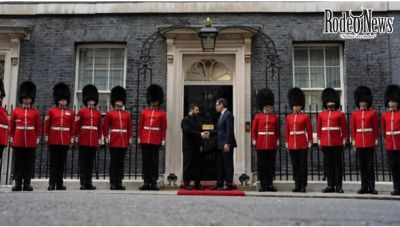
Zelensky’s visit came after a difficult period in relations with US President Donald Trump, whose recent decisions regarding Russian diesel sanctions and his comments about Ukraine’s leadership created fresh questions about the direction of American policy.
For Burnham, the diplomatic challenge was to demonstrate that Britain remained committed to Ukraine without turning the meeting into a public confrontation with Washington. His approach focused on continued assistance, closer cooperation and efforts to maintain diplomatic channels between the key partners.
The discussions also underscored a broader concern for European governments: Ukraine’s ability to sustain its defence depends not only on military resources but also on the reliability of international political support.
1. Ukraine Support Takes Centre Stage in London
Zelensky’s meeting with Burnham represented another important stop in the Ukrainian president’s continuing efforts to secure backing from European allies.
As Russia’s full-scale war against Ukraine continues, Kyiv faces the challenge of maintaining military readiness while protecting its infrastructure, supporting its population and preparing for further fighting.
International assistance has therefore remained a central part of Ukraine’s strategy. Military equipment, financial resources and diplomatic backing all contribute to the country’s ability to resist Russian attacks and maintain its position in negotiations.
For Britain, welcoming Zelensky provided an opportunity to reaffirm its relationship with Kyiv. The meeting also allowed the government to communicate that Ukraine would not be left without assistance during a period of uncertainty among its international partners.
According to the BBC’s reporting, Burnham promised that Ukraine would not leave the visit empty-handed. He also indicated that Britain intended to accelerate the delivery of lightweight multirole missiles designed to counter Russian drones.
The announcement was significant because air defence remains a major concern for Ukraine. Russian drone attacks can threaten military facilities, energy infrastructure and civilian areas, placing continued pressure on Ukrainian defence systems.
However, the effectiveness of any new commitment will depend on delivery schedules, available supplies and Ukraine’s operational requirements.
2. Donald Trump’s Russia Policy Creates Fresh Uncertainty
The meeting took place amid renewed uncertainty over the United States’ approach to Russia and Ukraine.
For months, Trump had offered Ukraine access to American air defence technology while also threatening additional sanctions against Moscow. Those positions provided some grounds for cooperation, even as disagreements between Washington and Kyiv continued.
The situation became more complicated following Trump’s decision to lift sanctions on Russian diesel and his call for Zelensky to be replaced, as described in the BBC report.
The developments raised questions about the consistency of US policy toward the conflict and the potential consequences for European security.
Sanctions are an important instrument of international pressure. Restrictions on Russian energy-related activities can affect trade, revenue and the broader economic environment in which Moscow finances its war.
Changing those restrictions can therefore carry diplomatic significance beyond the immediate economic consequences. European governments must assess how American decisions affect their own policies, their coordination with allies and their efforts to influence Russia.
For Ukraine, uncertainty over Washington’s position creates an additional strategic problem. Kyiv must continue defending its territory while determining whether the level of American political and military support will remain dependable.
European governments face a related challenge. They must consider how to sustain assistance if US policy changes or if disagreements between Washington and Kyiv become more pronounced.
3. Why Burnham Is Balancing Support With Diplomacy
Burnham’s position illustrates the difficult balance facing governments that want to support Ukraine while preserving working relationships with the United States.
Washington remains an important partner in Western security arrangements. At the same time, European governments have their own interests in preventing further Russian expansion and maintaining stability across the continent.
Publicly criticising an American president can complicate diplomatic coordination. Yet avoiding difficult questions altogether can create domestic political pressure, particularly when American policy appears to conflict with European security priorities.
Burnham sought to emphasise Britain’s commitment to Ukraine while avoiding a direct confrontation over Trump’s latest decisions.
That approach reflects a familiar diplomatic calculation: governments sometimes attempt to preserve cooperation by focusing public statements on shared objectives rather than disagreements.
The strategy has potential advantages. It can keep negotiations moving, reassure an ally and leave room for further discussions behind closed doors.
Nevertheless, it also carries risks. Critics may argue that a restrained public response fails to address decisions that could undermine international pressure on Russia.
The challenge is therefore not simply whether Britain supports Ukraine. It is how the government can turn that support into practical assistance while maintaining the diplomatic relationships needed to coordinate a wider response.
4. Military Assistance Remains Important to Ukraine’s Defence
The reported commitment to accelerate missile deliveries offered a concrete element of the London discussions.
Ukraine has repeatedly needed assistance to defend against Russian aerial attacks. Drones can be used in large numbers and may force defenders to expend valuable resources protecting cities, military positions and essential infrastructure.
Lightweight multirole missiles can contribute to defensive operations, although their precise capabilities depend on the systems supplied, how they are deployed and the threats they are intended to counter.
Speed is also important. A promise to provide equipment has limited immediate value if delivery takes too long to address urgent operational needs.
Accelerating deliveries could help Ukraine plan its defensive posture and manage pressure on existing resources. However, the scale of the potential benefit cannot be established from the announcement alone.
Delivery dates, quantities and other operational details are important measures of whether a political commitment translates into meaningful assistance.
Military aid is also only one component of Ukraine’s broader requirements. Financial support, training, intelligence cooperation and the maintenance of existing equipment can all influence the country’s ability to sustain its defence.
For Britain and its European partners, the wider question is how to coordinate assistance over time rather than rely solely on individual announcements.
5. European Allies Face a Larger Strategic Test
Zelensky’s visit to London also reflected Ukraine’s continuing effort to maintain strong relationships across Europe.
The BBC reported that the Ukrainian president was pursuing diplomatic discussions in London before travelling to Brussels. The sequence illustrates the importance Kyiv places on engaging multiple partners as the war enters another difficult period.
European governments have different domestic political priorities, economic constraints and security concerns. Nevertheless, the conflict has created a shared interest in preventing instability from spreading and maintaining a credible response to Russian military action.
The uncertainty surrounding US policy makes coordination particularly important.
If European countries expect Washington’s position to fluctuate, they may need to reassess their own capacity to provide military and financial assistance. Such planning would require decisions about budgets, equipment availability and the division of responsibilities among allies.
However, a shift toward greater European responsibility would not automatically replace American capabilities. Effective cooperation would still depend on resources, planning and agreement over strategic objectives.
For Ukraine, the immediate priority is to ensure that diplomatic commitments lead to assistance that meets its most urgent needs.
For European leaders, the challenge is to demonstrate that support can remain consistent even when international politics becomes more complicated.
What the Meeting Means for Britain and Ukraine
Burnham’s meeting with Zelensky carried significance beyond the announcement of additional military assistance.
It demonstrated Britain’s intention to maintain its relationship with Ukraine while navigating disagreements and uncertainty involving the United States.
The meeting also highlighted the distinction between expressing political solidarity and delivering practical results. Promises of support can reassure Kyiv, but their value ultimately depends on implementation.
For Ukraine, continued international assistance remains important as it confronts the military, economic and humanitarian consequences of Russia’s invasion.
For Britain, supporting Ukraine involves both immediate security considerations and a broader commitment to European stability. The government must consider how military aid, diplomacy and cooperation with allies fit together over the longer term.
Meanwhile, the changing position of the United States creates a challenge for European leaders seeking to maintain a coordinated response.
The coming weeks will help show whether the commitments made during Zelensky’s visit translate into faster equipment deliveries and sustained cooperation.
Conclusion: Ukraine Support Remains a Diplomatic Priority
Zelensky’s London visit underscored the continuing importance of Ukraine support at a time when international political conditions remain uncertain.
Burnham sought to reaffirm Britain’s commitment, including a pledge to accelerate missile deliveries, while avoiding a public confrontation with Trump over his recent decisions regarding Russia and Ukraine.
That balancing act reflects the wider challenge facing European governments. They must maintain assistance for Kyiv, preserve cooperation with Washington and respond to developments that could influence the course of the war.
Ultimately, the success of the visit will depend on more than diplomatic language. The speed and scale of military assistance, the consistency of financial commitments and the strength of international coordination will help determine how effectively Ukraine’s partners can support the country.
As the conflict continues, Britain and its allies face a clear task: turn political assurances into practical measures while maintaining the cooperation needed to address the long-term security challenges confronting Europe.