Pope Leo France Visit: 5 Key Warnings on AI
The Pope Leo France visit began Friday with a striking warning about artificial intelligence, human dignity and the dangers of allowing technology to shape everyday life without strong ethical boundaries. Speaking in Paris, Pope Leo XIV cautioned against what he described as a potential “paradise of machines,” arguing that scientific and technological progress must remain centered on human beings.
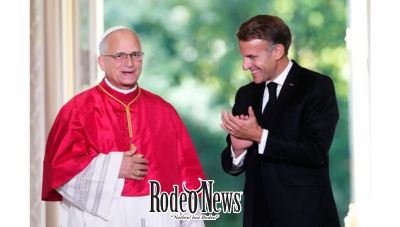
The remarks came as Leo began a four-day journey through France, his first official state visit to the country and the first papal state visit there in 18 years. The trip brings together religion, technology, European affairs, peace and questions about the future of human life.
During his opening meetings with French President Emmanuel Macron and other officials, Leo also addressed nuclear weapons, human rights and the role of faith in a highly secular society. His schedule includes appearances in Paris, Lourdes and Metz, with major public events expected throughout the visit.
Pope Leo France Visit Opens With AI Warning
Artificial intelligence was one of the central themes of Leo’s opening message.
The pope argued that society faces a growing paradox. Technology is becoming increasingly capable of performing tasks associated with human intelligence, while people risk being judged according to measures such as productivity and efficiency.
For Leo, the issue is therefore larger than the development of increasingly sophisticated computer systems. He presented AI as a question about what society believes human beings are worth.
His warning was especially pointed because AI has become one of the defining technological issues of the current era. Governments are debating regulation, companies are investing heavily in increasingly capable systems and businesses are integrating AI into workplaces at a rapid pace.
Leo has repeatedly called for technological development to be accompanied by ethical consideration. His France visit allowed him to bring that message directly into discussions with political leaders and international institutions.
The pope’s concern is not simply that machines could become more powerful. Instead, he has emphasized the possibility that humans could gradually surrender important decisions to systems designed around efficiency, automation or commercial interests.
That distinction formed an important part of his message in Paris.
A “Paradise of Machines” and the Human Question
One of the most memorable phrases from Leo’s opening speech was his warning about a possible “paradise of machines.”
The phrase captured his broader concern that technology could become so deeply embedded in daily life that people might stop questioning its influence.
Leo called for greater education in ethical discernment. In his view, people need the ability to distinguish between what technology can do and what it should do.
That question is becoming increasingly important as AI moves beyond experimental applications.
Artificial intelligence is now being developed for areas including education, medicine, finance, transportation, communications and creative work. The technology can process information quickly and automate tasks, but its expansion also raises questions about privacy, employment, misinformation, accountability and decision-making.
Leo’s argument places those questions within a broader philosophical framework.
Rather than treating technological advancement as an end in itself, he urged society to consider whether innovation serves human dignity.
That message also fits with the wider themes of his papacy. Vatican reporting on his France journey has highlighted faith, culture, Europe and human dignity as major themes of the four-day trip.
Pope Leo and Macron Discuss a Changing France
The Pope Leo France visit also placed him alongside Macron at a significant moment for French politics and society.
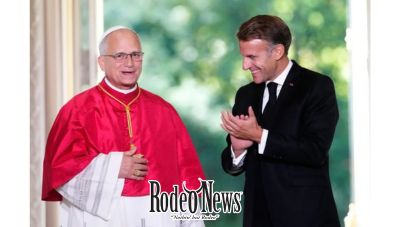
Macron welcomed Leo at the Élysée Palace and described the visit as a source of hope for many French people.
The meeting provided an opportunity for discussion of issues extending beyond religion. According to reporting on the visit, topics include artificial intelligence, climate change, international affairs, European issues and questions surrounding end-of-life care and the protection of children.
For France, the visit also highlights a complicated relationship between Catholicism and the modern French state.
France has a strong tradition of secularism, known as laïcité. The principle establishes state neutrality toward religion while protecting freedom of belief and religious practice.
That framework has shaped French public life for generations.
Leo’s message about the dignity of human life therefore arrives in a country where Catholic teaching does not automatically determine public policy.
The contrast was particularly visible in debates surrounding abortion and assisted dying.
Human Dignity at the Center of the Message
Leo used his first major speeches in France to emphasize the value of human life.
France incorporated abortion rights into its Constitution in 2024. French lawmakers have also approved legislation concerning assisted dying for adults with incurable illnesses.
The Catholic Church has opposed both developments on the grounds that human life should be protected.
Leo’s comments therefore represented more than a general philosophical discussion. They reflected established Catholic teaching while engaging with a country whose laws and public debates increasingly reflect secular principles.
The pope linked this issue directly to artificial intelligence.
His argument was that society should not allow efficiency to become the primary measure of human value.
That concern could become increasingly relevant as automation changes employment and economic structures.
If machines perform more tasks previously handled by people, societies will have to confront questions about work, income, education and purpose. Leo’s intervention places those future debates within a discussion about human dignity rather than technology alone.
Pope Leo France Visit Includes Nuclear Weapons Warning
AI was not the only major global issue addressed by Leo during his opening day.
The pope also reaffirmed the Vatican’s opposition to nuclear weapons.
With conflicts continuing in Europe and the Middle East, Leo criticized the logic of nuclear deterrence and argued that it contributes to a continuing arms race.
He emphasized that peace cannot simply depend on competing military capabilities.
Instead, Leo said peace must be built through dialogue and justice.
The remarks reflect the Catholic Church’s longstanding opposition to nuclear weapons, while giving the issue renewed attention amid current international tensions.
The inclusion of nuclear weapons alongside artificial intelligence was significant.
Both technologies can dramatically increase human capabilities. Both can also create risks that extend beyond the control of individuals.
By discussing them together, Leo framed technological power as something that requires moral responsibility.
Notre-Dame Becomes a Major Moment in Paris
The France journey also brought Leo to one of Paris’s most important religious and cultural landmarks: Notre-Dame Cathedral.
The pope celebrated evening prayers at the restored cathedral, marking his first visit there as pope.
Notre-Dame has particular significance because the cathedral was severely damaged by fire in 2019. Its restoration became a major international project, eventually leading to its reopening in 2024.
Leo’s visit offered another symbolic dimension to his message about human creativity and collective responsibility.
The restoration of the cathedral required architects, craftsmen, engineers and other specialists to work together over several years. During his visit, Leo praised those involved in bringing the historic building back to life.
The setting also created a contrast with his concerns about artificial intelligence.
Notre-Dame represents centuries of human craftsmanship, faith and artistic achievement. AI represents a new technological frontier that is changing how people create and work.
Leo’s France visit therefore placed these two forms of human achievement alongside each other.
A Major Test for the French Catholic Church
The pope’s trip also comes as the Catholic Church continues to confront declining influence and the consequences of abuse scandals in France.
A major independent investigation published in 2021 estimated that hundreds of thousands of children were sexually abused by clergy and other Church officials over decades.
The scandal deeply affected the credibility of the French Catholic Church and remains an important part of the context surrounding Leo’s visit. Reuters reported that the pope’s itinerary includes a private meeting with abuse survivors in Lourdes.
The meeting is expected to place accountability and the experiences of survivors alongside the pope’s broader messages about human dignity.
For the Vatican, the challenge is not limited to presenting theological arguments. The Church must also address questions about institutional responsibility and trust.
The Lourdes portion of the journey will therefore carry a different tone from the high-profile events in Paris.
Why the Pope’s France Visit Matters Beyond Religion
The Pope Leo France visit is significant because it extends beyond Catholic worship.
Leo is engaging with debates about AI, nuclear weapons, human rights, European unity and the relationship between faith and secular government.
His itinerary reflects that broad agenda.
After Paris, he is scheduled to travel to Lourdes and later to Metz, where the focus will include Europe, peace and unity. Vatican officials have described the journey as an opportunity to engage with French culture, history, society and the country’s Catholic community.
The visit also comes at a time when Europe faces multiple challenges.
War, economic uncertainty, technological disruption and political divisions have created a complicated environment for European governments.
Leo’s message is that these problems cannot be addressed solely through technological or political solutions.
He is calling instead for ethical reflection alongside scientific and political decision-making.
What Comes Next for Pope Leo in France
The pope’s four-day itinerary will continue with several major events.
His schedule includes further meetings with young people and Church representatives, the Lourdes pilgrimage and a later gathering in Metz focused on Europe’s future.
Large crowds are expected during the journey. French authorities have prepared extensive security measures, including police, military personnel, firefighters, bomb disposal teams and anti-drone capabilities. Security planning in Paris has been compared with arrangements used during the 2024 Olympic and Paralympic Games.
The scale of the security operation reflects the international attention surrounding the visit.
It also illustrates the unusual combination of religious and geopolitical themes surrounding Leo’s trip.
A Papal Message Focused on the Future
The opening day of the Pope Leo France visit established several themes likely to dominate the remainder of his journey.
Artificial intelligence has emerged as one of the most prominent.
Leo is asking whether technological progress can remain compatible with human dignity. He is also urging governments, technology companies and ordinary citizens to develop stronger ethical judgment as AI becomes more deeply integrated into daily life.
At the same time, his opposition to nuclear weapons places the visit within the context of current global security concerns.
His emphasis on the value of human life connects those issues to Catholic teaching while also entering debates taking place across secular Europe.
France provides a particularly important setting for that conversation because of its long tradition of separating religion from the state.
As Pope Leo continues his four-day journey, his message is becoming broader than a warning about technology. It is an argument that the future should remain centered on people, moral responsibility and human dignity.
For a pope visiting France at a moment of rapid technological and political change, that may prove to be one of the defining themes of the trip.