Niger Military Mutiny Raises New Threat to Junta
A Niger military mutiny erupted in the capital, Niamey, on Aug. 29, putting the country’s military government under one of its most serious internal challenges since it seized power in 2023. Heavy gunfire and explosions were reported around the international airport, a major military base and areas near the presidential palace.
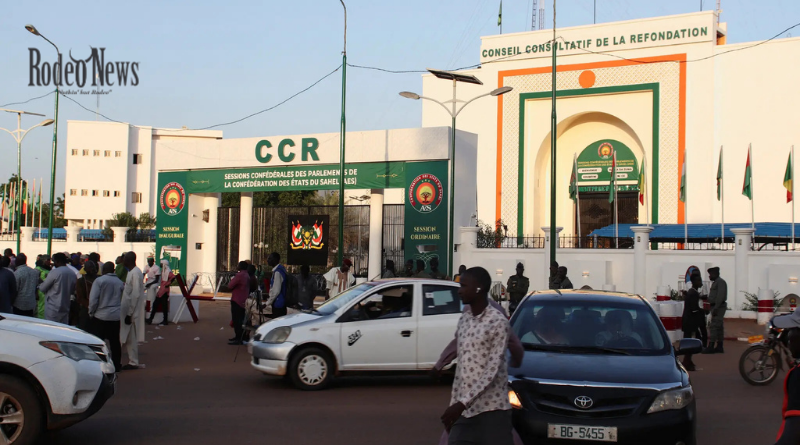
The confrontation involved soldiers who broke away from the chain of command and attacked sensitive locations in the capital. Niger’s authorities later said loyalist forces had regained control of key sites, although reports throughout the day indicated that the security situation remained fluid.
The unrest is particularly significant because Niger’s military government came to power after a coup promising to restore security and defeat armed groups operating across the country. Instead, the armed forces have continued to face attacks from jihadist organizations linked to Islamic State and al-Qaeda.
The latest Niger military mutiny therefore exposes a difficult contradiction for the junta: the same security crisis that helped bring the military to power is now contributing to dissatisfaction within its own ranks.
Niger Military Mutiny Targets Strategic Sites
The fighting began overnight in Niamey, with sustained gunfire reported around Diori Hamani International Airport and the adjacent Base 101 military facility.
The airport complex is strategically important. Base 101 has been used as a major military hub and is connected to Niger’s broader counterterrorism operations. The facility has also hosted forces from Niger and its regional partners.
According to reports, mutinous soldiers attempted to detain fellow troops at the base before opening fire at several sensitive locations. Gunfire was also reported near the presidential palace in the Plateau district.
The state broadcaster was temporarily taken off the air as the violence spread. When broadcasts resumed, authorities described the incident as a disturbance within the armed forces and urged residents to remain calm.
Niger’s Defense Minister, Gen. Salifou Mody, said security forces had moved quickly to restore control. However, independent reports initially suggested that fighting and uncertainty continued around some military positions.
The sequence of events suggested something more serious than an isolated dispute between soldiers.
The locations targeted were among the most sensitive in the capital, including military infrastructure, the presidency and state media. That is why several analysts characterized the incident as an attempted challenge to the government rather than an ordinary military disagreement.
Why the Niger Military Mutiny Matters
The significance of the Niger military mutiny goes beyond the immediate fighting in Niamey.
General Abdourahamane Tiani took power in July 2023 after overthrowing President Mohamed Bazoum. The coup was driven in large part by dissatisfaction over the country’s worsening security environment and the government’s inability to contain jihadist violence.
The junta subsequently promised to strengthen national security while reducing Niger’s dependence on Western military partners.
France’s military presence was pushed out, while Niger deepened cooperation with Russia and joined Mali and Burkina Faso in the Alliance of Sahel States, or AES.
Yet armed groups have continued to operate across large areas of the country.
That has created growing pressure on the military. Soldiers are expected to fight increasingly capable insurgent groups while the government faces difficult economic, political and diplomatic conditions.
The latest mutiny suggests that frustration may no longer be confined to civilians or political opponents. It may also be reaching sections of the armed forces themselves.
Security Failures Fuel Niger Military Mutiny
One of the most important factors behind the Niger military mutiny is the country’s continuing jihadist insurgency.
Niger sits at the center of the wider Sahel security crisis. The country’s western regions have been repeatedly attacked by organizations associated with Islamic State and al-Qaeda.
The capital has also experienced attacks despite its distance from some of the main conflict zones.
Diori Hamani International Airport and Base 101 were attacked twice earlier in 2026. Islamic State-linked militants targeted the complex in January, while Jama’at Nusrat al-Islam wal-Muslimin, commonly known as JNIM and linked to al-Qaeda, claimed responsibility for another attack in June.
The June assault reportedly killed 11 soldiers and two civilians, according to Nigerien authorities, while 22 attackers were killed.
Those attacks are especially damaging to a government that came to power by promising better security.
For soldiers deployed against insurgent groups, repeated casualties can create frustration over strategy, equipment, leadership and battlefield conditions. Analysts cited in recent coverage have linked military dissatisfaction to the continuing violence and the government’s struggle to fulfill its security promises.
Niger Military Mutiny Exposes Junta’s Weakness
The government has portrayed the latest crisis as an attempted mutiny that was rapidly contained.
That response is important for the junta because any perception that the military is divided could weaken its authority.
Military governments depend heavily on cohesion within the armed forces. When soldiers begin challenging commanders, even a failed uprising can expose vulnerabilities that opponents may attempt to exploit.
In Niger’s case, the danger is particularly acute because the junta has limited political institutions outside the military structure.
The government has also faced pressure from armed groups at the same time that it has attempted to reorganize the country’s regional security partnerships.
The Niger military mutiny consequently presents a double challenge.
First, the junta must determine how deeply the military dissatisfaction runs.
Second, it must prevent the episode from distracting the armed forces from the fight against jihadist groups.
That second problem could become especially dangerous if insurgents interpret the internal conflict as an opportunity to expand their operations.
Russia’s Role Adds Another Layer
The events in Niamey also highlight Niger’s increasingly important relationship with Russia.
Since the 2023 coup, Niger has moved away from its former Western security partnerships and developed closer ties with Moscow. Russian Africa Corps personnel have been involved in supporting Niger’s military authorities.
Recent reporting indicated that Russian personnel assisted loyalist forces during the effort to suppress the mutiny and regain control of the strategic airbase.
That development could have wider regional consequences.
Niger is not isolated. It is part of the Alliance of Sahel States with Mali and Burkina Faso, two neighboring countries also governed by military regimes.
All three governments have sought to reduce their dependence on Western governments while presenting their regional alliance as an alternative security framework.
If a major internal military dispute develops in Niger, it could therefore affect the credibility of that broader alliance.
The three governments have repeatedly argued that stronger regional cooperation can provide greater security against jihadist groups. But a mutiny inside one of the alliance’s key military hubs would raise questions about whether those governments can maintain military cohesion while fighting multiple insurgencies.
Niamey Airport Has Become a Symbol of the Crisis
The repeated violence around Niamey’s airport is another important warning sign.
The facility has become more than a transportation hub. It is also a major military installation and an important component of Niger’s security infrastructure.
That makes it an attractive target for both jihadist groups and internal military challengers.
The airport complex was already attacked in January and June. The August unrest marked another major security incident in the same strategically important area.
For residents of Niamey, the repeated violence is also a reminder that the conflict is no longer purely a distant battlefield problem.
Heavy gunfire and explosions were heard in several neighborhoods during the latest confrontation. Residents near the airport reportedly sheltered inside their homes as fighting continued.
The temporary interruption of state television further added to uncertainty because government communications were disrupted during a politically sensitive moment.
What Happens After the Niger Military Mutiny?
The immediate priority for the government is to restore complete control over military facilities and determine which units participated in the uprising.
Authorities have already described the situation as controlled, while later reports said loyalist forces regained the key airbase.
But restoring physical control is only the first step.
The government must also address why soldiers were willing to challenge the chain of command in the first place.
If the underlying grievances involve battlefield losses, poor conditions, dissatisfaction with leadership or frustration over the country’s worsening security situation, arrests alone may not resolve the problem.
The junta will also have to reassure other military units that the command structure remains intact.
Meanwhile, jihadist organizations are likely to watch the situation closely.
Any prolonged internal division could force Niger to redirect troops away from front-line areas. That could give armed groups an opportunity to attack isolated military positions or expand their influence.
The situation also matters internationally.
Niger remains strategically important because of its location in the Sahel and its natural resources, including uranium. Its shift toward Russia has already altered the geopolitical balance in West Africa.
A prolonged military crisis could further complicate relationships among Niger, its neighbors and outside powers.
A Critical Test for Niger’s Military Government
The Niger military mutiny is more than another episode of instability in a region already affected by repeated coups.
It strikes at the central argument used by Niger’s military government to justify its rule: that military leadership can provide greater security than the civilian government it replaced.
Since the 2023 coup, jihadist violence has continued despite changes in foreign alliances and military strategy.
Now, dissatisfaction within the armed forces has emerged as another threat.
The government appears to have survived the immediate confrontation. But survival of the junta should not be confused with resolution of the underlying crisis.
Niger still faces armed groups in several regions, political isolation from some former partners, economic pressures and the challenge of maintaining military unity.
The events in Niamey demonstrate how quickly those pressures can converge.
For General Tiani’s government, the next challenge will be preventing a failed mutiny from becoming a lasting fracture within the security establishment.
For Niger’s population, the bigger question is whether the military government can finally deliver the stability it promised when it seized power.
For the wider Sahel, the answer could shape the future of one of Africa’s most strategically important and politically volatile regions.