A Chance Moment, A Viral Fade-In
On the morning of October 19, 2025, as crowds gathered at the entrance of the Louvre Museum in Paris, a dramatic event unfolded: a daylight robbery of the French Crown Jewels
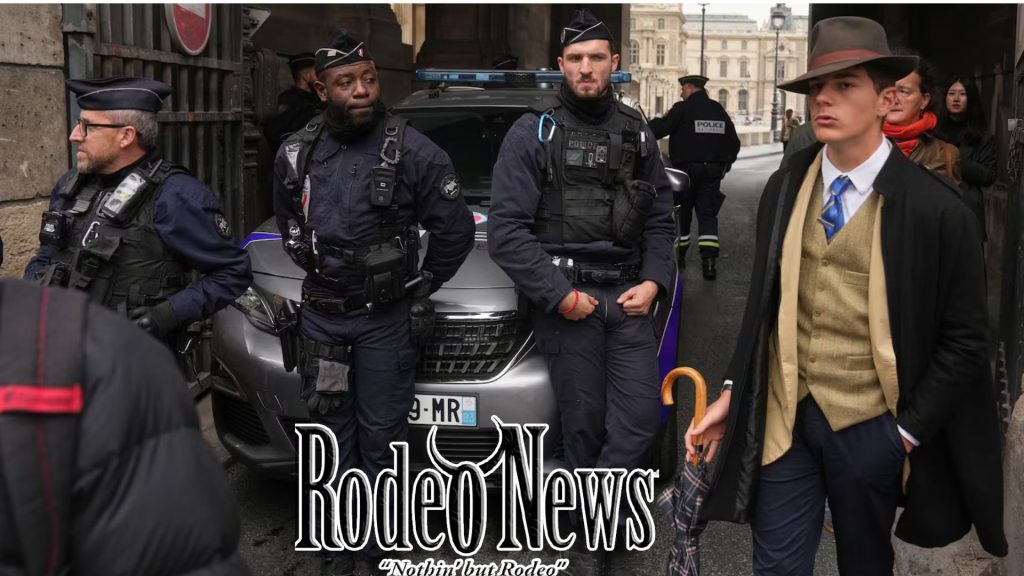
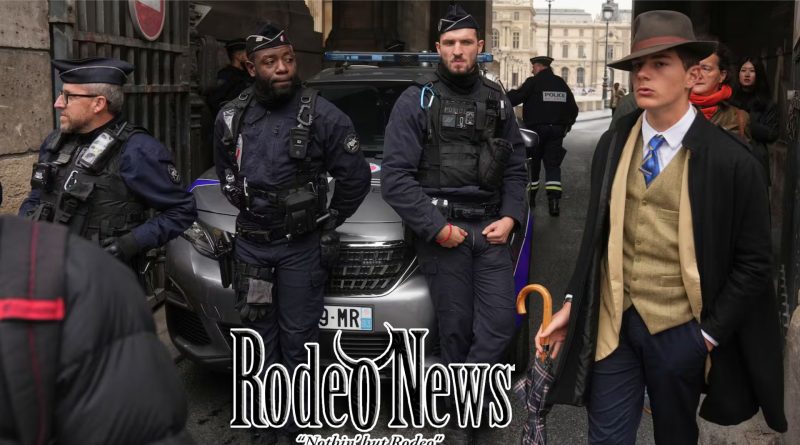
Amid the turmoil, photographer Thibault Camus of the Associated Press captured an image: three French police officers blocking one of the museum gates, and just to their right—someone dressed in a three-piece suit and fedora, walking by.
The figure struck a chord with millions online. Soon dubbed “Fedora Man,” he became the centrepiece of speculation—was he a detective? A covert operative? Or perhaps an AI-generated figment?
Behind the Hat: Who He Really Is
The individual turned out not to be an investigator, but a 15-year-old French teenager, Pedro Elias Garzon Delvaux, from Rambouillet, a suburb 30 km southwest of Paris.
Pedro, a fan of vintage style and lovers of fictional detectives like Hercule Poirot and Sherlock Holmes, opts for a fedora when visiting museums and dressing “chic” for weekends. He and his family had simply come to the Louvre for a visit—they were unaware of the heist that was unfolding. “I was just passing through,” he said
In his only public interview so far, Pedro appeared in the same style as in the photo: fedora pulled low, waistcoat borrowed from his father, jacket chosen by his mother, tie neat, and a restored Russian watch on his wrist—an homage to resistance hero Jean Moulin.
Why the Image Took Off
Several factors converged to make the image memorable:
- Time and place: It was taken at the Louvre, at the moment of one of the most audacious art thefts in recent memory
- Style contrast: A teenager in vintage-inspired attire (fedora, three-piece suit) walking past uniformed police—an oddball in a modern crowd. Pedro himself said, “In the photo, I’m dressed more in the 1940s, and we are in 2025.”
- Mystery and story: The public didn’t know his identity or role, so narratives sprang up: detective, insider, even AI
- Visual power: The image read like a noir film still—unexpected, styled, enigmatic.
Reality Over Romance
Despite the fanciful interpretations, the truth is simpler. Pedro was coincidentally in the frame. Camus the photographer confirmed he “just walked past.”
Pedro remained quiet for days while speculation swirled. “I didn’t want to say immediately it was me,” he explained. “With this photo there is a mystery, so you have to make it last.”
Even now, he seems amused by the attention. “I’m waiting for people to contact me for films,” he said with a grin. “That would be very funny.”
Style Meets Substance
This episode also underscores how personal style and imagery may intersect with big moments. For Pedro, dressing the part isn’t a stunt—it’s his regular style. He said: “I like to be chic. I go to school like this.”
His mother, an art-lover and daughter of a curator, echoes the sentiment: “Art and museums are living spaces. Life without art is not life.”
What It All Means
The “Fedora Man” phenomenon speaks to broader themes:
- The power of a single image: A photo meant to document a crime scene ended up sparking a viral aesthetic and narrative.
- Public imagination: People want stories—detectives, mystery, intrigue—even when the reality is mundane.
- Style and identity: Sometimes, being authentically yourself—even in a vintage fedora—can find an audience.
- Moments of coincidence: Pedro didn’t plan to be the star; the camera found him.
Final Thoughts
In a story dominated by theft, security failures, and cultural shockwaves, the “Fedora Man” provided a lighter counterpoint: a teenager, an outfit, a moment. He reminds us that even amidst high drama, sometimes it’s the unexpected bystander who captures the world’s attention.
Pedro says he’ll keep dressing the way he does. And in that one photo he did.
Recent news on Louvre heist and viral “Fedora Man”